
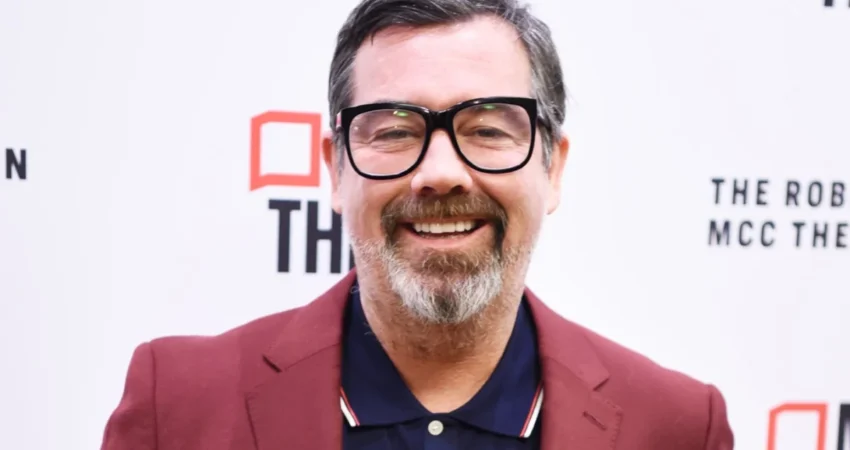
The international arts community is mourning the loss of Duncan Sheik, the multi-talented singer-songwriter and composer who successfully bridged the gap between 1990s alternative pop stardom and the pinnacle of Broadway achievement. Sheik passed away on Thursday in Manhattan at the age of 56. His mother confirmed the news to The New York Times, stating that the cause of death was heart failure which ultimately led to cardiac arrest. A spokesperson for the artist later released a statement to People magazine, describing Sheik as a "singular talent and deeply influential voice in music and theater," noting that he would be remembered for the "sensitivity, wit, intelligence, and depth of spirit" he infused into both his personal relationships and his extensive body of work. At the time of his passing, Sheik was reportedly in the midst of developing a new Off-Broadway production, continuing a prolific career that spanned three decades. He is survived by his wife, Nora Ariffin, and their seven-year-old daughter, Ines.
The Rise of a Gen-X Icon: From Hilton Head to the Billboard Charts
Duncan Sheik’s journey into the cultural zeitgeist began long before he became a fixture of the New York theater scene. Born in Montclair, New Jersey, and raised in Hilton Head, South Carolina, Sheik’s musical foundation was built on a blend of classical appreciation and a burgeoning interest in the burgeoning alternative rock scene of the late 1980s. He often credited his grandmother, a pianist, for fostering his early improvisational skills. By the time he attended Brown University, where he studied semiotics, he was already honing the songwriting craft that would eventually define a decade.
In 1996, Sheik released his self-titled debut album under Atlantic Records. It was an era dominated by the fading echoes of grunge and the rise of Britpop, yet Sheik found a unique lane with his literate, melodic, and often melancholic brand of adult alternative pop. The album’s lead single, "Barely Breathing," became an inescapable radio staple. The track was a masterclass in understated pop-rock, characterized by its rhythmic acoustic guitar and Sheik’s breathy, earnest delivery.
The success of "Barely Breathing" was monumental. The song peaked at No. 16 on the Billboard Hot 100 but demonstrated extraordinary longevity, remaining on the chart for a then-record-breaking 55 consecutive weeks. This endurance earned Sheik a Grammy Award nomination for Best Male Pop Vocal Performance in 1997. While the massive success of the single threatened to label him a "one-hit wonder" in the eyes of casual listeners, Sheik spent the following years proving his depth through albums like Humming (1998) and Daylight (2002), which explored more complex arrangements and philosophical themes, often influenced by his practice of Nichiren Buddhism.
A Career Reimagined: The Transformation of the American Musical
By the early 2000s, Sheik felt increasingly alienated from a mainstream music industry that was shifting toward highly produced "bubblegum" pop and boy bands. In later interviews with NPR, he admitted that his sound lacked "kinship" with the prevailing trends of the time. This disillusionment led him toward a radical career pivot: musical theater.
Collaborating with lyricist and playwright Steven Sater, Sheik began work on a musical adaptation of Frank Wedekind’s controversial 1891 play about adolescent sexuality and repression, Spring Awakening. The project spent years in development, facing skepticism from traditionalists who doubted whether a rock score could effectively translate to the Broadway stage. When Spring Awakening finally opened at the Eugene O’Neill Theatre in 2006, it didn’t just succeed; it revolutionized the medium.
The production was a visceral, high-energy explosion of teenage angst, blending 19th-century dialogue with contemporary alternative rock songs. It launched the careers of future stars including Lea Michele, Jonathan Groff, and Skylar Astin. At the 2007 Tony Awards, the show was a juggernaut, winning eight awards including Best Musical. Sheik himself took home two Tonys: Best Original Score and Best Orchestrations. He also received a Grammy Award for the show’s cast album. The success of Spring Awakening proved that there was a hungry audience for "rock musicals" that felt authentic to the genre rather than a caricature of it, paving the way for future hits like Next to Normal and Dear Evan Hansen.
Chronology of a Prolific Career
The breadth of Duncan Sheik’s career can be viewed through a timeline of consistent evolution and artistic risk-taking:

- 1996: Releases self-titled debut album; "Barely Breathing" becomes a Top 20 hit.
- 1997: Receives Grammy nomination for Best Male Pop Vocal Performance.
- 1998–2002: Releases Humming and Daylight, further establishing his reputation as a serious singer-songwriter.
- 2006: Spring Awakening debuts on Broadway, challenging the conventions of musical theater.
- 2007: Wins two Tony Awards and a Grammy for his work on Spring Awakening.
- 2011: Premieres Whisper House, a musical ghost story, showcasing his interest in atmospheric, narrative-driven scores.
- 2013: American Psycho, a musical based on the Bret Easton Ellis novel, premieres at London’s Almeida Theatre with a score by Sheik that blends 80s synth-pop with theatrical storytelling.
- 2016: American Psycho moves to Broadway, earning critical praise for its innovative electronic score.
- 2019: Alice by Heart, another collaboration with Steven Sater, debuts Off-Broadway.
- 2020–2026: Continues work on various film scores and theatrical workshops, maintaining a steady presence in the New York arts scene.
Artistic Philosophy and Industry Influence
Sheik was often described by colleagues as a "musician’s musician." His approach to composition was intellectual yet deeply emotional. He was known for avoiding the obvious "showtune" tropes, instead favoring sophisticated harmonies, intricate guitar work, and a sense of atmosphere that drew from his love of British bands like Talk Talk and The Blue Nile.
His influence extended beyond his own hits. By bringing a contemporary, credible rock sensibility to Broadway, he helped change the demographic of theatergoers. He proved that the theater could be a place for "cool" music, attracting younger audiences who had previously felt alienated by the art form. His transition from pop star to respected composer also provided a blueprint for other contemporary artists, such as Sara Bareilles and Cyndi Lauper, to find success on the stage.
Industry peers have begun sharing tributes, noting Sheik’s quiet intensity and his commitment to his craft. Actors who worked under his direction frequently cited his ability to write music that felt deeply connected to the internal lives of the characters, particularly those struggling with the transition from childhood to adulthood.
The Medical Context: Understanding Cardiac Arrest in Men Over 50
The news of Sheik’s death at 56 has also reignited discussions regarding cardiovascular health, particularly for men in their fifties. According to data from the Sudden Cardiac Arrest Foundation, men face a significantly higher lifetime risk of sudden cardiac death than women. Research suggests that nearly one in nine men will experience a sudden cardiac event before the age of 70.
Medical professionals emphasize the distinction between a heart attack and cardiac arrest, a distinction relevant to Sheik’s diagnosis of heart failure. While a heart attack is essentially a "plumbing problem" caused by a blocked artery, sudden cardiac arrest is an "electrical problem." It occurs when the heart’s internal electrical system malfunctions, causing the organ to stop beating unexpectedly. In many cases, heart failure—a chronic condition where the heart doesn’t pump blood as well as it should—weakens the heart muscle over time, making it more susceptible to these fatal electrical disruptions.
For men over 50, the risk of these conditions increases due to several physiological factors, including the gradual stiffening of the arteries (arteriosclerosis) and the cumulative effects of high blood pressure or cholesterol. Cardiologists stress that routine screenings and monitoring of cardiovascular markers are essential, as many individuals with underlying heart failure or electrical abnormalities may not present obvious symptoms until a crisis occurs.
A Legacy of Sensitivity and Sound
As the theater and music worlds process the loss of Duncan Sheik, his legacy remains firmly rooted in his ability to capture the complexities of the human experience through sound. Whether it was the yearning of a jilted lover in a four-minute pop song or the existential angst of a 19th-century student, Sheik’s music always felt intimate and honest.
His work on Spring Awakening remains a cornerstone of modern theater, studied in drama schools and performed by regional theaters around the world. It serves as a reminder of his courage to take an 1890s play and turn it into a 21st-century anthem for the misunderstood.
Duncan Sheik did not just survive the transition from a 90s "it-boy" to a veteran of the arts; he thrived, reinventing himself with a grace that few performers manage. His death marks the end of a chapter for the American musical, but his scores and songs will continue to provide a voice for the "sensitive, witty, and intelligent" spirits he so admired. Funeral arrangements have not yet been announced, and the family has requested privacy during this time of mourning.

0 Comments