
The American Thanksgiving holiday, traditionally centered on the domestic hearth and biological family gatherings, is undergoing a significant cultural and logistical transformation. While the holiday’s roots date back to a 1621 harvest feast in Plymouth, Massachusetts, the modern iteration has expanded to include "Friendsgiving," a portmanteau and social phenomenon that prioritizes "chosen family" and peer groups. This shift has catalyzed a surge in the short-term rental market, as travelers increasingly seek "dream holiday houses" rather than traditional family homes to host large-scale communal meals. On the U.S. East Coast, this trend is particularly visible in regions like the Hudson Valley and the New Hampshire Lakes Region, where sprawling, "country-chic" estates provide the infrastructure necessary for complex culinary production and multi-generational lodging.
The Historical and Cultural Trajectory of the Thanksgiving Feast
The origins of Thanksgiving are historically tied to the 1621 celebration between the Wampanoag people and the Pilgrims at Plymouth Colony. For centuries, the holiday remained an informal regional event until President Abraham Lincoln proclaimed a national day of Thanksgiving in 1863, during the height of the Civil War, intended as a day of "Thanksgiving and Praise to our beneficent Father who dwelleth in the Heavens." Throughout the 20th century, the holiday solidified as a cornerstone of American domestic life, characterized by the "homecoming" narrative.
However, the early 21st century introduced the concept of "Friendsgiving." While the term began appearing in informal digital spaces as early as 2007, it gained mainstream traction around 2011, eventually being added to the Merriam-Webster dictionary in 2020. This evolution reflects broader demographic shifts, including delayed marriage, increased geographic mobility, and the rising importance of platonic social networks. As the "Friendsgiving" trend matured, the logistical requirements for the holiday changed. The traditional suburban home often lacks the capacity to house large groups of peers or provide the professional-grade kitchen facilities required for high-volume turkey preparation. This gap in the market has been filled by the short-term rental (STR) industry, with platforms like Airbnb reporting significant seasonal demand for properties capable of accommodating 10 or more guests.
The Rise of the "Destination Thanksgiving" in the Short-Term Rental Market
Data from the travel industry suggests that Thanksgiving is one of the busiest periods for domestic travel in the United States. According to AAA, millions of Americans travel 50 miles or more from home during the holiday weekend. Within this massive migration, a sub-sector of travelers is moving away from staying in hotels or with relatives, opting instead for luxury rentals. The appeal lies in the "sprawling homestead" aesthetic—a curated, rural experience that mirrors the "country-chic" lifestyle popularized by figures such as Martha Stewart.
For East Coast residents, the geographic focus is predominantly on the "Great Northwoods" and the Appalachian foothills. The Hudson Valley in New York, the Berkshires in Massachusetts, and the White Mountains of New Hampshire have become primary targets for holiday rentals. These locations offer a combination of natural beauty and historical architecture, such as restored farmhouses and lakeside log cabins. The market demand in these areas often leads to bookings being secured six to nine months in advance, with premium properties commanding significant nightly rates during the final week of November.
Criteria for the Ideal Friendsgiving Property
The selection process for a Thanksgiving rental is dictated by specific functional requirements that differ from standard vacation needs. Industry analysts and "Superhosts" (a designation used by Airbnb for top-rated hosts) note that "Friendsgiving-friendly" properties must possess a specific set of amenities:
- Culinary Infrastructure: The kitchen is the focal point of the stay. Requirements include double ovens (necessary for a large bird and multiple side dishes), extensive counter space, and professional-grade appliances. Properties that provide high-quality roasting pans, food processors, and sufficient sets of dinnerware for 12 to 16 people are rated significantly higher by guests.
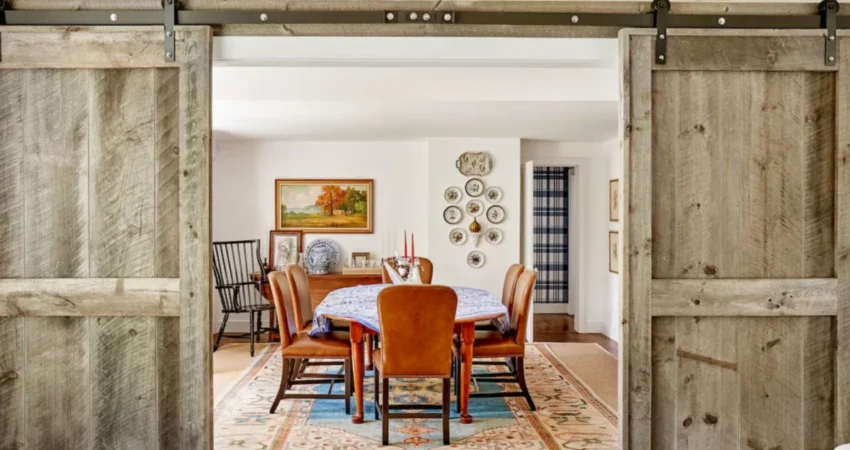
- The Grand Dining Table: A central, oversized dining table is a non-negotiable feature. The communal meal is the primary "event" of the holiday, and properties that can seat the entire group in a single, cohesive space are prioritized.
- Sleeping Capacity and Privacy: Unlike family gatherings where guests might tolerate sofa beds or shared rooms, Friendsgiving groups often require multiple bedrooms with equal levels of luxury to ensure comfort among peers.
- Post-Prandial Amenities: Features such as saunas, hot tubs, game rooms, and stone fireplaces are highly sought after for the "wind-down" period following the meal.
Regional Spotlights: The Hudson Valley and New Hampshire
The Hudson Valley remains the preeminent destination for New York City-based groups. The region’s inventory of restored 18th-century farmhouses provides a sense of "historical authenticity" that aligns with the Thanksgiving narrative. These properties often feature original exposed beams and wood-burning stoves, combined with modern renovations. The economic impact on the Hudson Valley is substantial; local artisanal butchers, farm stands, and bakeries report a significant uptick in "pre-order" business from STR guests during the holiday week.
In contrast, the New Hampshire market focuses on the "lakeside log cabin" experience. Properties surrounding Lake Winnipesaukee or nestled in the White Mountains cater to groups seeking a more rugged, nature-centric retreat. These homes often serve as a base for late-autumn hiking or early-season skiing, integrating outdoor activity with the traditional feast.
Market Data and Economic Implications
The shift toward large-group holiday rentals has broader implications for the hospitality industry and local economies. According to AirDNA, a leading provider of short-term rental data and analytics, properties with five or more bedrooms have seen a steady increase in "Revenue Per Available Room" (RevPAR) during the Thanksgiving window over the last five years.
While the economic influx benefits local property owners and service providers, it also presents challenges. Some rural communities have expressed concerns regarding "over-tourism" and the impact of large, potentially noisy groups on local infrastructure. In response, many high-end rentals have implemented strict "house rules" regarding noise and guest counts, often enforced by local property managers or "Superhosts" who maintain a high level of oversight to protect their investment and community standing.
Inferred Reactions and Industry Expert Analysis
Hospitality experts suggest that the "Airbnb Thanksgiving" is a symptom of a larger trend toward "experiential travel." Rather than viewing the holiday as a static obligation, younger generations view it as an opportunity for a curated getaway. "The house itself has become the destination," says a hospitality consultant specializing in the East Coast market. "It’s no longer just a place to sleep; it’s a stage for a social event that will be documented on social media and remembered as a collective experience."
Furthermore, the rise of the "Friendsgiving" rental reflects a change in the definition of "home." For many urban dwellers living in small apartments, the ability to rent a 4,000-square-foot estate for four days provides a sense of "temporary ownership" of a lifestyle that is otherwise unattainable. This psychological aspect—the "dream holiday house" factor—is a primary driver of the high price points and early booking cycles observed in the market.
Conclusion and Broader Impact
The transformation of Thanksgiving from a home-bound tradition to a destination-based social event highlights the adaptability of American cultural practices. By utilizing the short-term rental market, groups are able to circumvent the limitations of their own living spaces to create "quality time without the stress" of traditional hosting. As the industry continues to evolve, we can expect to see further specialization in rental properties, with hosts specifically marketing their homes as "Friendsgiving-ready" through the addition of high-capacity kitchen tools and communal social spaces.
Ultimately, whether it is a lakeside cabin in New Hampshire or a restored farmhouse in the Hudson Valley, the modern Thanksgiving is increasingly defined by the venue as much as the menu. This shift ensures that the holiday remains relevant in a mobile, social-centric society, providing a new framework for an ancient tradition of gratitude and community.

0 Comments