
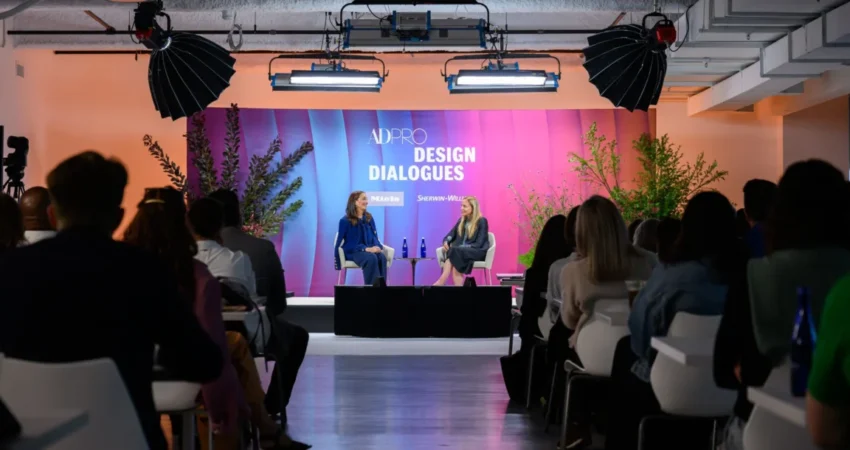
At the inaugural AD PRO Design Dialogues summit on September 16, San Francisco-based designer Heidi Caillier, a recognized talent within the AD100 and AD PRO Directory, offered an unvarnished look into her relatively short but impactful career. Caillier, who launched her interior design practice just over a decade ago, revealed her strategies for maintaining creative freshness and navigating the evolving landscape of the design industry. In a candid conversation with Alison Levasseur, Global Interiors and Gardens Director at Architectural Digest, Caillier discussed everything from the demands of social media to the serendipitous commission of Kendall Jenner’s mountain home.
The AD PRO Design Dialogues, a new initiative by Architectural Digest aimed at fostering dialogue and connection within the design community, brought together leading professionals for a day of insightful discussions. The summit served as a platform for industry leaders to share their experiences, challenges, and innovative approaches to design and business. Caillier’s participation underscored her emergence as a significant voice, known for her distinct aesthetic and her pragmatic approach to building a successful design firm.
A Philosophy of Constant Evolution
Caillier’s core philosophy for achieving staying power in the competitive design industry hinges on continuous evolution and a commitment to authenticity. "As you grow your business, you put out work that you want to get back," she stated, emphasizing the importance of aligning one’s portfolio with personal creative aspirations. This proactive approach, she believes, is crucial for attracting clients who resonate with her vision and for preventing creative stagnation. Caillier expressed a clear aversion to designing repetitive projects, noting, "I struggle with projects where clients ask for a ‘Heidi house.’ I don’t like to design the same thing twice. I get bored." This personal drive for novelty fuels her commitment to innovation and ensures each project is approached with fresh perspective.
The Strategic Advantage of a Remote Team

One of the most striking revelations from Caillier’s presentation was the entirely remote structure of her design team. This operational model, which predates the widespread adoption driven by the COVID-19 pandemic, emerged organically from her initial hiring challenges. "When I started to think about hiring, it was pre-COVID, and there was not a pool [of candidates in Seattle] where I was living," Caillier explained. Her first hire, who reached out via Instagram, remains a key member of her staff.
This initial success paved the way for a team of six professionals, dispersed across different locations. What began as a practical solution has evolved into a significant business asset. The remote model allows Caillier to tap into a broader talent pool, securing highly skilled individuals regardless of their geographic location. This is particularly beneficial given the firm’s project portfolio, which spans across the United States. The distributed nature of her team can also streamline logistics for site visits, as team members may already be closer to project locations. Industry analysts note that such flexible work arrangements are increasingly becoming a competitive advantage for businesses, enabling them to attract top talent and operate more efficiently in a globalized market. The ability to maintain a cohesive and productive team without a centralized office demonstrates a forward-thinking operational strategy.
Streamlining Client Presentations: The "Limited Options Program"
Caillier’s approach to client engagement is characterized by a highly structured and efficient process, designed to maintain momentum and clarity throughout the design journey. She employs what she terms a "limited options program" to guide clients and prevent decision paralysis. This methodology begins with an intensive discovery phase, where Caillier and her team conduct a thorough exploration of the homeowners’ inspirations, lifestyle needs, and style preferences. This deep dive typically spans three months and culminates in a comprehensive design presentation.
"We present the whole scope of work in one meeting," Caillier stated. This single, pivotal meeting encompasses the entirety of the project vision, including budget allocations, projected timelines, and essential construction requirements. Crucially, instead of overwhelming clients with myriad choices, Caillier presents a curated selection of options for only a few key elements. This focused approach ensures that the design process remains dynamic and avoids prolonged periods of indecision, a factor particularly important for Caillier, who prefers to focus on one project at a time. "I don’t want to marinate on sofas or fabrics for the next six months," she elaborated. Maintaining clear professional boundaries is also a cornerstone of her client management, exemplified by her firm rule: "I don’t text with my clients." This practice helps to preserve a professional distance and ensures that all communication is documented and managed effectively. This strategic limitation of choices is a recognized technique in design and sales, often leading to quicker decisions and increased client satisfaction by reducing cognitive load.
The Power of Social Media: A Full-Time Commitment

Caillier’s journey into interior design is unconventional, lacking a formal design education; she holds a master’s degree in public health. Her career transition began with blogging, which then evolved into a significant presence on Instagram. Today, with nearly half a million followers on the platform, she personally manages all her social media accounts. She candidly acknowledged the substantial time investment required, stating, "Instagram is a full-time job if you want to be successful these days, but it does still get me a lot of work."
Her Instagram presence played a pivotal role in securing high-profile commissions, including the project for Kendall Jenner’s mountain home, which she secured after Jenner discovered her work on the platform. Caillier shared her essential "rules for social media" for aspiring designers: a consistent posting schedule of four to five times per week, prompt responses to direct messages, and real-time engagement with comments. This consistent and authentic digital presence has proven to be a powerful tool for brand building and client acquisition. The efficacy of social media marketing for designers has been widely documented, with platforms like Instagram offering unparalleled visual storytelling capabilities and direct access to a global audience.
Strategic Collaborations and Brand Expansion
Caillier’s business acumen extends to strategic brand partnerships that allow her to scale her influence while retaining personal creative control. This year marked the launch of a substantial 63-piece collection of furnishings, lighting, and wallpapers in collaboration with Lulu & Georgia. Such initiatives enable her to reach a broader market and expand her brand’s footprint. "Be intentional about the goals you have, the scope of projects, and your collaborations," Caillier advised.
Looking ahead, she is preparing to introduce new collections, including textiles and wallpaper with Elizabeth Eakins, scheduled for debut at Deco Off in January 2027. These expansions into product lines are a testament to her understanding of how to leverage her design identity across various platforms. "If you can find a way to continue to reinvent yourself using things that you love, that’s the key," she concluded, underscoring the importance of embracing change and innovation as central to long-term success. The growth of designer-led product lines is a significant trend in the interior design industry, allowing designers to diversify revenue streams and extend their creative reach beyond individual client projects. This strategy not only increases brand visibility but also democratizes access to a designer’s aesthetic.
The AD PRO Design Dialogues summit provided a valuable window into the strategic thinking and creative philosophy of Heidi Caillier. Her insights offer a compelling case study for emerging and established designers alike, highlighting the importance of authenticity, adaptability, and a proactive approach to business development in shaping a sustainable and impactful career in the design world. The event itself signifies Architectural Digest’s ongoing commitment to supporting and elevating the professional design community.

0 Comments