
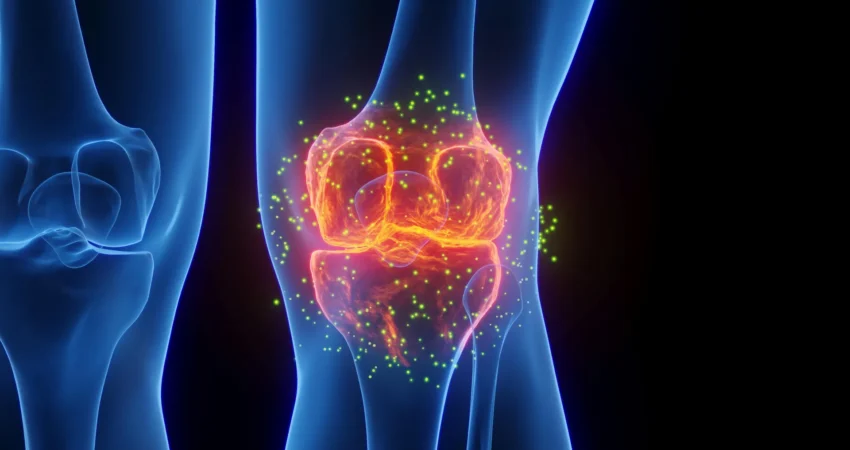
The procedure was "remarkably" successful. This is how 74-year-old Cynthia Schraf-Fletcher describes genicular artery embolization (GAE), a minimally invasive treatment designed to significantly reduce chronic knee pain. Nearly a year after undergoing this outpatient procedure on her right knee, she reports that the relief feels almost comparable to the total knee replacement she previously had on her left knee. "I couldn’t be more pleased," Schraf-Fletcher stated, having sought treatment from Leigh Casadaban, MD, MS, an assistant professor of radiology at the University of Colorado Anschutz School of Medicine. The improved mobility has allowed her to resume everyday activities that once caused substantial discomfort, including gardening and riding a stationary bicycle, with far less pain.
A Promising Middle Ground in Knee Pain Management
GAE emerges as a potentially transformative option for individuals grappling with chronic knee pain, particularly those suffering from osteoarthritis. This innovative procedure aims to alleviate discomfort by strategically reducing blood flow to inflamed areas within the knee joint. The underlying principle is to calm the inflammatory cascade, which in turn can lead to decreased swelling and pain. This targeted approach positions GAE as a valuable intervention for patients who have exhausted conservative treatments like medications, physical therapy, and even corticosteroid injections, but are not yet candidates or are hesitant to undergo major surgical interventions such as total knee replacement.
Dr. Casadaban, a vascular interventional radiologist, highlighted the significant gap GAE may fill in the treatment landscape. "For treating osteoarthritis in the knees, we often think of medications, physical therapy, maybe a steroid injection, and then on the far end of the spectrum is a total knee replacement. There really hasn’t been anything for patients in between," she explained. "GAE is a promising minimally invasive procedure that may fill that spot for people who have failed conservative treatments but are not yet ready to have a major surgery."
Osteoarthritis, a pervasive degenerative joint disease, affects millions worldwide. It is characterized by the gradual breakdown of cartilage and other crucial structures within a joint. In the knee, this deterioration can manifest as persistent pain, stiffness, inflammation, and significant limitations in mobility, impacting a person’s ability to walk, exercise, and engage in daily life. While the condition can affect various joints, the knee is a common site for debilitating osteoarthritis.
Current clinical observations suggest that individuals with mild to moderate knee osteoarthritis are typically the most suitable candidates for GAE. However, Dr. Casadaban noted that patients with more advanced disease can also benefit from the procedure, although the duration of pain relief might be shorter. "We find about 70% of patients have phenomenal results. They cut their pain scores in half, sometimes more. We have a few patients with no pain at all after the procedure," Dr. Casadaban reported. "Patients that have tried a lot of other treatments and haven’t had pain relief are happy to get back to their normal activities."
For Ms. Schraf-Fletcher, the prospect of avoiding another major knee operation was a significant motivator. Having experienced complications from her previous knee replacement surgery, she expressed relief and satisfaction with her decision to pursue GAE. "I was eager to try GAE and am glad I did," she remarked, underscoring the appeal of a less invasive alternative.
The Mechanics of Genicular Artery Embolization
The genicular artery embolization procedure is typically performed under conscious sedation, a state where patients are relaxed and comfortable but remain awake and responsive, avoiding the risks associated with general anesthesia. The intervention itself is relatively brief, usually lasting between one to two hours.
The process commences with an interventional radiology team making a small incision, typically in the crease of the leg. Through this entry point, a slender tube known as a catheter is carefully guided into the femoral artery. Advanced X-ray imaging, enhanced by the use of contrast dye, allows physicians to meticulously visualize the intricate network of blood vessels supplying the knee.
Once the catheter reaches the genicular arteries, which are crucial blood vessels branching towards the knee, the medical team carefully injects microscopic beads. These beads are deliberately released into specific abnormal blood vessels identified as contributing to the inflammation and pain within the knee joint. By occluding these vessels, the procedure effectively reduces blood flow to the affected areas, thereby mitigating inflammation.
A key advantage of GAE, differentiating it from traditional surgical interventions, is its minimally invasive nature. The absence of joint replacement or large surgical incisions significantly shortens the recovery period compared to knee replacement surgery. Following the procedure, patients are closely monitored for several hours before being discharged, usually on the same day. Post-procedure care typically involves advising patients to take it easy for a few days to allow for optimal healing.
A Procedure Gaining Global Traction and Regulatory Attention
The development of genicular artery embolization traces back to Japan just over a decade ago, and since its inception, it has garnered increasing attention and adoption across the globe. In the United States, the Food and Drug Administration (FDA) has recognized the potential of GAE by granting "breakthrough device status" to several devices utilized in this area since 2021. This designation is a significant regulatory pathway designed to expedite the development and review process for medical technologies that demonstrate the potential to offer substantial improvements in patient care and outcomes.
Early research investigating the efficacy of GAE has yielded encouraging results, bolstering confidence in its therapeutic potential. Dr. Casadaban cited significant findings from international studies. "The theory is that GAE reduces inflammation inside the knee joint, and symptom relief can last years," she stated. "Four-year data published in Japan shows that if you have one outpatient procedure, your pain relief can last for those four years. In the U.S., we now have two-year data, which shows that if you have a good response, pain relief can last two years. That really speaks to the theory that we’re hopefully modifying something in the joint."
The prospect of achieving pain relief lasting several years from a single, non-surgical outpatient treatment is a compelling aspect that fuels ongoing research into the precise mechanisms by which GAE influences the internal environment of the knee joint.
Illuminating the Inner Workings: Ongoing Research and Future Directions
At the University of Colorado Anschutz Medical Campus, Dr. Casadaban is at the forefront of clinical trials aimed at deepening our understanding of GAE. These studies are meticulously designed to explore the intricate biological changes that occur within the knee following the procedure.
One such study is investigating the alterations in the composition of synovial fluid within the knee joint of individuals undergoing GAE. By analyzing these changes, researchers aim to gain a more profound insight into how the procedure modulates inflammation and other critical biological processes occurring within the joint. This granular understanding is crucial for optimizing treatment protocols and predicting patient outcomes.
Furthermore, another ongoing study is evaluating a novel temporary treatment device, identified as Nexsphere-F. This innovative device is designed to be temporarily placed within the arteries supplying the knee. Its function is to transiently block small blood vessels that are believed to contribute to inflammation and pain. This research is exploring the potential of targeted, temporary vascular occlusion as a therapeutic strategy for knee osteoarthritis.
Osteoarthritis represents a significant global health challenge, affecting millions annually and capable of impacting numerous joints throughout the body. While GAE is currently primarily employed for knee osteoarthritis, the fundamental principles of vascular embolization are beginning to be explored for the treatment of other painful musculoskeletal conditions. Dr. Casadaban indicated that similar approaches are under investigation for ailments such as frozen shoulder, tennis elbow, and plantar fasciitis.
The continued success and expansion of GAE hinge on the outcomes of ongoing research. If future studies consistently demonstrate long-lasting benefits and a favorable safety profile, genicular artery embolization could transition from a promising emerging treatment to a cornerstone therapy for patients navigating the challenging space between conservative management and invasive joint replacement surgery, offering a pathway to improved quality of life and restored function.

0 Comments