
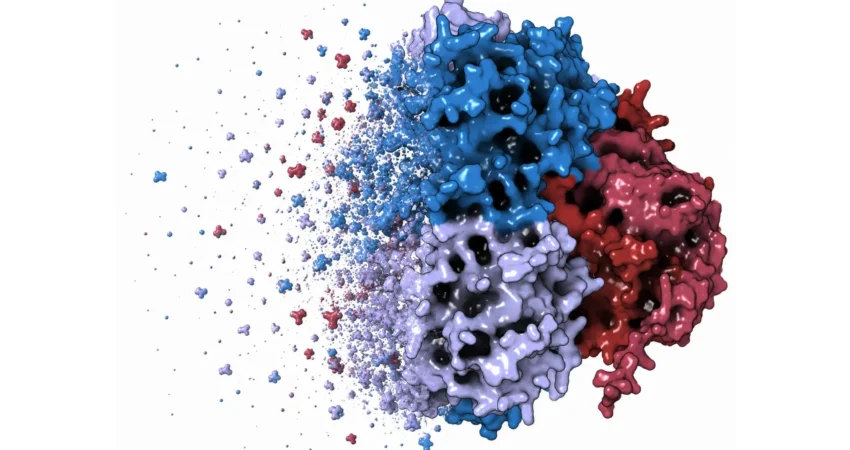
For over seventy years, the chemotherapy drug 6-thioguanine (6-TG) has been a cornerstone in the treatment of leukemia, a group of blood cancers characterized by the uncontrolled proliferation of abnormal white blood cells. While its clinical efficacy is well-established, the intricate molecular mechanisms dictating why some cancer cells succumb to 6-TG while others exhibit resistance have remained a complex puzzle for researchers. Now, a groundbreaking collaborative effort involving scientists from the CeMM Research Center for Molecular Medicine of the Austrian Academy of Sciences, the University of Oxford, the Weizmann Institute of Science, and the University of Dundee has illuminated a previously unrecognized player in this critical cellular response: a protein named NUDT5.
This significant discovery, detailed in a recent publication, stems from a confluence of prior research and cutting-edge investigative techniques. The findings build upon an earlier revelation from the Kubicek and Huber laboratories, published in Science in 2025. That preceding work unveiled a multifaceted role for NUDT5 within the cell, one that transcends its conventional enzymatic function. Instead of solely acting as a catalyst to drive biochemical reactions, NUDT5 was found to possess an additional capacity: serving as a molecular scaffold that plays a crucial role in organizing cellular metabolism. This dual functionality—both catalytic and structural—is now understood to be pivotal in determining a cell’s fate when exposed to 6-TG.
The Unexpected Role of NUDT5
The initial hypotheses regarding NUDT5’s involvement in 6-TG response centered on its enzymatic activity. "We initially expected that NUDT5 would influence 6-TG through its enzymatic activity," stated Tuan-Anh Nguyen, a co-first author of the study from CeMM. "Instead, we found that inhibiting the enzyme had little effect. What mattered was whether the protein itself was present." This observation was a critical turning point, redirecting the research focus from inhibiting enzymatic reactions to understanding the physical presence and structural contributions of the NUDT5 protein.
Traditional drug development often targets the catalytic sites of enzymes, aiming to block their biochemical functions. The researchers sought to explore whether this conventional approach would suffice in modulating 6-TG’s effects. To this end, they employed a sophisticated and emerging therapeutic strategy known as targeted protein degradation. Unlike conventional inhibitors that merely dampen an enzyme’s activity, targeted protein degradation actively prompts the cell to dismantle and eliminate the protein entirely.
Precision Degradation: A New Frontier in Drug Discovery
"We developed a cell-based platform to accelerate the discovery of NUDT5 degraders," explained Anne-Sophie Marques, another first author of the paper, whose contributions at Oxford were instrumental. "This platform helped guide the medicinal chemistry efforts that ultimately produced dNUDT5, our most active degrader." This innovative platform facilitated the identification and optimization of molecules specifically designed to trigger the degradation of NUDT5.
A dedicated medicinal chemistry program, spearheaded by the Huber laboratory at the University of Oxford, meticulously synthesized a library of highly selective NUDT5 degraders. Crucially, this program also generated precisely matched control compounds. These controls were engineered to bind to NUDT5, mimicking the initial interaction, but without initiating the degradation process. This allowed for a direct comparison between the effects of simply binding to the protein and actively removing it.
The experimental results were stark and definitive. When researchers compared the impact of these newly developed degraders with conventional NUDT5 inhibitors, a clear divergence emerged. Inhibiting NUDT5’s enzymatic activity had a negligible impact on cellular sensitivity to 6-TG. However, the complete removal of NUDT5 from the cells, achieved through targeted degradation, conferred significant protection against the cytotoxic effects of the drug. Genetic experiments, employing techniques like gene knockout, corroborated these findings, leading to the same unambiguous conclusion: the physical presence of NUDT5, rather than its enzymatic function, is the key determinant of cellular response to 6-TG.
Professor Kilian Huber, from the Centre for Medicines Discovery at the University of Oxford and co-corresponding author of the study, emphasized the power of this novel approach. "Chemical degraders give us a way to separate what a protein does as an enzyme from what it does as a physical presence in the cell," he stated. "In this case, that distinction was decisive: removing NUDT5 revealed biology that conventional inhibitors missed." This highlights the limitations of traditional enzyme inhibition and underscores the potential of protein degradation technologies to uncover previously hidden biological functions.
Beyond Catalysis: A Deeper Biological Role
The findings strongly suggest that NUDT5 influences sensitivity to thiopurine drugs like 6-TG through a mechanism entirely independent of its catalytic activity. This implies that an exclusive focus on the enzyme’s biochemical reactions is insufficient to fully comprehend its impact on 6-TG efficacy.
Ludwig Bauer, a first author of the study, described the moment of revelation: "As the results came in, it became immediately clear that the dNUDT5 was protecting cells from 6-thioguanine toxicity in a dose-dependent manner. That was an incredibly exciting moment." This observation provided direct evidence of NUDT5’s protective role when present in the cell, a role unmasked only by its complete removal.
Furthermore, the research uncovered an intriguing and potentially antagonistic relationship between NUDT5 and another protein, NUDT15. NUDT15 has already been established in scientific literature as a significant factor influencing patient responses to thiopurine drugs. The current study indicates that these two proteins exert opposing effects on thiopurine sensitivity.
Specifically, the loss of NUDT15 function has been shown to increase cellular sensitivity to 6-TG, making cells more vulnerable to the drug’s killing power. In contrast, reducing the levels of NUDT5, as demonstrated by the targeted degradation experiments, renders cells more resistant to 6-TG treatment. This suggests a complex regulatory network where NUDT5 and NUDT15 operate through distinct molecular pathways, each capable of pushing cellular responses to thiopurines in opposite directions.
Corresponding author Stefan Kubicek, a Principal Investigator at CeMM, summarized the broader significance of these findings: "Our results show that proteins can have important biological functions that are completely independent of their enzymatic activity," he remarked. "By removing NUDT5 rather than simply inhibiting it, we were able to uncover a hidden layer of biology that helps determine how cells respond to a clinically important drug." This paradigm shift in understanding protein function opens new avenues for investigating drug mechanisms.
Implications for Leukemia Treatment and Beyond
While this research does not immediately translate into a new therapeutic regimen, it provides a profound new understanding of the molecular underpinnings of 6-TG’s efficacy. By elucidating that NUDT5 mediates its influence on 6-TG through a non-catalytic function, the study offers crucial insights into the variability of patient responses to thiopurine treatments. This could pave the way for more personalized approaches to leukemia therapy, potentially identifying patients who might benefit from strategies that modulate NUDT5 levels.
Moreover, the study serves as a powerful demonstration of how targeted protein degradation can serve as an indispensable tool in biological discovery. It highlights the limitations of conventional enzyme inhibitors, which can mask crucial biological functions by failing to distinguish between a protein’s catalytic activity and its broader structural or organizational roles within the cell. This methodology has the potential to unlock hidden biological mechanisms across a wide range of cellular processes and disease states.
The research was generously supported by a consortium of esteemed funding bodies, including the European Research Council (ERC) under the European Union’s Horizon 2020 research and innovation program, the Austrian Science Fund (FWF), the Vienna Science and Technology Fund (WWTF), the Marie Skłodowska-Curie Actions Postdoctoral Fellowships program, the Innovative Medicines Initiative 2 Joint Undertaking (IMI2 JU), the Wellcome Trust, Merck Sharp & Dohme Corp., and Janssen Pharmaceutica NV. This collective support underscores the international recognition of the project’s significance and its potential to advance medical science. The collaborative nature of this research, spanning multiple leading institutions, exemplifies the power of interdisciplinary science in tackling complex biological questions and accelerating the pace of discovery.

0 Comments