
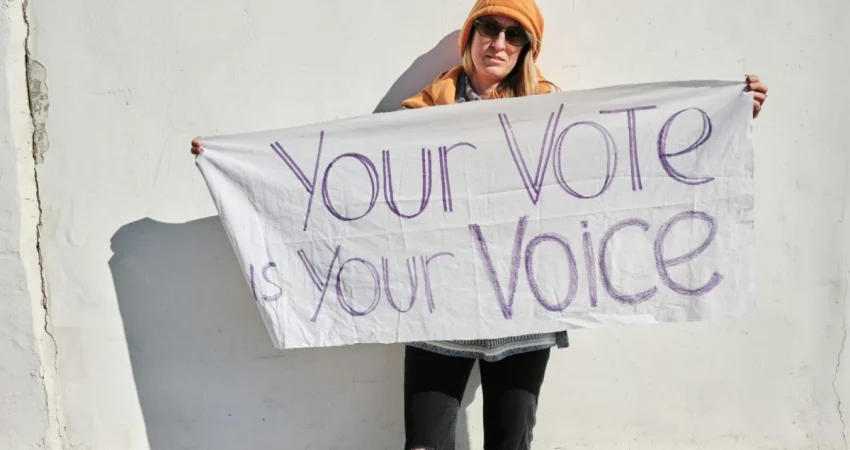
A groundbreaking nonpartisan initiative, "Vote Like a Mother," has launched to empower the 85 million mothers across the United States by directly linking state-specific maternal health data with the platforms and voting records of candidates on the 2026 ballot. This free, user-friendly tool, developed through a collaboration between Chamber of Mothers and Healthy Moms, Healthy Babies America (HMHBA), aims to transform abstract maternal health statistics into actionable information, enabling voters to make informed decisions that directly impact the well-being of mothers and families nationwide. The United States currently faces an alarming maternal health crisis, standing out among developed nations for its high rates of maternal mortality and morbidity. This new guide seeks to illuminate the critical role state-level policies and elected officials play in addressing this urgent public health challenge.

The Unfolding Maternal Health Crisis in America
The state of maternal health in the U.S. presents a stark paradox: despite being one of the wealthiest nations, it remains the most dangerous place in the developed world to give birth. This grim reality is underscored by statistics revealing a maternal mortality rate significantly higher than its peer countries, a trend that has tragically worsened in recent years. For example, recent data from the Centers for Disease Control and Prevention (CDC) indicate a maternal mortality rate in the U.S. that is often three to four times higher than in other high-income nations. This crisis extends beyond fatalities to encompass widespread maternal morbidity, including severe complications, chronic health issues, and mental health challenges that affect countless new mothers.

A significant portion of these adverse outcomes occurs not during childbirth itself, but in the extended postpartum period. Studies highlight that approximately one-third of all pregnancy-related deaths happen up to a year after birth, long after the traditional six-week postpartum check-up has passed and regular medical oversight typically diminishes. This critical "fourth trimester" is often characterized by a severe lack of comprehensive care, with research cited by the "Vote Like a Mother" campaign revealing that nearly 40% of new mothers never even attend a postpartum visit. The repercussions of this care gap are profound and far-reaching, manifesting as undiagnosed postpartum depression and anxiety, untreated pelvic floor dysfunction, unresolved lactation difficulties, and unmonitored blood pressure spikes—conditions that, while manageable with proper attention, can become life-threatening when overlooked. The CDC estimates that a staggering 87% of pregnancy-related deaths are preventable, underscoring that these tragedies are not inevitable but rather systemic failures.

Disproportionate Impact and Systemic Inequities
The maternal health crisis in America is not evenly distributed. Deep-seated systemic inequities, including racial bias, socio-economic disparities, and geographic limitations, lead to vastly different outcomes for various populations. Black women, for instance, face an exceptionally high risk, being more than three times as likely to die from pregnancy-related causes compared to white women, according to CDC data. American Indian and Alaska Native women also experience disproportionately higher rates, roughly twice that of white women. These disparities are not merely statistical; they reflect a complex interplay of factors such as inadequate access to quality healthcare, implicit bias within medical systems, socio-economic stressors, and environmental determinants of health.

Rural communities are also profoundly affected, with mothers in these areas confronting some of the steepest odds. The ongoing closure of labor and delivery units in rural hospitals has forced expectant mothers to travel greater distances for care, often delaying critical interventions and exacerbating existing health challenges. These closures are frequently driven by financial pressures and staffing shortages, further eroding the healthcare infrastructure in underserved regions. The "Vote Like a Mother" initiative seeks to highlight these urgent issues, emphasizing that improved maternal health outcomes require targeted policy interventions that address these systemic and demographic vulnerabilities.

"Vote Like a Mother": Bridging Data and Democracy
The "Vote Like a Mother" tool, accessible at votelikeamother2026.com, represents a critical step in democratizing access to vital maternal health information. Designed to be intuitive and empowering, the free platform allows users to navigate a comprehensive map of maternal health outcomes across all 50 states and Washington, D.C. Upon selecting their state, users are immediately presented with its specific maternal mortality rate, benchmarked against the average rates found in other developed nations. This direct comparison provides immediate context for the severity of the local situation.

Beyond raw statistics, the guide then presents profiles of the gubernatorial candidates on the user’s 2026 ballot. These profiles meticulously detail each candidate’s past voting records on relevant legislation, public statements, and proposed policy platforms concerning maternal health. This includes their stances on issues such as extending postpartum Medicaid coverage, supporting rural healthcare infrastructure, and funding community-based maternal care programs. By consolidating this information, the tool eliminates the need for voters to conduct extensive research, offering a clear and actionable overview of how political leaders and aspirants directly influence maternal well-being in their respective states. The aim is to empower the 85 million mothers, along with their families and allies, to translate their concerns into meaningful electoral choices.

State-Level Policies: The Engine of Change
The focus on gubernatorial races in 2026 is deliberate, as state governors, in conjunction with their legislative bodies, wield significant power over the policies that most directly impact maternal health. In 2026, 36 states will hold gubernatorial elections, presenting a pivotal opportunity for voters to shape the future of maternal care. State governments control a myriad of policy levers, from healthcare funding mechanisms to regulatory frameworks for medical facilities and professional licensing.

One of the most concrete and impactful policy changes on the table is the extension of postpartum Medicaid coverage. Historically, Medicaid coverage for new mothers often terminates just 60 days after birth, leaving many vulnerable during a critical period of recovery and adjustment. States like Arkansas, as highlighted in the campaign, currently adhere to this restrictive 60-day limit. Advocates are pushing for an extension of this coverage to a full year, recognizing that the majority of pregnancy-related complications and deaths occur well beyond the initial two-month window. Such an extension would provide crucial access to mental health services, chronic disease management, and ongoing physical recovery support.

Beyond Medicaid, state policies dictate the viability of essential healthcare services, particularly in rural areas. Governors and legislatures influence whether a rural hospital can sustain its labor and delivery unit, a service vital for local communities but often under threat due to financial strain. State funding, regulatory support, and innovative healthcare models can preserve these critical facilities. Furthermore, states play a role in funding and implementing community-based programs, such as home nurse visits for new parents, which can significantly improve postpartum outcomes by providing direct support, education, and early detection of complications. The "Vote Like a Mother" guide precisely maps these policy considerations against the candidates who will ultimately decide them, making the connection between electoral choices and tangible health outcomes undeniable.

The Driving Forces: Chamber of Mothers and Healthy Moms, Healthy Babies America
The "Vote Like a Mother" initiative is a collaborative effort by two prominent nonpartisan organizations dedicated to advancing maternal and family well-being.

Chamber of Mothers is a 501(c)(3) nonprofit organization with a robust network of over 50 local chapters across the nation. Its mission is to mobilize mothers and advocates around a comprehensive policy agenda that includes advocating for paid family leave, ensuring access to affordable and high-quality childcare, and championing robust investments in maternal healthcare. The organization operates on the principle that the collective voice of mothers can drive significant policy change, transforming systemic failures into supportive structures for families.

Healthy Moms, Healthy Babies America (HMHBA), co-founded in 2026 by Olivia Walton and Cara Osborne, is a national nonprofit with an ambitious, stated goal: to halve the U.S. maternal death rate within five years of its inception. This organization focuses on evidence-based strategies and advocacy to achieve measurable improvements in maternal health outcomes nationwide. Its co-founders bring a wealth of experience and dedication to the cause, aiming to make a tangible difference in the lives of mothers and babies.

Both organizations are united by a shared philosophy that positions maternal health as one of the few issues capable of garnering genuine bipartisan support. They recognize that the fundamental well-being of mothers transcends political divides and represents a common ground for societal progress. The "Vote Like a Mother" voter guide is their strategic bet on translating this widespread public concern and bipartisan consensus into concrete electoral action and sustained policy change. By providing voters with transparent, accessible information, they aim to ensure that maternal health is not an ancillary issue but a central determinant in political campaigns and legislative agendas.

Leadership Perspectives and the Call to Action
The leaders behind "Vote Like a Mother" articulate a clear vision for change, highlighting both the urgency of the crisis and the power of informed civic engagement.

Erin Erenberg, CEO of Chamber of Mothers, minced no words in attributing the failure to adequately protect mothers to shortcomings across the political spectrum. "The solution to America’s maternal health crisis isn’t hard to conjure, yet too many elected officials, regardless of party, continue to overlook what moms ask for and need: paid leave, affordable, accessible childcare, and robust investments in maternal healthcare," she stated. Erenberg emphasizes that the voter guide is fundamentally designed "to give moms the tools and understanding to vote like a mother," which she defines as "voting your values and for candidates and ballot measures that support a safe, healthy, and whole experience for moms and kids alike." This perspective frames voting not just as a civic duty, but as an act of profound maternal advocacy.

Robin Reck, Executive Director of HMHBA, echoed this sentiment, focusing on the geographical inequities that plague maternal care. "It’s unacceptable that where you live still determines whether you survive having a baby in this country," Reck asserted, adding that it is "unconscionable that most moms have no idea how their own state stacks up." Her comments underscore the critical need for transparency and accessibility of information, which the "Vote Like a Mother" tool directly addresses. Reck powerfully concluded, "This year, no mom should have to choose between her family and her vote. Her vote is how she protects her family." This statement encapsulates the core message of the campaign: that the ballot box is a powerful instrument for safeguarding the health and future of families.

Broader Impact and Future Implications
The launch of "Vote Like a Mother" marks a significant evolution in maternal health advocacy, signaling a shift towards greater accountability for elected officials. By making state-specific maternal health data and candidate stances readily available, the initiative aims to elevate maternal health as a top-tier electoral issue, compelling candidates to address it with serious policy proposals rather than mere platitudes. The potential for 85 million mothers to cast informed votes with maternal well-being as a primary consideration could create an unprecedented force for change in American politics.

The implications extend beyond the 2026 elections. This tool could establish a new standard for civic engagement, fostering a more educated and mobilized electorate on health policy matters. It could also encourage more states to adopt best practices, such as extended postpartum Medicaid coverage, by demonstrating a clear voter mandate for such reforms. While challenges remain, including the need for sustained voter engagement and overcoming political polarization, the "Vote Like a Mother" campaign offers a clear path forward. It posits that collective, informed action at the ballot box is not just an ideal, but a pragmatic strategy for ensuring that every mother in America has access to the safe, healthy, and supportive care she deserves. The success of this initiative could ultimately redefine how the nation measures its health—not just by its economic indicators, but by how it truly treats its mothers.

0 Comments