
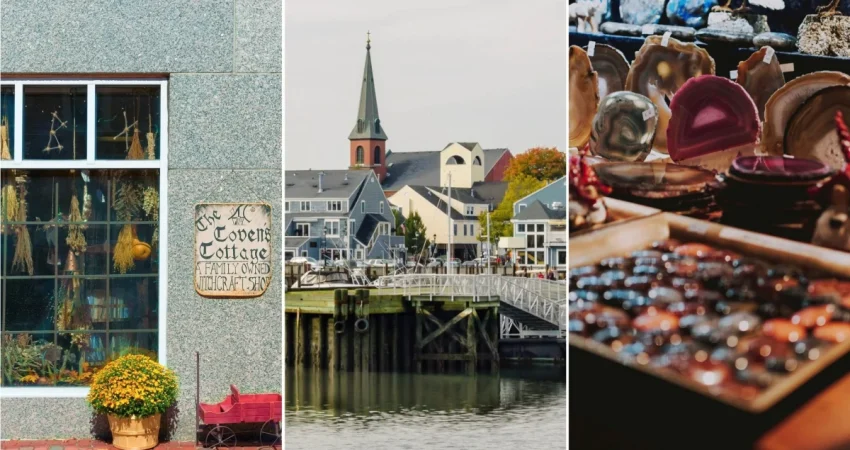
Salem, Massachusetts, a city of approximately eight square miles and a permanent population of 45,000, has solidified its status as a global epicenter for seasonal tourism, drawing an estimated 4.6 million visitors in 2025. Of that total, roughly 1.4 million travelers arrived during the month of October alone, a period locally referred to as the "high season." As the city approaches its 400th anniversary, municipal leaders and tourism officials are implementing strategic planning measures to manage the unprecedented influx of visitors while preserving the historical integrity of the community. Known internationally for the 1692 witch trials, Salem has evolved from a quiet coastal town into a year-round destination that balances somber historical education with large-scale festive entertainment.

Historical Context and the Evolution of the "Witch City"
The modern identity of Salem is inextricably linked to the events of the late 17th century. In 1692, a period of mass hysteria led to the accusation of hundreds of individuals for witchcraft within the Puritan colony of Massachusetts. These proceedings resulted in the execution of 20 people and the deaths of several others in custody. For centuries, this legacy was a source of local solemnity, but in the late 20th century, Salem began to embrace its history as a tool for economic revitalization and education.
Today, the city operates as a living museum. The upcoming 400th anniversary, branded as "Salem 400+," marks four centuries since the city’s founding in 1626. This milestone is expected to drive even higher attendance than previous record-breaking years. The festivities are designed to honor the city’s complex past—including its maritime success and literary contributions—while catering to the modern demand for "spooky" thrills and Halloween-themed events.

Tourism Logistics and Municipal Management
The scale of tourism in Salem presents significant logistical challenges for a city of its size. Data from 2025 indicates that the concentration of visitors in the downtown core, particularly along the Essex Street pedestrian mall, creates density levels comparable to major theme parks during peak seasons.
Ashley Judge, the executive director of Destination Salem, emphasizes that sustainable tourism requires proactive visitor behavior. "The biggest thing I always say is that a little planning goes a long way," Judge stated. To mitigate the impact on local infrastructure, city officials strongly recommend that visitors utilize the MBTA commuter rail or the Salem Ferry from Boston rather than attempting to navigate the city by car. During October weekends, traffic congestion often extends the 45-minute drive from Boston to over 90 minutes, and parking within the city limits becomes nearly non-existent.

To address these issues, the city has expanded its "Haunted Happenings" programming, a month-long festival that includes ghost tours, live performances, and costume parades. By distributing events throughout the week and across different neighborhoods, officials hope to reduce the physical strain on the historic district.
The Local Economy: Dining and Hospitality
The surge in tourism provides a vital economic engine for Salem’s hospitality sector. The city’s culinary landscape has adapted to provide both high-end historic dining and themed experiences that cater to the seasonal crowd.

Themed and Artisanal Dining
Establishments like Blackcraft Coffee and the Witchside Tavern leverage the city’s reputation to offer immersive environments. In the craft beverage sector, Far From the Tree utilizes locally sourced apples to produce ciders that reflect the region’s agricultural heritage. For more specialized fare, Hallowed Grounds has gained attention for its complex cocktail menu, featuring drinks like the "Boneyard"—a blend of rum, lemon, and chipotle-cacao bitters—and the "Midsommar," which utilizes aquavit and hibiscus.
Historic and Coastal Cuisine
For many, the draw of Salem lies in its traditional New England seafood. Turner’s Seafood, located in the historic Lyceum Hall, offers a refined dining experience in a 19th-century building that once served as a community hub for intellectual lectures. The menu focuses on regional staples such as lobster bisque and fresh oysters. Similarly, The Lobster Shanty provides a more casual, "seafood shack" atmosphere, serving as a local anchor in the downtown area. Gulu-Gulu Cafe, located on Essex Street, offers a European-style bohemian environment, hosting a diverse crowd of artists and tourists with a menu of eclectic light bites and craft beers.

Accommodation Trends and Historic Lodging
The demand for lodging in Salem during October often results in hotels reaching 100% capacity months in advance. The Hawthorne Hotel, established in 1925, remains one of the city’s most prominent landmarks. The Georgian Revival property is frequently cited in paranormal literature, with guests reporting encounters with apparitions, purportedly linked to the fact that the hotel stands on land once owned by Bridget Bishop, the first person executed during the 1692 trials.
Other notable accommodations include:

- The Merchant: A boutique hotel where guests can stay in a room once occupied by George Washington.
- The Daniels House Inn: A 17th-century colonial home that operates as a bed and breakfast, offering one of the most authentic historic stays in the city.
- The Salem Waterfront Hotel & Suites: A modern luxury option located along the harbor, providing a quieter alternative to the bustling downtown core.
Due to the limited number of rooms within the city, many travelers are increasingly looking to neighboring towns such as Peabody or utilizing vacation rental platforms like Airbnb.
Cultural and Educational Landmarks
While the "Haunted Happenings" festival provides entertainment, Salem’s permanent museums offer the necessary historical depth to ground the visitor experience.

The Salem Witch Museum and The Witch House
The Salem Witch Museum remains a primary destination for those seeking to understand the 1692 trials. Using life-sized figures and narration, the museum provides a chronological account of the hysteria. Complementing this is The Witch House, the former home of Judge Jonathan Corwin. As the only structure still standing in Salem with direct ties to the witch trials, it serves as a critical site for understanding 17th-century architecture and the legal mindset of the period.
Literary and Maritime Heritage
The House of the Seven Gables, made famous by Nathaniel Hawthorne’s 1851 novel, allows visitors to explore the mansion and its secret staircases while learning about the Hawthorne family’s role in Salem’s history. For a broader cultural perspective, the Peabody Essex Museum (PEM) holds one of the most significant collections of maritime art and Asian export art in the United States, reflecting Salem’s history as a global trading port.

Memorials and Reflection
The Salem Witch Trials Memorial, located adjacent to the Old Burying Point Cemetery, features 20 stone benches engraved with the names and execution dates of the victims. This site serves as a somber reminder of the human cost of the trials and is a focal point for those wishing to pay their respects away from the more commercialized aspects of the season.
Broader Impact and Implications for the Future
The success of Salem as a tourism destination has broader implications for urban planning and heritage preservation. The "Salem 400+" initiative is not merely a celebration but a strategic framework for the city’s next century. Proceeds from specific events, such as the sale of special-edition witch hats, are often directed toward local charities like HAWC (Healing Abuse, Working for Change), a domestic violence organization, demonstrating a commitment to social responsibility.

However, the "Disneyfication" of the city remains a point of debate among residents. The balance between maintaining a functional city for 45,000 people and hosting 4.6 million visitors requires constant negotiation. As Salem enters its fifth century, the city serves as a case study for how small, historic municipalities can leverage their unique—and often painful—past to build a robust, modern economy while ensuring that the lessons of history are not lost to the spectacle of the season.
The 400th anniversary will likely set a new benchmark for how Salem manages its global brand. With increased focus on midweek visits, public transportation, and off-the-beaten-path exploration, the city aims to remain a sustainable destination for the millions who seek to walk its haunted, historic streets.

0 Comments