
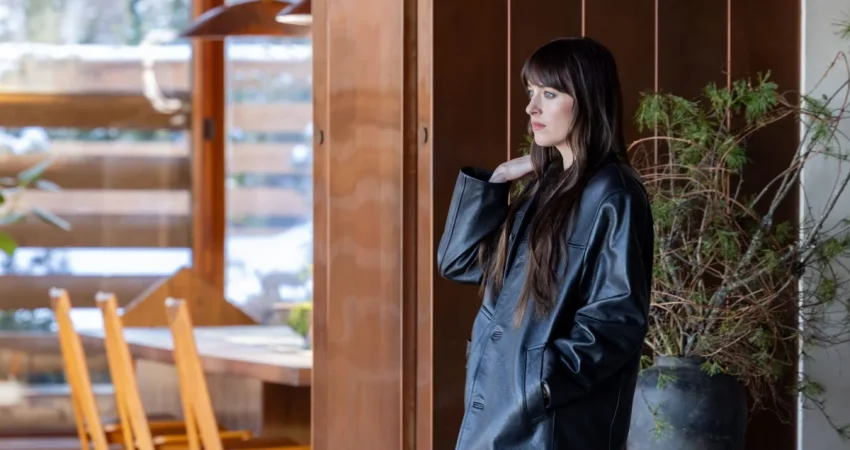
The cinematic adaptation of Colleen Hoover’s psychological thriller, Verity, has captivated audiences not only with its propulsive plot and intense character dynamics but also with its strikingly atmospheric setting. The secluded estate where much of the narrative unfolds has become a character in its own right, a meticulously chosen backdrop designed to amplify the story’s inherent suspense and dark allure. The challenge for the production team was to translate Hoover’s vivid world-building from the page to the screen, a task that fell to Production Designer Amy Williams and Location Manager Elizabeth Krekel. Their quest for the perfect location led them to Beckoning Path, a distinctive midcentury modern property in Armonk, New York, which served as the Crawford family’s ominous residence.

The Genesis of a Cinematic Setting
Colleen Hoover’s literary success, particularly her ability to craft compelling narratives with fervent fan followings, has made her books prime candidates for Hollywood adaptations. Verity, a 2018 thriller that delves into the unsettling discoveries made by a struggling writer tasked with completing the manuscript of a comatose author, presented a unique set of challenges. The story’s claustrophobic atmosphere and psychological tension are deeply intertwined with its primary setting. This meant that the selection of the Crawford home was not merely a matter of aesthetics but a critical element in establishing the film’s tone and immersing viewers in its unsettling narrative.
The production team, aware of the high expectations from Hoover’s dedicated fanbase, embarked on an extensive search for a property that could embody the story’s complex blend of mystery, sensuality, and underlying menace. "We were very open to whatever felt like it could best encapsulate these characters in this world and this environment," Amy Williams stated, emphasizing their desire for a location that felt fresh and unseen on screen. The goal was to find a house that was not only visually striking but also possessed an inherent quality that could harbor secrets and project an aura of unease.

Beckoning Path: A Midcentury Masterpiece with a Sinister Edge
The discovery of Beckoning Path proved to be a pivotal moment in the production. Designed by Jens Quistgaard, the chief designer for the renowned Scandinavian homeware brand Dansk, the property was originally built for Dansk founders Martha and Ted Nierenberg. Its architectural style, a quintessential example of midcentury modernism, immediately resonated with Williams. "I don’t think it was anything that anyone pictured, but when I saw the exterior, it was like a fantasy dream come true for a midcentury-modern girl like myself," she confessed to Architectural Digest.
The house’s distinctive sawtooth roof, with its sharp, angular peaks, played a significant role in its selection. This architectural feature not only lent the home a unique visual identity but also served as a subtle, yet potent, symbolic element within the film. The "V" shape of the roof was interpreted as a visual representation of the titular character, Verity Crawford, adding another layer of thematic resonance.

Beyond its striking exterior, the interior of Beckoning Path offered a canvas that could be both alluring and unnerving. The production team aimed to outfit the space in a manner that felt consistent with the wealthy Crawford family’s lifestyle while simultaneously creating an atmosphere that was "inhospitable to kids, and that it’s not a warm, fuzzy family home," as Williams described. This deliberate design choice was intended to make the audience feel a sense of discomfort, mirroring Lowen Ashleigh’s own growing unease within the household.
The Architectural Palette of Suspense
The interior design of Beckoning Path was a crucial element in building the film’s suspenseful narrative. Production designer Amy Williams and her team meticulously curated furnishings and decorative elements to enhance the unsettling ambiance. Sourcing pieces from platforms like 1stDibs, they selected items that reflected the wealth of the Crawford family but also possessed a subtle, almost menacing quality.

"You want people to feel uncomfortable [while watching]," Williams explained, underscoring the intention behind the design choices. This was achieved through an emphasis on sharp edges, angular forms, and furniture that often felt as imposing as the characters inhabiting the space. The home’s unique architectural features, such as its walls of windows and the dramatic gabled Vs, allowed for a dynamic interplay of light and shadow, transforming the house from an architectural wonder in daylight to a more sinister presence after dark.
A particularly striking element of the set design was the incorporation of rough stone into the bathroom, a feature that contributed to a daunting and decidedly uninviting atmosphere. Even seemingly innocuous details, like a pointy book display in a reading nook, subtly referenced the home’s distinctive sawtooth roof, reinforcing the architectural motif throughout the film.

Adapting the Space for Cinematic Storytelling
While Beckoning Path provided an exceptional foundation, certain areas of the property required adaptation for the demands of filmmaking. Some spaces, such as the hallways, sprawling bedrooms, and Verity’s home office, proved to be either too cramped or lacked the optimal lighting conditions for cinematic purposes. To address these limitations, Williams and her team recreated key areas on a soundstage at Broadway Stage in Queens, New York.
The process of constructing these sets involved a deep understanding of Jens Quistgaard’s original design philosophy. Williams explained that the aim was to "pushing what he’d done forward in a more dramatic, cinematic way: more verticals, more pitches in the ceiling, and sharp angles." This approach ensured that the fabricated sets seamlessly blended with the existing architecture of Beckoning Path, maintaining a cohesive visual narrative.

The Power of Collaboration: Hathaway’s Influence
The casting of Anne Hathaway as the enigmatic Verity Crawford proved to be an invaluable asset to the production’s design process. Williams, who had collaborated with Hathaway on previous film projects, found her to be an exceptional partner. "She’s a really great, open collaborator," Williams remarked, highlighting Hathaway’s keen eye for detail and sophisticated taste.
Hathaway’s involvement extended beyond her on-screen performance, offering Williams a valuable sounding board for design decisions. The process of selecting artwork and furniture became a collaborative effort, with Hathaway offering insights that helped Williams navigate choices, such as the dichotomy between a "crazy, chrome desk, or the wooden one." This level of collaboration is considered a luxury in the film industry and undoubtedly contributed to the nuanced and compelling portrayal of Verity’s world.

Broader Implications and Fan Expectations
The successful translation of Colleen Hoover’s literary world into a visually compelling film is a testament to the power of thoughtful production design and location scouting. The choice of Beckoning Path for Verity underscores a growing trend in filmmaking where the environment plays an integral role in shaping the narrative and enhancing the emotional impact of a story.
For Colleen Hoover’s devoted fanbase, the meticulous attention to detail in bringing the Crawford estate to life is likely to be met with appreciation. The film’s ability to capture the essence of the novel’s unsettling atmosphere, largely through its architectural choices, suggests that the adaptation has successfully met the high bar set by its source material. This success not only bodes well for future adaptations of Hoover’s work but also highlights the critical role that architectural storytelling can play in modern cinema, demonstrating how a house, with its unique design and history, can become as compelling and memorable as its human inhabitants. The film’s critical and commercial reception will ultimately determine the extent to which this architectural gamble pays off, but the initial efforts to imbue the setting with psychological weight have undoubtedly laid a strong foundation.

0 Comments