
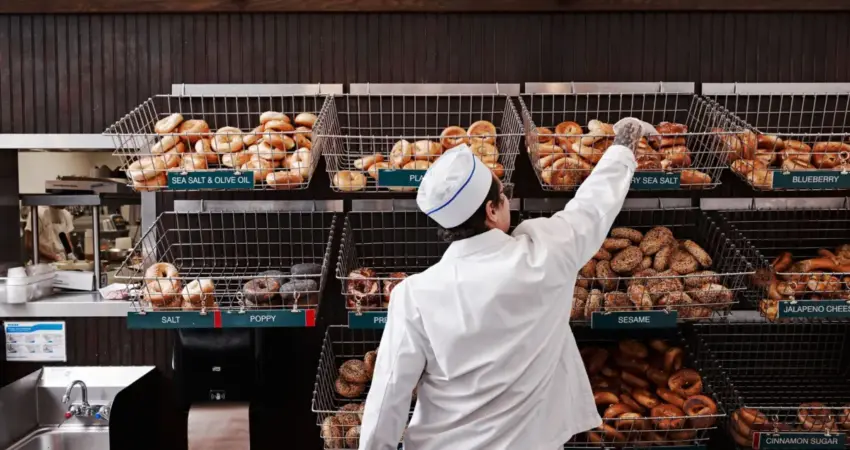
Atlanta, a city long celebrated for its devotion to the humble, fluffy biscuit, is experiencing a significant culinary shift. In recent years, the southern capital has increasingly embraced a distinct import from the North: the New York City-style bagel. This burgeoning trend is not merely a fleeting fad but a tangible reflection of a broader demographic and cultural migration, as thousands of New Yorkers seek new opportunities and a different pace of life in Georgia.
The Rise of the NYC Bagel in the Peach State
At the forefront of this culinary assimilation is Emerald City Bagels, a establishment that, while not bearing a specific borough in its name, undeniably channels the spirit of New York’s iconic delis. Founded in 2018 in East Atlanta Village, the shop is helmed by mother-daughter duo Deanna and Jackie Halcrow, both proud natives of Long Island. Their original location and a newer outpost along Atlanta’s vibrant Beltline are meticulously designed to evoke a retro New York deli ambiance. The interiors are adorned with classic green and white subway tiles, a visual cue that transports patrons straight to the bustling streets of Manhattan. The staff, clad in paper soda jerk hats and crisp white aprons, further enhance this nostalgic experience. The ritual of customers receiving their orders – everything bagels generously schmeared with green olive cream cheese, carefully placed into paper bags for takeaway – underscores the authentic New York deli experience being cultivated in Atlanta.
Emerald City Bagels is not an isolated phenomenon. In the suburb of Stone Mountain, NY Deli & Juice Bar has carved out a niche for itself by serving classic New York fare, most notably the chopped cheese sandwich. This establishment occupies a space that was once a Waffle House, a poignant symbol of the changing culinary landscape. The familiar counter and high chairs, once dedicated to serving Southern comfort food like pecan waffles and smothered hash browns, have been replaced by a long, traditional bodega-style service counter, a staple of New York City’s grab-and-go food culture.
While New York-inspired culinary imports, ranging from pizza and Chinese cuisine to the aforementioned chopped cheese, have been steadily increasing in Atlanta, the bagel has emerged as the most prominent and impactful addition to the city’s food scene. This phenomenon is deeply intertwined with the significant North-to-South migration that has been reshaping American demographics over the past decade, with a notable acceleration in recent years.

New Yorkers’ Southern Sojourn: Driven by Opportunity and Affordability
The influx of New Yorkers into Atlanta is not merely anecdotal; it is substantiated by U.S. Census data. Between 2021 and 2024, an estimated 50,000 individuals relocated from New York to Georgia, a rate comparable to other significant regional moves. Data from the Atlanta Regional Commission further highlights this trend, indicating that a substantial portion of young adults moving to Atlanta from out of state are originating from New York City.
Several compelling factors contribute to this migration. Milder winters and expanding job opportunities in various sectors within the Atlanta metropolitan area are significant draws. However, across the board, New Yorkers consistently cite a more favorable cost of living as the primary catalyst for their relocation to the South.
Kamal Dorsainville, originally from Brooklyn, articulates this sentiment with stark clarity: "A house that’s $300,000, $400,000 in Georgia would be over a million dollars in New York." This stark economic reality has a powerful ripple effect. Dorsainville recounts how, when he and his wife, Susan, shared information about Georgia’s housing prices with their friends back home, the reaction was immediate and enthusiastic. "We’re coming too," was the common refrain. This initial wave of relocation has, in turn, encouraged further migration, with Susan noting, "And then they brought two more families down with them." This cascading effect underscores the potent economic drivers behind the New York to Atlanta exodus.
The Quest for Authentic Flavors: Recreating a Taste of Home
For many New Yorkers transplanted to Atlanta, the arrival of authentic bagel shops offers more than just a culinary convenience; it provides a crucial emotional connection to their roots. Julie Dragich, a co-owner of The Bronx Bagel Buggy, emphasizes this point: "This is comfort food, a taste of home. I think many of our New York customers feel the same way."
The demand for these familiar flavors often predates the establishment of dedicated shops. When New Yorkers would return home for visits, friends and family would invariably request they bring back a supply of their beloved bagels, often filling entire suitcases. This persistent demand was a key impetus for entrepreneurs like Dragich to establish businesses that could meet this need locally.

This desire for authenticity extends to the very process of bagel creation. Steven Novotny, Dragich’s partner in The Bronx Bagel Buggy, brings a wealth of experience from his family’s restaurant background, which included operating delicatessens in the Bronx. However, mastering the art of New York bagel-making proved to be a significant undertaking. He and Dragich spent months dedicating themselves to learning the craft from the ground up. Their educational journey began with a class from King Arthur Baking, which provided foundational knowledge on dough measurement, baking times, and flavor development. The efficacy of their efforts was soon evident; their bagels quickly became a sell-out success within an hour at the Brookhaven Farmers Market, a testament to the quality of their product.
The pursuit of authenticity also involved extensive research and consultation with established New York bagel purveyors and equipment manufacturers. Novotny and Dragich undertook a four-day trip back to New York, meticulously visiting iconic shops like Utopia Bagel in Queens. These visits were not merely for research; they were a form of immersion, a deep dive into the operational intricacies and cultural nuances required to replicate the genuine New York bagel experience in the heart of the South. The stakes were notably high, as Novotny humorously observed, "New Yorkers will walk in, announce they’re from New York, and then express skepticism about Atlanta having the ‘real deal’." This skepticism fueled their determination to prove that authenticity could indeed flourish beyond its native soil.
The Science and Soul of a New York Bagel
A key aspect of creating an authentic New York bagel, according to purveyors, lies not just in what is included, but also in what is omitted. Dragich asserts that "New York water isn’t necessary for an authentic flavor." Instead, the focus is on the deliberate exclusion of ingredients that can compromise the traditional texture and taste. Specifically, they avoid adding sugar or dough additives that are often used to extend shelf life. The true secret, they contend, lies in the meticulous process of hand-rolling the dough and allowing it ample time to ferment. This slow fermentation process is crucial for developing the characteristic chewy interior and crisp, crunchy exterior that defines a New York bagel.
The payoff for this dedication is evident in the reaction of their customers. After biting through the satisfyingly crisp outer layer into the soft, yielding dough within, New Yorkers often express a sense of relief and satisfaction, frequently returning to the establishments and bringing fellow transplants with them.
Bridging the Culinary Divide: Educating Atlanta Palates
While New Yorkers are readily embracing these familiar tastes, a notable learning curve exists for Atlanta natives who may be less familiar with the nuances of New York bagel culture. Deanna Halcrow of Emerald City Bagels recalls early challenges: "We were both trying to teach people how to eat a bagel without toasting it, because truly you’re not supposed to toast a bagel." Her daughter described this effort as a "Herculean task," involving the generous distribution of untoasted bagel sandwiches in an effort to convert Southern palates to the traditional New York way of enjoying bagels.

Despite this initial unfamiliarity, the broader Atlanta community has largely welcomed the influx of Northern culinary offerings. Jasmin Moore, a native Georgian, expresses her enthusiasm: "I would love to see more New York staples come down here." While she maintains a preference for Southern biscuits, she values the added variety that establishments like Brooklyn Bagel & Deli bring to her neighborhood. Moore’s perspective reflects a broader sentiment: "I don’t feel like any restaurants that come from out of town are pushing out anything local that has good flavor." This indicates a welcoming and inclusive culinary environment in Atlanta, where new cuisines are seen as complementary rather than competitive.
Atlanta’s historical openness to diverse culinary influences is a significant factor in this successful integration. Akila McConnell, a food historian specializing in Atlanta, notes that the city’s foundation was built on immigrant flavors. Even with its own distinct food traditions, Atlanta has historically demonstrated an ability to incorporate and adapt New York-centric tastes. For instance, in the late 19th century, Atlanta mirrored New York’s burgeoning popularity with oysters, demonstrating a long-standing receptiveness to culinary trends originating from the northern metropolis.
A Cultural Exchange: Bagels as a Symbol of Connection
The ongoing culinary exchange in Atlanta signifies more than just the spread of a particular food item. It represents a cultural dialogue and a heartwarming connection between transplanted communities and their new home. Whether New York bagel purists will ultimately convert all Atlantans to the gospel of the untoasted bagel or if a new hybrid appreciation will emerge remains to be seen. Regardless of the ultimate outcome, the narrative of New York bagels finding a home in Atlanta is a powerful testament to the evolving American landscape, a story of migration, adaptation, and the enduring power of food to forge connections and create a sense of belonging.
As Kamal Dorsainville aptly concludes, reflecting on the integration of New York culture into Atlanta’s fabric, "Now they’re part of the family. With a different accent." This sentiment captures the essence of a successful cultural integration, where new arrivals and their traditions are not just tolerated but embraced, becoming an integral and cherished part of the community. The rise of the New York bagel in Atlanta is a delicious chapter in this ongoing story of American cultural fusion.

0 Comments