
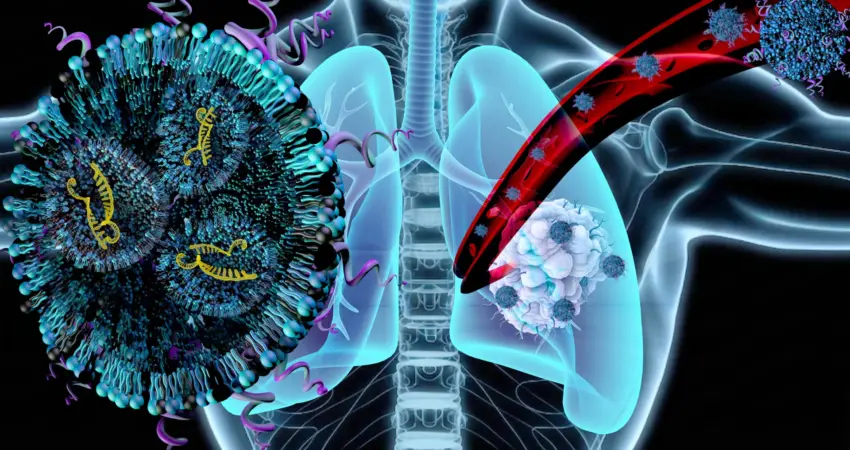
Researchers at Oregon State University (OSU) have unveiled a groundbreaking experimental treatment that demonstrates a dual-pronged approach to combating lung cancer and the debilitating muscle loss, known as cachexia, that frequently accompanies the disease. This innovative therapy, detailed in the latest issue of the Journal of Controlled Release, utilizes sophisticated lipid nanoparticles (LNPs) to deliver therapeutic genetic material directly to lung tumors, offering a potential paradigm shift in cancer treatment.
A Targeted Delivery System for mRNA Therapeutics
The core of this promising development lies in the precise delivery mechanism designed by the OSU team, led by Oleh Taratula and Yoon Tae Goo from the OSU College of Pharmacy. Their research, conducted using preclinical models involving mice, centered on LNPs engineered to carry follistatin messenger RNA (mRNA). Upon intravenous administration, these LNPs exhibit a remarkable ability to accumulate within lung tumors. Once at their destination, the mRNA instructs the tumor cells to produce follistatin, a naturally occurring protein with a dual beneficial effect: it actively works to suppress tumor growth while simultaneously promoting the regeneration and maintenance of muscle tissue.
The success of this targeted delivery hinges on a sophisticated interaction between the LNPs and the biological environment of the bloodstream. The LNPs are designed to bind with vitronectin, a protein abundant in blood serum. This binding is crucial, as it acts as a homing beacon, directing the nanoparticles towards lung cancer tumors. The mechanism of attraction involves the interaction with integrin receptors, a class of proteins that are characteristically overexpressed on the surface of cancer cells.
"We found that these LNPs bind vitronectin in the bloodstream, which then directs them to lung cancer tumors by interacting with integrin receptors that are overexpressed on the tumor surface," explained Dr. Taratula, a key figure in the research. Integrin receptors play a vital role in cellular communication, mediating how cells adhere to their surroundings and respond to external signals. Their heightened presence on tumor cells provides a specific and exploitable target for the vitronectin-bound LNPs.
Overcoming a Persistent mRNA Delivery Hurdle
The systemic delivery of mRNA-based therapies to specific cancer sites, particularly lung tumors, has historically presented a significant challenge in the field of oncology. A common obstacle is the tendency for conventional LNPs to be preferentially taken up by the liver, a vital organ responsible for detoxification and metabolism. This off-target accumulation can reduce the amount of therapeutic agent reaching the intended cancer cells, thereby diminishing treatment efficacy and potentially leading to unintended side effects.
The OSU researchers’ novel approach appears to circumvent this critical limitation. "Systemic delivery of mRNA therapeutics to lung cancer tumors has been a significant challenge in our field, and this work offers a promising solution," Dr. Taratula stated. The study reported a notable improvement in efficacy, with their engineered LNPs achieving "approximately 2.5-fold greater reduction in tumor burden" compared to conventional LNPs that tend to accumulate in the liver. This enhanced delivery efficiency to the tumor site is a key indicator of the potential of this new therapeutic strategy.
The Pervasive Threat of Lung Cancer and Cachexia
Lung cancer remains a formidable public health concern globally. In the United States, it stands as the third most common cancer diagnosis and, more critically, the leading cause of cancer-related mortality. Statistics from the American Cancer Society highlight the immense burden of this disease, estimating approximately 230,000 new cases diagnosed annually and projecting around 125,000 deaths. While the overall lifetime risk of developing lung cancer is about 5%, this risk is significantly amplified for individuals who smoke, underscoring the importance of prevention strategies alongside treatment advancements.
Adding to the complexity of lung cancer management is the frequent co-occurrence of cancer cachexia. This severe and often irreversible condition is characterized by profound and involuntary weight loss, encompassing both fat and muscle mass. Cachexia is not simply a consequence of reduced food intake; it is a complex metabolic syndrome driven by the tumor itself and the body’s inflammatory response to it. It can persist even when patients are consuming adequate calories, leading to profound weakness, fatigue, and a diminished quality of life. Alarmingly, cachexia is estimated to contribute to the deaths of as many as 30% of cancer patients, making its management a critical aspect of comprehensive cancer care.
A Unified Approach to a Dual Threat
The innovative aspect of the OSU research lies in its ingenious design to address both lung cancer and cachexia simultaneously. By utilizing follistatin mRNA, the therapy targets the root causes of both conditions. Follistatin’s role in suppressing tumor growth directly combats the primary malignancy, while its known function in promoting muscle growth provides a countermeasure against the devastating effects of cachexia.
"By loading our LNPs with follistatin mRNA, we developed a therapy that simultaneously targets lung cancer and cancer cachexia, all without adverse effects," Dr. Taratula emphasized. The absence of reported adverse effects in the preclinical studies is a particularly encouraging finding, suggesting a potentially favorable safety profile for this dual-action therapy.
From Preclinical Promise to Potential Clinical Application
While the results from the preclinical studies are highly encouraging, the researchers are clear that further rigorous testing is essential before human trials can be contemplated. The transition from laboratory-based experiments to clinical application is a carefully regulated process, involving extensive safety and efficacy evaluations.
"More preclinical work is necessary, but we’re very encouraged by what we’ve seen so far and hope that testing in humans is down the road," Dr. Taratula stated, reflecting the cautious optimism that characterizes scientific progress. The next phases of research will likely involve more extensive animal studies to further refine dosage, delivery protocols, and assess long-term safety and efficacy. Following successful completion of these preclinical investigations, the researchers can then seek regulatory approval to initiate clinical trials in human patients.
A Collaborative Effort and Future Outlook
The development of this promising therapy is a testament to interdisciplinary collaboration. The research involved a multidisciplinary team from the OSU College of Pharmacy, including Vladislav Grigoriev, Tetiana Korzun, Ammar Salem, Kongbrailatpam Shitaljit Sharma, Prem Singh, Chrissa Kioussi, and Olena Taratula. Additionally, Daniel Marks from Endevica Bio, a company specializing in peptide therapies, contributed to the project, highlighting the synergy between academic research and industry innovation.
The study received vital support from prestigious institutions, including the National Cancer Institute, the Eunice Kennedy Shriver National Institute of Child Health and Human Development, and the National Research Foundation of Korea. This broad base of support underscores the recognized significance and potential impact of this line of research.
Broader Implications for Cancer Therapeutics
The implications of this research extend beyond the immediate scope of lung cancer and cachexia. The success of this targeted LNP delivery system could pave the way for similar strategies to treat other forms of cancer and associated complications. The ability to precisely deliver therapeutic agents to specific tumor sites while minimizing off-target effects is a holy grail in cancer therapy. This development offers a tangible step forward in achieving that goal, potentially leading to more effective treatments with fewer debilitating side effects for a wide range of patients.
The dual-action nature of the follistatin mRNA approach also presents a compelling model for developing treatments that address the multifaceted nature of cancer and its systemic impacts. By tackling both the primary disease and its debilitating secondary effects, such as muscle wasting, future therapies could significantly improve patient outcomes and quality of life. The scientific community will be closely watching the progression of this research, hopeful that it will translate into tangible benefits for patients battling lung cancer and other complex diseases. The journey from laboratory discovery to widespread clinical use is often long and arduous, but the initial findings from Oregon State University offer a beacon of hope in the ongoing fight against cancer.

0 Comments