
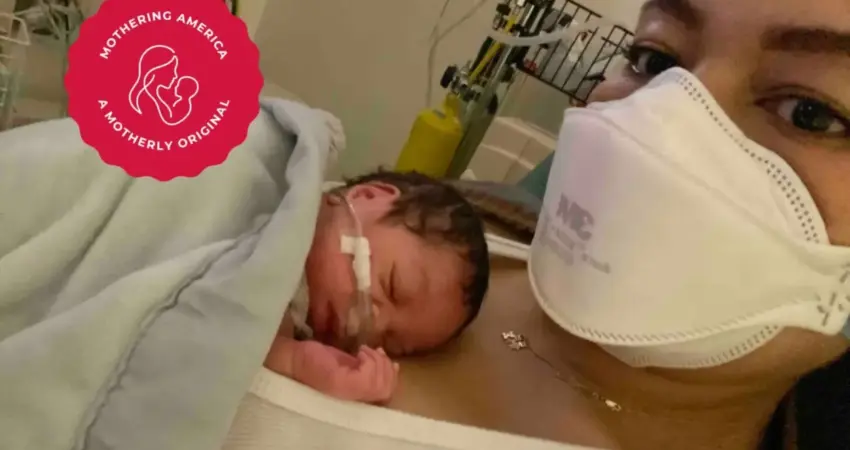
Stephanie Roberson’s second pregnancy began uneventfully, marked by routine check-ups and reassuring ultrasound results. Yet, at a critical juncture of 24 weeks, her world was irrevocably altered when her water broke unexpectedly while putting her 2-year-old son to bed. This sudden onset of premature labor plunged her into an urgent medical crisis, initiating a harrowing journey through the complexities of neonatal intensive care and ultimately igniting a passion for systemic change in maternal support across the United States. Her experience, shared through "Mothering America," a collaborative column by Motherly and Chamber of Mothers, underscores the profound challenges faced by countless families and the urgent need for comprehensive policy reform.
The Unexpected Onset of Premature Labor
The evening of the incident remains a vivid memory for Roberson. Discovering the full extent of her ruptured membranes, she immediately contacted her doctor, who directed her to a hospital equipped with a higher level of Neonatal Intensive Care Unit (NICU) care. With her husband traveling for work, her visiting mother became her lifeline, driving her through a panicked haze to the hospital while a neighbor cared for her eldest son. The immediate concern was overwhelming: how could a baby born so prematurely possibly survive?
Upon admission, Roberson was placed on strict bed rest. A neonatologist presented the stark realities and survival statistics for infants born at such an early gestational age. While attempts were made to convey the information positively, the gravity of an 80% survival rate for a 25-week-old infant was terrifying. Roberson’s mind raced through a litany of potential outcomes: the possibility of losing her child, the prospect of a medically fragile infant with a high likelihood of vision, hearing, and lung issues, and a suppressed immune system. Beyond the immediate struggle for survival, she grappled with the profound question of how her life would transform under the weight of a child with extensive, long-term needs.
A self-professed planner, Roberson instinctively sought control through knowledge. She immersed herself in medical literature on prematurity, devouring books and scientific articles, learning medical terminology, potential challenges, and long-term outcomes. This intensive self-education was driven by a powerful maternal instinct: to become the most effective advocate for her unborn son. Amidst this intellectual pursuit, a pervasive sense of shame also emerged, leading her to question if she had somehow failed her child, if her body had betrayed them both.
After 13 arduous days confined to bed rest, Roberson went into labor at 25 weeks and 6 days gestation. Her husband, having returned home, was with their 2-year-old. The birth was rapid; a mere 14 minutes elapsed between her departure from the room and her son, Myles, entering the world.
Navigating the NICU: A Marathon of Uncertainty
Myles’s arrival was met by a full NICU team, a testament to the critical nature of his premature birth. The sound of his first cry, though tiny and distant-sounding, was a powerful affirmation of life. His strong Apgar scores offered further encouragement. A fleeting moment of skin-to-skin contact, a “smoosh against my cheek,” was all Roberson had before Myles was whisked away for immediate, specialized care.
The subsequent 87 days in the NICU were a relentless test of endurance and hope. Myles, like many premature infants, experienced frequent episodes of apnea—stopping breathing multiple times a day for 77 days. This common complication, stemming from an underdeveloped brain, was managed with caffeine to stimulate respiratory function, often requiring physical stimulation to restart his breathing. The unpredictability of his condition became a constant source of anxiety. "You don’t know what the outcome is going to be for your child," Roberson reflected, articulating the profound uncertainty that defines the NICU experience.
The NICU environment itself was fraught with stress. The ceaseless alarms from monitors, signaling minute changes in vital signs, created an atmosphere of perpetual vigilance. Witnessing other families’ struggles added another layer of emotional burden. Roberson vividly recalled moments of shared grief, including one family bringing in extended relatives for a final farewell to a baby who wouldn’t survive. This shared vulnerability underscored the collective trauma experienced within the NICU walls.
Miraculously, Myles avoided major surgeries and never required intubation, a significant achievement for an infant born so prematurely. Upon his discharge, the chief of neonatology hailed him as a "one-in-a-million miracle baby." By his first birthday, Myles had not only caught up on all developmental milestones but was ahead on some. Today, he thrives as a healthy four-year-old, a testament to resilience and dedicated care.
The Unseen Costs: Financial and Emotional Burdens
Myles’s journey through the NICU, while ultimately triumphant, illuminated a stark reality for Roberson: her ability to navigate this crisis was largely due to privileges many other families lack. Her supportive partner, stable employment, and access to comprehensive paid family and medical leave proved indispensable. Without these critical supports, she recognized, her family’s story could have unfolded very differently.
During her time in the NICU, Roberson observed firsthand the immense pressures faced by other mothers. She overheard desperate phone calls with insurance companies, pleas for coverage denied, and the heart-wrenching logistical nightmares. One mother, admitted on the same day, had gone into labor unexpectedly while visiting for Thanksgiving, four hours from home. She grappled with the impossible choice of returning to her job and older child or staying by her premature infant’s bedside, all while navigating a fragmented support system. "How do I do this?" Roberson remembered her asking, highlighting the overwhelming nature of the situation when systemic supports are absent.
Roberson herself utilized nine and a half months of combined medical, maternity, and state-funded family leave to recover physically and emotionally, and to care for Myles. This extensive period of leave is a luxury for most American parents. According to the Kaiser Family Foundation, only 14 states and Washington, D.C., have enacted paid family and medical leave policies, and merely 27% of workers nationally have access to paid family leave. The federal Family and Medical Leave Act (FMLA) offers 12 weeks of unpaid leave, a duration often entirely consumed by a NICU stay, leaving parents without any remaining leave once their baby comes home. The United States remains an outlier among developed nations, lacking a federal paid family and medical leave policy.
The financial burden of NICU care is staggering. Myles’s medical bills totaled nearly $1.5 million. While Roberson’s insurance covered all but $1,300 of her deductible, this level of coverage is far from universal. Infants admitted to the highest-level NICU facilities average over $3,000 in out-of-pocket spending in their first two years with private insurance. This figure, however, does not encompass the myriad indirect costs: parking fees, childcare for older siblings, hotel stays for families traveling long distances, and daily meals, which can cumulatively amount to hundreds of dollars per day, pushing many families into financial distress or bankruptcy.
Beyond the financial strain, NICU parents face an elevated risk for perinatal mental health conditions. Studies indicate that parents of premature infants are at an increased risk for postpartum depression, anxiety, and, as in Roberson’s case, post-traumatic stress disorder (PTSD). The constant stress, fear, and trauma of the NICU environment can have profound and lasting psychological effects. Roberson sought months of therapy to process her experience, a crucial step in her recovery. Yet, access to mental healthcare remains a significant barrier for many; a staggering 75% of mothers with perinatal mental health conditions go untreated due to a shortage of trained providers and insurance limitations. This neglect extracts a heavy toll on families, workplaces, and the broader economy.
"I could recognize the privilege that I had in the situation," Roberson stated, acknowledging the disparity she witnessed. "It really sort of tore something open, seeing how that didn’t apply to everyone." This realization became a catalyst for action.
From Personal Ordeal to National Advocacy
The stark inequities Roberson observed in the NICU fueled a determination to drive change. In 2024, she discovered Chamber of Mothers, a national nonpartisan nonprofit dedicated to advocating for paid leave, affordable and accessible childcare, and improved maternal outcomes for all Americans. The organization resonated deeply with her lived experience and her newfound conviction.
"I just knew that I wanted to be doing something that would change things for moms and babies," Roberson affirmed. Her commitment quickly led to her appointment as chair of the board in July, positioning her at the forefront of the organization’s efforts to ensure every mother and family in the U.S. receives the necessary support and care. Chamber of Mothers operates through 52 chapters nationwide, where mothers transform their personal stories into collective action, advocating for cultural and policy changes that positively impact maternal well-being.
The organization’s work extends to legislative advocacy. Several states, including Colorado and Illinois, have already integrated NICU leave into their state-level paid leave policies, recognizing the unique and prolonged needs of these families. This past winter, Roberson joined Chamber of Mothers representatives in Washington, D.C., to lend support to drafted federal legislation aimed at establishing a national NICU leave policy for parents. Such legislation would provide a vital safety net, ensuring that parents of premature infants can focus on their child’s recovery without fear of job loss or financial ruin.
Paving the Way for Policy Change and Broader Impact
The push for federal NICU leave is part of a larger movement to address the systemic deficiencies in maternal and family support in the U.S. The implications of inadequate policies are far-reaching, impacting not only individual families but also the national economy and public health. When parents lack paid leave, they may be forced to return to work prematurely, potentially hindering their child’s development, especially for fragile NICU graduates who require intensive follow-up care. The stress and financial burden can exacerbate existing health disparities, particularly affecting low-income families and communities of color, who often have less access to employer-sponsored benefits and paid leave.
Conversely, robust paid leave policies have been shown to improve infant and maternal health outcomes, reduce instances of postpartum depression, increase breastfeeding rates, and enhance family financial stability. Furthermore, accessible and affordable childcare, another pillar of Chamber of Mothers’ advocacy, is crucial for parents returning to work, ensuring children receive quality care while alleviating a significant financial strain on families.
Stephanie Roberson’s journey, from the terrifying uncertainty of a premature birth to the relentless advocacy for systemic change, exemplifies the power of lived experience in shaping policy. Her realization that "there are basic things that we all deserve to have" and her inability to "unsee" the disparities once her eyes were opened, fuels a powerful call to action. "Everybody deserves better," she states, encapsulating the core message of a movement striving for a future where every mother and family in the U.S. has the fundamental support and care needed to thrive. The collective efforts of organizations like Chamber of Mothers, driven by the stories of countless mothers like Stephanie, are critical in challenging the status quo and building a more equitable and supportive society for all.

0 Comments