
Movies are more than just entertainment; they are immersive experiences that can profoundly influence our perception and inspire our creative endeavors. For designers, architects, and homeowners alike, the visual storytelling within films offers a rich tapestry of ideas, from the opulent furnishings of "Death Becomes Her" to the iconic "coastal grandmother" aesthetic synonymous with Nancy Meyers’ films. These cinematic worlds, brimming with captivating interiors and arresting architecture, continue to shape the spaces we inhabit, long after the credits roll. This article explores a curated selection of films that serve as masterful lessons in design, offering a blueprint for inspiration, as recommended by industry professionals.
The Enduring Influence of Cinematic Design
The power of film to shape design trends is undeniable. Beyond mere set dressing, the environments depicted on screen often become characters in themselves, reflecting the personalities, aspirations, and even the hidden desires of their inhabitants. This symbiotic relationship between film and interior design has been a constant throughout cinematic history, with certain films becoming touchstones for aesthetic movements and inspiring designers to translate the magic of the screen into tangible, livable spaces. From the lavish historical settings to the sleek modern dwellings, these films offer a unique lens through which to understand architectural principles, material choices, and the emotional resonance of interior spaces.

The meticulous attention to detail in film production, particularly in set design and art direction, provides a wealth of visual information. This includes not only the grand architectural gestures but also the subtle nuances of furniture selection, color palettes, lighting techniques, and the arrangement of objects that contribute to the overall atmosphere. As designers rewatch these films, they uncover layers of inspiration, drawing parallels between the curated visual narratives and the principles of creating compelling and functional environments. This article delves into specific films that have left an indelible mark on the design world, offering insights from professionals who have found inspiration within their frames.
Classic Elegance and French Riviera Charm: "To Catch a Thief" (1955)
Alfred Hitchcock’s "To Catch a Thief," set against the breathtaking backdrop of the French Riviera, is a masterclass in timeless elegance and sophisticated living. The film, which follows a retired jewel thief, portrayed by Cary Grant, attempting to clear his name, offers a captivating glimpse into the glamorous world of the South of France. Betsy Kasha, a designer at Kasha Paris, highlights the film’s enduring appeal, stating, "It captures the French elan, and has the timeless elegance I love and could watch again and again."
The architectural and design elements within "To Catch a Thief" are particularly inspiring. Kasha points to the classic elegance of the wall mouldings found in the suites at the Hotel Carlton, evoking a sense of historical grandeur. The villa where the pivotal masquerade ball takes place features enchanting garden terraces and verandas, seamlessly blending indoor and outdoor living spaces. Furthermore, John Robie’s hillside villa embodies a simple yet refined interior aesthetic, demonstrating how understated design can exude sophistication. These elements collectively contribute to the film’s visual richness, extending to the cinematography, the iconic stars Cary Grant and Grace Kelly, and the exquisite fashion and jewels. The film’s design narrative emphasizes the importance of context, showcasing how architectural styles and decorative choices can profoundly enhance the storytelling and create an immersive, aspirational environment.

A Kaleidoscope of Styles: "Auntie Mame" (1958)
"Auntie Mame" is a vibrant celebration of design as a form of self-expression and a reflection of a dynamic personality. The film, a joyous exploration of life and style, showcases the transformative power of interiors through its titular character, Mame Dennis, played by Rosalind Russell. Alexander D. Wilson, a designer at Alexander D. Wilson, describes the film as "a feast for the eyes and a rite of passage for every decorator or design enthusiast."
The majority of the film unfolds within Mame’s duplex apartment at 3 Beekman Place, a New York City residence that serves as a canvas for her evolving life and tastes. The apartment impressively transitions through six distinct design styles: Chinese, Twenties Modern, Postmodern Neoclassical, English, Danish Modern, and East Indian. These stylistic shifts are not merely decorative; they are intricately woven into the narrative, mirroring Mame’s unconventional spirit and her journey through life’s various chapters. Wilson emphasizes Mame’s "individuality and fearlessness in her design choices," which serves as a powerful reminder to embrace life’s possibilities with exuberance. The film’s core message, encapsulated by Mame’s famous quote, "Life is a banquet, and most poor suckers are starving to death!" extends to the realm of design, encouraging a bold and celebratory approach to creating spaces that are as rich and varied as life itself. The apartment’s ability to embody multiple aesthetic philosophies within a single dwelling highlights the fluidity of style and the potential for design to adapt and evolve alongside personal growth.
The Psychological Power of Interiors: "Fatal Attraction" (1987)
In "Fatal Attraction," directed by Adrian Lyne, the domestic spaces are not just backdrops but active participants in the unfolding psychological drama. The film masterfully uses interiors to reveal character and underscore the escalating tension of a lawyer’s affair gone terribly wrong. Brigette Romanek of Romanek Design Studio notes, "Few films use interiors as effectively as Fatal Attraction," adding that the apartments capture "a very specific moment in New York design history."

Glenn Close’s character, Alex Forrest, inhabits a downtown industrial loft that embodies a sense of creative freedom, characterized by its large windows, light gray and white brick walls, and understated furnishings. Romanek observes that this space "feels both seductive and slightly severe, just like Glenn Close’s character, Alex Forrest." The loft’s slightly unkempt nature, she notes, mirrors Alex’s own disarray. In contrast, Michael Douglas’s character, Dan Gallagher, resides in a prewar apartment that serves as a perfect counterpoint. This space is described as conventional, domestic, and orderly, featuring neutral colors, oversized furniture, and soft lighting, creating an atmosphere of a home that has been "loved and full of soul." The stark contrast between these two residences powerfully illustrates the film’s themes of obsession and domesticity. Romanek’s insight that "the minute you see those apartments, you can feel the homeowner’s love and what they care about" underscores the fundamental principle that a home is a personal statement, a "love letter/diary to yourself." The film’s meticulous set design highlights how the physical environment can amplify emotional states and contribute to the narrative’s intensity.
The Pursuit of Dream Homes: "Green Card" (1990)
"Green Card" playfully explores the lengths to which individuals will go to secure a coveted living space. The film’s central plot revolves around an urban horticulturalist, played by Andie MacDowell, who needs to be married to lease a desirable New York City apartment. This comedic premise sets the stage for a deep appreciation of the apartment’s architectural beauty and ambiance. Jessica Davis, an AD PRO Directory designer and principal of Atelier Davis, finds herself repeatedly drawn back to the film, stating, "Her apartment is so classic—the architecture, the beautiful courtyard garden. The ambiance of the space is amazing, and the lengths someone would go to acquire such a stunning space!"
The apartment’s appeal lies in its inherent charm and the aspirational lifestyle it represents. Davis emphasizes the importance of architecture as a starting point for design, noting that while her own designs are bold, she aims for a classic foundation. "Watching that movie made me really think about ambiance and layering," she shares. The film serves as a reminder that a well-designed space, with its "bones, essence, and layering," can be a powerful motivator. It highlights the enduring appeal of classic architectural features and the creation of a specific mood through thoughtful design choices. The desire for such a space becomes a driving force, illustrating how our living environments can profoundly impact our aspirations and actions.

Opulence and the Art of Furnishing: "Death Becomes Her" (1992)
Robert Zemeckis’s darkly comedic fantasy "Death Becomes Her" is a visual spectacle that delights with its ornate design details and extravagant furnishings. The film, which follows two rival women vying for eternal youth and the same man, showcases a world where opulence is a key element of the narrative. Noz Nozawa, principal of Noz Design, recalls being captivated by the film’s interiors from a young age. "The movie’s interiors informed my childhood love of opulence and formed my understanding of how symmetry, material richness, and details really make a space," she states.
Nozawa highlights the film’s ability to integrate furnishings so seamlessly into the story that they become characters in their own right. This approach, she explains, is deeply aligned with her own design philosophy: "how I want our designs to function for our clients." She points to specific scenes, such as the iconic moments of actors reclining on luxurious seating, as demonstrations of how furniture placement and style can communicate character and emotional states. The oversized blue 1980s-Regency sofa, on which a character collapses with a hole in her torso, is a particularly memorable example. Nozawa admits, "I am searching for the right project to bring a today-version of that piece to life!" This sentiment underscores how specific, impactful design elements from film can linger in the minds of designers, inspiring future creations. The film’s exaggerated aesthetic serves as a potent reminder of the dramatic impact that bold furniture choices and rich material palettes can have on a space.
The Allure of Two Worlds: "The Parent Trap" (1998)
Nancy Meyers’s delightful remake of "The Parent Trap" presents two distinct yet equally desirable living environments: a sun-drenched California vineyard estate and a classic London townhouse. Jessica Bradley, principal of Jessica Bradley Interiors, finds herself consistently drawn to the latter, describing it as the epitome of "effortless elegance." She elaborates, "Anytime I need to reset and remember what ‘effortless elegance’ actually feels like, I think about that space. It’s not loud or showy. It pulls you in over time—with dark lacquered walls, a library that feels like it’s been there forever, brass that’s just worn enough."

The London townhouse embodies a lived-in sophistication that Bradley deeply admires. The design eschews perfection for authenticity, featuring elements like "stacks of books with cracked spines, frames that aren’t perfectly lined up, and a desk that actually looks used." This emphasis on a genuine sense of habitation, rather than a staged appearance, is a core tenet of Bradley’s design philosophy. She constantly questions, "Does a space feel lived in, or does it just look styled?" The townhouse’s "Old World" charm is balanced with a comfortable, unpretentious atmosphere, a delicate equilibrium that Bradley strives to achieve in her own work. Ultimately, the film’s London residence conveys a strong sense of belonging, possessing a distinct point of view that feels specific to its inhabitants. This authenticity, Bradley concludes, is the ultimate goal: "not perfect, not generic, just specific to the person living in it." The film’s ability to showcase the nuanced beauty of a well-loved home reinforces the idea that true design speaks to the soul of its occupants.
Timeless Italian Sophistication: "The Talented Mr. Ripley" (1999)
Anthony Minghella’s psychological thriller "The Talented Mr. Ripley," based on Patricia Highsmith’s novel, is renowned for its gripping narrative, stellar cast, and, crucially, its breathtaking portrayal of an idyllic Italian coastal lifestyle. The film’s stunning visual aesthetic, particularly its depiction of sun-drenched villas and charming coastal towns, has left a lasting impression on designers. Manny Varas, principal of MV Group USA, finds himself returning to the film repeatedly for its profound design insights.
Varas is particularly drawn to how the film’s interiors "never feel overly decorated or performative." Instead, the spaces feel "lived in, emotionally intelligent, and deeply connected to their surroundings." He praises the "quiet sophistication in the architecture, materials, lighting, and pacing of the environments," noting a sense of "permanence and authenticity" that he believes is often missing in contemporary luxury design. The film’s impact, Varas suggests, is not achieved through excess but through a masterful command of "composition, texture, scale, and emotional experience." Whether it’s the coastal Italian villas, the layered natural materials, aged stone, or the interplay between indoor and outdoor living, each setting exudes a timeless quality. This philosophy heavily influences Varas’s work in ultra-luxury residential building, where he focuses on creating homes that are "cinematic yet enduring—spaces that evoke emotion decades from now rather than simply impress in the present moment." The film’s setting becomes a character in itself, demonstrating how a profound connection to place can infuse a design with an unparalleled sense of authenticity and lasting appeal.

Audacious Grandeur and Modern Whimsy: "Marie Antoinette" (2006)
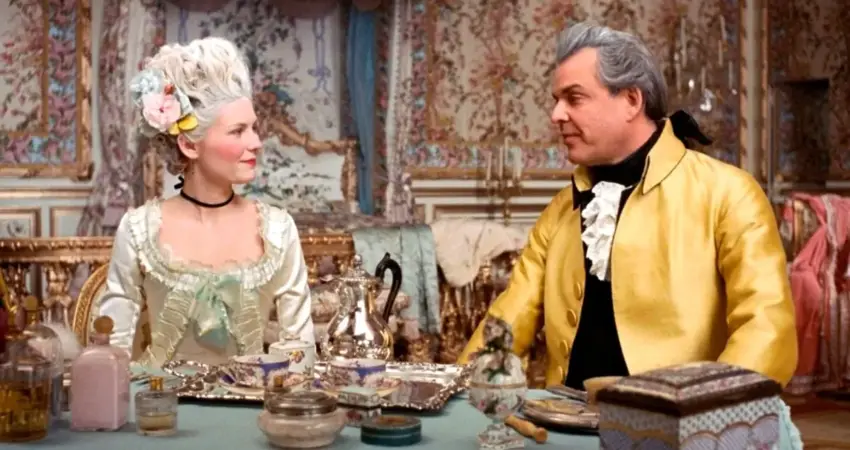
Sofia Coppola’s visually opulent and stylistically daring interpretation of Marie Antoinette’s life offers a unique blend of historical grandeur and modern irreverence. The film, set against the backdrop of the Palace of Versailles and other lavish locales, has become a significant source of inspiration for designers seeking to balance tradition with contemporary flair. Summer Thornton, principal of Summer Thornton Design, finds particular inspiration in this period piece.
Thornton, who is drawn to the visually rich works of Baz Luhrmann, including "Romeo and Juliet," "The Great Gatsby," and "Elvis," finds "Marie Antoinette" to be a standout for its "balance of splendor, cheekiness, and audacity." She notes the film’s "amazing juxtaposition of the grandeur of Versailles but a modern irreverent edge from Sofia Coppola and an amazing music track." This blend of historical weight with a contemporary, playful sensibility is precisely what Thornton aims to achieve in her own work. "In my work, I’m always trying to blend tradition and history with modernity and whimsy to make it feel fresh and a little bit mischievous," she explains. The film’s fearless approach to historical interpretation, combining period accuracy with anachronistic elements like modern music and fashion, demonstrates how established aesthetics can be reimagined with a fresh perspective, creating something both familiar and excitingly new.
The Art of the Milanese Villa: "I Am Love" (2009)
Luca Guadagnino’s "I Am Love" (original "Io Sono L’Amore") is a visually sumptuous drama that offers an intoxicating exploration of wealth, desire, and culinary passion, all set within the exquisite architecture of Milan. The film is particularly celebrated for its portrayal of the privileged lives of the Recchi family, whose opulent Milanese villa serves as a central character. Leonora Hamill, an AD100 designer at Leonora Hamill Studio, experienced an "epiphany" upon her first viewing of the film in 2009.

The film features scenes shot at the Villa Necchi Campiglio, a masterpiece designed by Milanese architect Piero Portaluppi. Hamill was "totally enthralled by the interiors; the shimmering family dining room scene in particular really stayed with me." The film’s visual richness extends beyond this singular location, encompassing a broader aesthetic that influences Hamill’s projects. She lists "The Leopard," "The Garden of the Finzi-Continis," "Teorema," "Stealing Beauty," "Call Me by Your Name," and "The Age of Innocence" as other visually inspiring films that have shaped her design sensibilities. "I Am Love," with its sophisticated mise-en-scène, underscores how architectural integrity, combined with carefully curated interiors and a palpable sense of atmosphere, can create a deeply resonant and enduring cinematic experience. The film’s focus on the intersection of art, food, and architecture highlights the holistic nature of luxurious living.
Midcentury Modern Mastery: "A Single Man" (2009)
Tom Ford’s directorial debut, "A Single Man," is a masterclass in visual restraint and sophisticated design, set against the backdrop of a meticulously designed midcentury-modern home in Los Angeles. The film, starring Colin Firth as a grief-stricken professor, showcases an architectural aesthetic that is both emotionally evocative and impeccably curated. Nina Magon, an AD PRO Directory designer at Nina Magon Studio, finds the film’s interiors particularly inspiring.
Magon praises the film’s ability to achieve "every space feels intentional, layered, and emotionally evocative without ever feeling overdesigned." She is inspired by the seamless balance between modernist architecture and "warmth and sensuality," achieved through the use of rich wood tones, abundant natural light, tailored textures, and sculptural furnishings. This creates an atmosphere that is "both timeless and deeply intimate." The "quiet confidence" of the film’s design language is something Magon references in her own work, recognizing that true luxury lies not in excess but in thoughtful execution. The film demonstrates that "luxury does not need to be excessive to feel impactful," as the interiors are "refined and cinematic yet still incredibly livable." This careful consideration of "materiality, proportion, and atmosphere" shapes the emotional experience of the space, proving that thoughtful design can profoundly influence our feelings and perceptions. The film’s success lies in its ability to make the architectural space a direct reflection of the protagonist’s internal state, creating a powerful and cohesive narrative.

The Comforts of California Living: "It’s Complicated" (2009)
Nancy Meyers’s signature style of creating aspirational yet cozy interiors is perfectly exemplified in her 2009 romantic comedy, "It’s Complicated." The film, starring Meryl Streep and Alec Baldwin, is celebrated for its depiction of a warm, inviting, and beautifully appointed California home that feels both luxurious and deeply lived-in. Heather French, principal of French & French Interiors, revisits the film frequently for its masterful portrayal of effortless domesticity.
French describes the house as having a "casualness… that feels deeply lived-in and completely unforced," possessing "the warmth and soul I’m always searching for in design." The film’s standout property, with its adobe architecture reminiscent of George Washington Smith’s work, feels "timeless rather than styled." The absence of excessive perfection or preciousness makes it particularly inspiring. French highlights her ongoing quest for interiors that are "grounded, layered, and soulful—spaces that quietly tell a family’s story." "It’s Complicated" beautifully captures this balance, offering a vision of a home that is not just aesthetically pleasing but also rich in character and personal history. The film’s inclusion of a charming vegetable garden further adds to its idyllic appeal, reinforcing the idea of a home connected to nature and the pleasures of a well-lived life. The enduring appeal of this film lies in its ability to translate a feeling of comfort and belonging into tangible design elements, making it a touchstone for those seeking to create homes with genuine soul.

0 Comments