
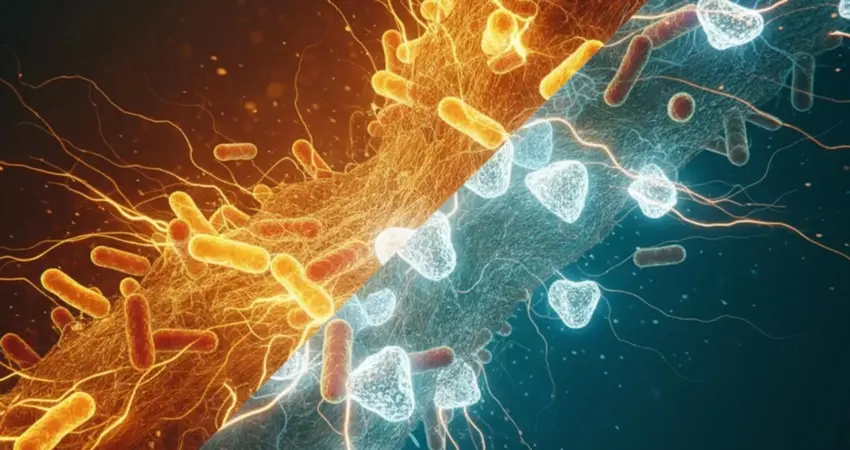
Bacteria, microscopic powerhouses of adaptation, possess a remarkable ability to thrive in diverse and often challenging environments. This inherent resilience, while crucial for their survival, presents a significant global health concern when it leads to the evolution of antibiotic and disinfectant resistance in pathogenic species. However, this adaptability also hints at a more nuanced relationship with these microorganisms. Bacteria are not merely adversaries to be eradicated; many species are integral to human health, including the vast and complex microbial communities that inhabit the human mouth. This understanding opens a compelling new avenue of scientific inquiry: rather than focusing solely on eliminating bacteria, could we instead learn to influence their behavior and cultivate more beneficial microbial ecosystems?
Emerging research, published in 2025 in the esteemed journal npj Biofilms and Microbiomes, suggests that such a paradigm shift is not only possible but may be within reach. A groundbreaking study, focusing on the intricate world of dental plaque, has revealed that by interfering with the chemical signaling pathways bacteria use to communicate, scientists can subtly alter the dynamics of these microbial communities. This manipulation has the potential to favor the proliferation of species associated with improved oral health, offering a novel strategy for combating oral diseases.
The Intricate Social Networks of Oral Bacteria
The human oral cavity is a vibrant ecosystem, hosting an estimated 700 distinct species of bacteria. These microbes do not exist in isolation; instead, they engage in sophisticated interspecies dialogues, a process known as quorum sensing. Quorum sensing allows bacterial populations to gauge their density and coordinate collective behaviors, akin to a microscopic town meeting where decisions are made based on population size.
A key mechanism in this communication is the use of signaling molecules called N-acyl homoserine lactones (AHLs). These molecules act as chemical messengers, transmitting information about population density and environmental conditions between bacterial cells. Researchers from the College of Biological Sciences and the School of Dentistry embarked on an ambitious project to unravel how these AHL signals shape the composition and behavior of dental plaque, with the ultimate goal of harnessing this knowledge to foster a healthier oral microbiome.
The oral microbiome, a term encompassing all the microorganisms residing in the mouth, plays a critical role in maintaining oral health. When this delicate balance is disrupted, a phenomenon known as dysbiosis, potentially harmful bacteria can gain a foothold, leading to the development of various oral pathologies, most notably periodontal disease. This chronic inflammatory condition, affecting the gums and supporting structures of the teeth, can have far-reaching consequences for overall health.
Unlocking the Secrets of Signal Transmission Across the Gumline
A pivotal discovery in the study was the surprising reach of these bacterial chemical signals. The researchers observed that bacteria within dental plaque, particularly in aerobic environments like those found above the gumline where oxygen is readily available, actively produced AHL signals. Crucially, these chemical messages were not confined to the oxygen-rich upper regions. Bacteria residing in anaerobic environments, such as the subgingival pockets beneath the gumline where oxygen levels are significantly lower, were able to detect and respond to these AHL signals originating from above.
This cross-environmental communication is particularly significant because the anaerobic conditions found beneath the gumline often provide a more conducive environment for bacteria associated with periodontal disease. The study’s findings underscore the interconnectedness of these oral microbial habitats and the pervasive influence of bacterial signaling.
To investigate the impact of these signals, the research team employed a sophisticated approach: utilizing specialized enzymes known as lactonases. These enzymes possess the remarkable ability to break down AHL molecules, effectively disrupting the ongoing chemical conversations between bacteria. By neutralizing these communication signals, the researchers aimed to observe how the dental plaque community would respond.
The results were compelling. When AHL signaling was disrupted, the composition of the dental plaque community demonstrably shifted. The study observed a move towards species that are more strongly correlated with positive oral health outcomes. This suggests that by strategically interfering with bacterial communication, it may be possible to steer the plaque community away from disease-promoting states and towards a healthier equilibrium.
Dental Plaque: An Evolving Ecosystem with Dynamic Interactions
Dr. Mikael Elias, an associate professor in the College of Biological Sciences and senior author of the study, drew a powerful analogy to explain the development of dental plaque: "Dental plaque develops in a sequence, much like a forest ecosystem," he stated. "Pioneer species like Streptococcus and Actinomyces are the initial settlers in simple communities — they’re generally harmless and associated with good oral health. Increasingly diverse late colonizers include the ‘red complex’ bacteria like Porphyromonas gingivalis, which are strongly linked to periodontal disease. By disrupting the chemical signals bacteria use to communicate, one could manipulate the plaque community to remain or return to its health-associated stage."
This ecological perspective highlights that dental plaque is not a static entity but rather a dynamic community that evolves over time. The initial stages of plaque formation may be dominated by relatively innocuous bacteria. However, as the community matures and becomes more complex, it can eventually harbor species that are significantly implicated in the pathogenesis of gum disease. The researchers’ ambition is to leverage their understanding of bacterial communication to guide plaque development towards its earlier, healthier stages, thereby circumventing the need for broad-spectrum antimicrobial interventions.
The Profound Influence of Oxygen on Bacterial Signaling
One of the most striking revelations from the research was the profound impact of oxygen availability on the behavior and consequences of bacterial communication. Lead author Rakesh Sikdar elaborated on this critical finding: "What’s particularly striking is how oxygen availability changes everything," he noted. "When we blocked AHL signaling in aerobic conditions, we saw more health-associated bacteria. But when we added AHLs under anaerobic conditions, we promoted the growth of disease-associated late colonizers. Quorum sensing may play very different roles above and below the gumline, which has major implications for how we approach treatment of periodontal diseases."
This dichotomy underscores the context-dependent nature of bacterial signaling. The same chemical signals can exert vastly different influences on microbial communities depending on their location within the oral cavity and the prevailing environmental conditions. Above the gumline, where oxygen is abundant, inhibiting AHL signaling promoted the growth of bacteria linked to enhanced oral health. Conversely, introducing these signals in anaerobic conditions beneath the gumline appeared to encourage the proliferation of later-colonizing species associated with disease. This intricate interplay between signaling molecules and oxygen levels offers a powerful new lever for therapeutic intervention.
A Paradigm Shift in Preventing Gum Disease
The implications of this research extend far beyond the laboratory. The research team is now focused on a more in-depth investigation into how bacterial communication patterns vary across different regions of the mouth and in individuals at various stages of periodontal disease. The long-term objective is to develop innovative strategies that influence the delicate balance of the oral microbial community, moving away from broad-spectrum antimicrobial treatments that can have unintended consequences.
"Understanding how bacterial communities communicate and organize themselves may ultimately give us new tools to prevent periodontal disease — not by waging war on all oral bacteria, but by strategically maintaining a healthy microbial balance," stated Dr. Elias. This nuanced approach promises a more targeted and potentially more effective method for combating oral diseases.
The potential applications of this research may not be limited to dentistry. Similar imbalances in microbial communities, often termed microbiome dysbiosis, are increasingly recognized as contributing factors to a wide range of systemic health issues, including certain types of cancer. By deciphering the intricate language of bacteria and learning to modulate their behavior, scientists may lay the groundwork for novel therapies that promote healthier microbial states throughout the body, rather than resorting to indiscriminate elimination. This represents a fundamental shift in our approach to managing microbial interactions, moving from eradication to cultivation and balance.
The research was generously supported by funding from the National Institutes of Health, underscoring the significance and potential impact of this innovative line of inquiry. As scientists continue to unravel the complexities of bacterial communication, the prospect of harnessing these ancient conversations for the benefit of human health grows ever stronger.

0 Comments