
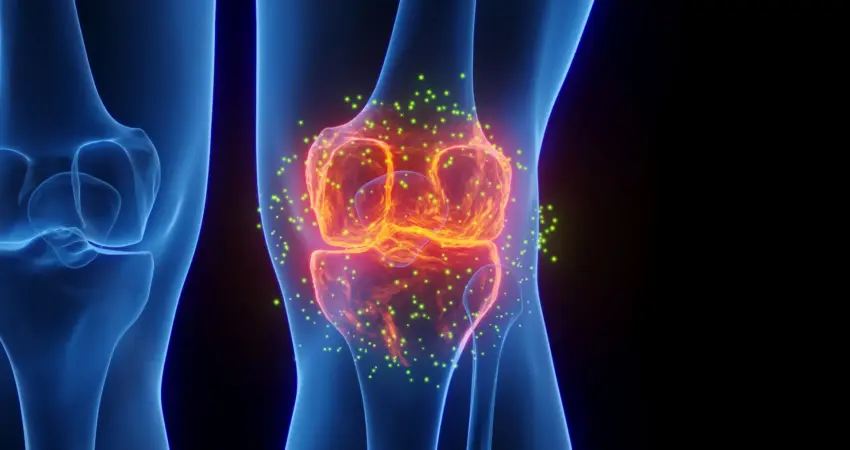
For millions worldwide grappling with the debilitating effects of osteoarthritis, the daily reality is often a relentless cycle of pain and stiffness that progressively encroaches upon fundamental life activities. Existing therapeutic strategies, ranging from over-the-counter analgesics to corticosteroid injections, offer temporary respite by masking symptoms. However, these conventional treatments fall short of addressing the root cause of the disease, leaving the underlying progressive joint damage unchecked. This crucial gap in care has spurred a new wave of research at Yale University, where scientists are exploring an innovative approach that not only alleviates pain but also actively works to reverse cartilage degradation.
H2: A Dual-Action Breakthrough: Lacosamide and Hydrogel Synergy
Groundbreaking research originating from Yale, detailed in the latest issue of the journal Bioactive Materials, unveils the remarkable dual capabilities of the anti-epileptic medication lacosamide. The study demonstrates that lacosamide can effectively reduce joint pain associated with osteoarthritis while simultaneously initiating the reversal of cartilage damage. The efficacy of this therapeutic strategy is significantly amplified when the drug is delivered directly into the affected joint through a specially designed hydrogel. This localized delivery system ensures sustained drug presence, maximizing its therapeutic impact and minimizing systemic exposure.
H3: Understanding the Biology of Osteoarthritis
Osteoarthritis, commonly misconstrued as a simple condition of "wear and tear," involves a far more complex biological cascade. In a healthy joint, specialized cells known as chondrocytes play a vital role in maintaining the integrity of cartilage. These cells operate within a delicate equilibrium, continuously synthesizing new cartilaginous tissue while simultaneously removing older, worn-out material. Osteoarthritis disrupts this crucial balance. The rate of cartilage breakdown accelerates beyond the chondrocytes’ capacity for repair and replacement. This progressive deterioration leads to the eventual loss of the protective cartilage layer, allowing the underlying bones to grind against each other. In advanced stages, this debilitating process can necessitate extensive surgical interventions, such as total knee or hip replacement, fundamentally altering a patient’s mobility and quality of life.
The unmet need for effective osteoarthritis treatments that go beyond symptomatic relief is stark. "There is a major unmet need in osteoarthritis," stated Dr. Chuan-Ju Liu, the study’s principal investigator and the Charles W. Ohse Professor of Orthopaedics & Rehabilitation at Yale. "We need therapies that don’t just mask pain but actually change how the disease progresses." Currently, no medication approved by the U.S. Food and Drug Administration (FDA) possesses the ability to simultaneously halt osteoarthritis pain and prevent the structural deterioration of cartilage. The Yale team’s pioneering work suggests that a single therapeutic intervention might hold the key to addressing both these critical aspects of the disease.
H3: Repurposing Existing Medications for Novel Applications
The researchers’ strategy involved repurposing an existing medication, lacosamide, and integrating it with an advanced hydrogel formulation. This combination aims to ensure the drug remains localized within the joint, thereby preserving vital joint tissue and providing sustained pain relief. This innovative approach offers a promising alternative to traditional pain management, which often relies on potentially addictive opioids. The development of such a localized, long-acting therapeutic system could represent a significant paradigm shift in osteoarthritis management.
H2: Targeting a Dual-Action Protein: Nav1.7
At the heart of this research lies the investigation of Nav1.7, a protein that functions as a sodium channel. These channels are integral components of cell membranes, acting as microscopic gateways that regulate electrical signaling within cells. Traditionally, Nav1.7 was primarily associated with specialized nerve cells responsible for transmitting pain signals from peripheral tissues to the brain. However, recent discoveries by Dr. Liu and his team have revealed a more intricate role for Nav1.7, demonstrating its significant activity within chondrocytes – the very cells responsible for cartilage maintenance.
In healthy joints, Nav1.7 activity remains relatively subdued. Conversely, in the context of osteoarthritis, its activity escalates dramatically. The Yale researchers found that this heightened Nav1.7 activity not only amplifies pain signaling but also prompts chondrocytes to shift their function from cartilage preservation to cartilage degradation. This dual role makes Nav1.7 a particularly compelling therapeutic target, as it appears to influence both the perception of pain and the physical integrity of joint tissue.
"When Nav1.7 becomes dysregulated, it contributes to both joint degeneration and pain," explained Dr. Liu. "Our findings suggest that Nav1.7 is a dual-acting target. By blocking this single protein, we can potentially quiet the pain nerves and tell the cartilage cells to not only stop breaking down but start repairing as well." This insight offers a unique opportunity to develop a single therapeutic agent that addresses the multifaceted nature of osteoarthritis.
H3: Lacosamide’s Unexpected Potential for Cartilage Regeneration
Instead of embarking on the lengthy and costly process of developing an entirely new drug, Dr. Liu’s team focused on existing medications known to inhibit sodium channels. Among the candidates screened, lacosamide emerged as particularly promising. It exhibited potent biological effects at significantly lower concentrations compared to other drugs in its class, while also demonstrating a favorable safety profile.
While lacosamide is already an established treatment for epilepsy, its impact on cartilage proved to be concentration-dependent. The research revealed a finely tuned therapeutic window. At an optimal low concentration, lacosamide stimulated chondrocytes to produce proteins essential for cartilage synthesis and simultaneously suppressed the enzymatic pathways responsible for tissue breakdown. Deviations from this ideal concentration, either higher or lower, diminished these beneficial effects.
"This tells us the system is finely tuned," Dr. Liu commented. "There is an optimal range where the drug helps restore balance without overcorrecting. What stood out was not just its effectiveness, but how little of a dose was needed." This observation underscores the precision with which lacosamide can modulate cellular activity for therapeutic benefit.
Further investigations uncovered that lacosamide also influences intercellular communication. The drug was found to promote the release of two key signaling proteins: HSP70 and midkine. HSP70 is known for its role in cellular stress response and tissue repair, while midkine is involved in regulating inflammation and protecting joint tissues from degenerative processes. The synergistic action of these proteins creates a more conducive environment for cartilage maintenance and repair.
"These proteins create a supportive environment for cartilage maintenance," Dr. Liu elaborated. "They allow the effects of the drug to extend beyond individual cells and influence the entire tissue." This systemic effect within the joint microenvironment further enhances the therapeutic potential of lacosamide.
H2: The Role of Advanced Biomaterials in Targeted Drug Delivery
While oral administration of lacosamide proved effective in preclinical studies, systemic drug circulation carries the inherent risk of off-target effects in other parts of the body. To circumvent this, the researchers focused on intra-articular injection, a method that delivers the medication directly into the affected joint. However, a significant hurdle remained: the natural tendency of joints, particularly the knee, to rapidly clear injected fluids.
"The knee joint, which is also the most common location for osteoarthritis, naturally acts like a leaky bucket," Dr. Liu explained. "The body’s drainage system can clear out liquids injected into the knee within hours." To address this limitation, the team engineered a specialized hydrogel composed of Collagen II. This innovative biomaterial exhibits thermosensitive properties. It remains in a liquid state within a cool syringe, facilitating easy injection, but transforms into a firm, jelly-like matrix upon reaching body temperature inside the joint.
Once injected, the hydrogel serves as a localized reservoir for lacosamide. This design ensures that the medication remains concentrated within the affected joint and is gradually released over several weeks, providing sustained therapeutic benefits. "The hydrogel acts as a local reservoir," Dr. Liu emphasized. "It holds the drug in place in the location it is needed most and releases it slowly over time. It transforms a daily pill into a long-lasting, local treatment that stays active for a month or longer."
Preclinical studies demonstrated that a single injection of the lacosamide-infused hydrogel administered every four weeks was more effective in preventing cartilage loss than daily oral administration of the drug. This localized delivery system not only enhances therapeutic efficacy but also significantly improves patient convenience and compliance.
H3: Accelerating Clinical Translation and Broader Implications
A substantial advantage of utilizing lacosamide is its existing FDA approval for human use. This pre-existing regulatory status significantly streamlines the pathway toward clinical trials in osteoarthritis patients, potentially accelerating the timeline for bringing this novel treatment to market compared to a completely new drug. Furthermore, lacosamide has been previously investigated in human trials for certain nerve-related pain conditions stemming from Nav1.7 mutations. These prior studies provide a foundation of safety and efficacy data, bolstering researchers’ confidence that the observed laboratory benefits will translate into tangible pain relief for patients suffering from osteoarthritis.
This research also aligns with a broader trend in modern medicine: the convergence of pharmaceuticals with advanced biomaterials to achieve highly precise drug delivery. If this approach proves successful in human clinical trials, it could lead to a reduction in the number of surgical procedures required for osteoarthritis patients, minimize the occurrence of adverse side effects, and offer enduring protection against progressive joint damage.
"We are not just developing a treatment," Dr. Liu concluded. "We are developing a system that allows the medicine to work more effectively where it matters most. Our goal is to move beyond symptom control and towards true disease modification. This effort brings us closer to that reality." The potential impact of this research extends beyond individual patient outcomes, promising to redefine the landscape of osteoarthritis management and offer a renewed sense of hope to those affected by this pervasive condition. The integration of targeted drug delivery with existing therapeutic agents represents a powerful strategy for addressing complex chronic diseases and improving the quality of life for millions.

0 Comments