
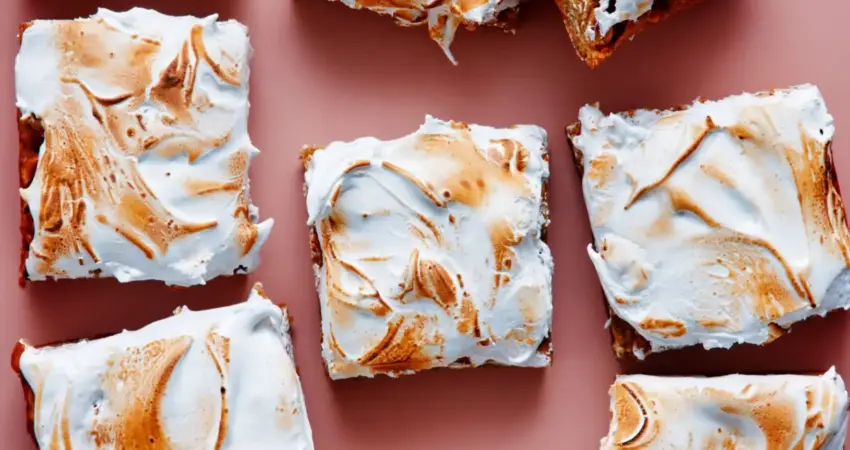
A beloved Italian cookie, known for its delightful paradox of "ugly but good," has inspired a sophisticated dessert innovation: brutti ma buoni-inspired hazelnut blondies. This reimagined treat takes the essence of the traditional meringue cookie—its rich, toasted hazelnut flavor and airy sweetness—and transforms it into a more visually appealing and texturally complex confection. The result is a chewy, fudgy blondie base, generously studded with crunchy toasted hazelnuts and crowned with swirls of caramelized, torched meringue, offering a harmonious blend of textures and deeply satisfying flavors.
The inspiration for these hazelnut blondies stems directly from the classic Italian "brutti ma buoni" cookie. The name, translating literally to "ugly but good," hints at the cookie’s rustic appearance, often characterized by its irregular shape and slightly craggy surface. Despite its unassuming look, the cookie is celebrated for its intensely nutty flavor, derived from toasted hazelnuts, and its light, crisp meringue texture. This new blondie iteration seeks to capture that same flavor profile while presenting it in a more refined, yet still approachable, format.
From Rustic Cookie to Refined Blondie: A Culinary Transformation
The creator of this recipe, whose work often draws from traditional culinary inspirations, has translated the core elements of the brutti ma buoni into a blondie. The original cookies, while not inherently "ugly" in the eyes of many enthusiasts, possess a charm that lies in their unpretentious nature. This new interpretation aims to retain that inherent deliciousness while enhancing its visual appeal. The process involves first toasting blanched hazelnuts to bring out their full nutty aroma and flavor. These are then incorporated into a rich, chewy blondie batter, characterized by brown butter for added depth and caramel notes. The topping of crunchy hazelnuts provides a delightful textural contrast to the soft, fudgy interior.
A significant addition that elevates this blondie beyond the traditional is the inclusion of torched meringue. This component directly echoes the meringue element of the original brutti ma buoni, offering a sweet, airy counterpoint to the dense blondie. The meringue is not merely an afterthought; it is described as a "bonus" that significantly enhances the overall dessert experience. Even without the meringue, the blondies themselves are lauded as excellent, highlighting the strength of the base recipe.
For those seeking an even more nuanced flavor profile, a subtle yet impactful suggestion is made: incorporating the finely grated zest of a large orange into the warm brown butter. This addition introduces a bright, citrusy note that complements the richness of the hazelnuts and brown butter, creating a more complex and layered taste sensation. This small alteration demonstrates a keen understanding of flavor pairings and the potential for subtle enhancements to traditional recipes.
The Allure of "Ugly but Good": A Culinary Philosophy
The concept of "ugly but good" in food is not new. It speaks to a culinary philosophy that prioritizes flavor and quality over superficial aesthetics. This can be observed in various cuisines, from the humble yet delicious peasant dishes of Europe to the unpretentious but flavorful street food found across the globe. The brutti ma buoni cookie is a prime example of this philosophy, proving that exceptional taste can come in unassuming packages.
The success of such desserts often lies in the quality of their core ingredients and the mastery of simple techniques. In the case of the brutti ma buoni, the toasting of hazelnuts is paramount, unlocking their complex flavor. Similarly, the creation of a stable and delicious meringue requires precision. The adaptation into a blondie format further emphasizes the importance of a well-executed base, where the richness of brown butter and the chewiness of the batter are key.
The popularity of recipes that celebrate ingredients and simple preparations has seen a resurgence in recent years, as consumers increasingly seek authenticity and deliciousness. This trend is reflected in the growing interest in home baking and the appreciation for desserts that are both comforting and sophisticated. The brutti ma buoni-inspired blondies tap into this sentiment, offering a familiar yet elevated experience.
A Deeper Dive into the Ingredients and Preparation
The recipe calls for a carefully selected set of ingredients to achieve the desired texture and flavor profile. For the blondie base, blanched hazelnuts are essential, ensuring a pure hazelnut flavor without the bitterness of skins. The use of unsalted butter is standard in baking, allowing for precise control over salt content. The inclusion of both whole eggs and an extra egg yolk contributes to the blondie’s signature fudgy chewiness and richness.
The sweetener blend of granulated sugar and light brown sugar provides both structure and moisture, with the brown sugar adding a subtle molasses note. Vanilla bean paste or extract is crucial for its aromatic contribution, while Diamond Crystal or Morton kosher salt balances the sweetness. The optional instant espresso powder can deepen the chocolatey undertones of the brown butter, enhancing the overall flavor complexity. All-purpose flour forms the structural backbone of the blondies.
The meringue component, while optional, requires large egg whites, granulated sugar, vanilla bean paste or extract, and kosher salt. The ratio of egg whites to sugar is critical for creating a stable meringue. The recipe also specifically calls for a kitchen torch, indicating the desire for a torched, caramelized finish, reminiscent of a lightly toasted meringue.
Preparation Steps: A Symphony of Textures and Flavors
The preparation of these brutti ma buoni-inspired hazelnut blondies involves several key stages, each contributing to the final product’s exceptional quality.
-
Toasting the Hazelnuts: The initial step involves toasting the blanched hazelnuts. This process is vital for developing their characteristic nutty aroma and flavor. Roasting them until fragrant and lightly golden brown ensures they are perfectly prepared to impart their richness to the blondies.
-
Browning the Butter: The foundation of the blondie’s flavor lies in brown butter. This technique involves heating butter until the milk solids toast and caramelize, imparting a rich, nutty, and slightly toffee-like flavor. This step is crucial for the depth and complexity of the blondie. The optional orange zest would be added at this stage, infusing the warm butter with citrus notes.
-
Creating the Blondie Batter: Once the butter is browned and slightly cooled, it is combined with the sugars. The eggs and egg yolk are then incorporated, followed by the vanilla, salt, and optional espresso powder. Finally, the all-purpose flour is gently folded in until just combined, ensuring a tender crumb. A portion of the toasted hazelnuts is then mixed into the batter.
-
Baking the Blondies: The batter is spread into a prepared baking pan, and the remaining toasted hazelnuts are scattered generously over the top. This creates a delightful crunch and visual appeal. The blondies are then baked until the edges are set and golden brown, and a toothpick inserted into the center comes out with moist crumbs attached.
-
Preparing the Meringue: While the blondies bake or cool, the meringue can be prepared. Egg whites are whisked with sugar until stiff, glossy peaks form, creating a stable, sweet topping.
-
Assembly and Torching: Once the blondies have cooled sufficiently, the meringue is carefully spooned or piped over the top, creating decorative swirls. A kitchen torch is then used to lightly caramelize the meringue, adding a beautiful golden-brown hue and a slightly crisp texture. A sprinkle of flaky sea salt over the torched meringue provides a final touch of savory contrast.
Broader Implications and Culinary Trends
The creation and popularity of recipes like these brutti ma buoni-inspired hazelnut blondies reflect several prevailing trends in the culinary world. There is a growing appreciation for ingredient-driven desserts, where the quality of raw materials is paramount. The use of nuts, particularly hazelnuts, in baked goods has seen a sustained interest, driven by their rich flavor and versatile texture.
Furthermore, the act of deconstructing and reimagining classic desserts speaks to a desire for innovation within traditional frameworks. It allows home bakers and professional chefs alike to pay homage to culinary heritage while injecting contemporary appeal. This approach often results in recipes that are both familiar and exciting, appealing to a broad audience.
The emphasis on texture – the chewy blondie, the crunchy hazelnuts, the airy, slightly crisp meringue – is another significant aspect of modern dessert creation. Consumers today often seek multi-sensory experiences, and a well-executed dessert delivers on both flavor and texture.
The fact that the meringue is considered a "bonus" highlights a key aspect of recipe development: ensuring that the core product is excellent on its own. This allows for flexibility and caters to different preferences or skill levels. The recommendation for adding orange zest also points to a trend of layering flavors and encouraging experimentation, empowering home bakers to personalize their creations.
The enduring appeal of the "ugly but good" concept in food continues to inspire chefs and home cooks. It champions the idea that true culinary excellence lies in taste and satisfaction, not solely in visual perfection. As consumers become more discerning and adventurous, recipes that offer a sophisticated yet accessible take on beloved classics are likely to remain in high demand. These brutti ma buoni-inspired hazelnut blondies are a testament to this enduring culinary principle, offering a delightful fusion of tradition and contemporary appeal.

0 Comments