
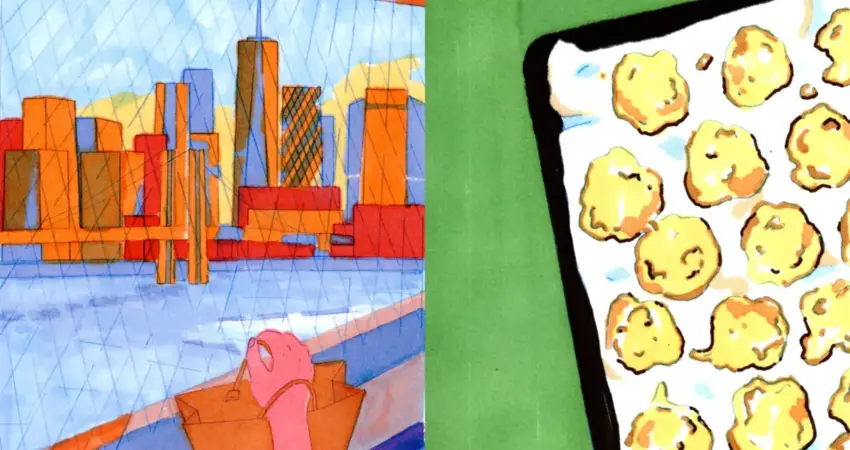
The pre-dawn chill of a New York City morning, a stark contrast to the rising sun and the demands of a bustling culinary career, served as the unlikely starting pistol for Tanya Bush’s ambitious culinary trek. Bush, a celebrated pastry chef at Brooklyn’s Little Egg, co-founder of the innovative Cake Zine, and author of the compelling narrative cookbook "Will This Make You Happy," embarked on a considerable journey—part walk, part ferry ride—from Manhattan to Jersey City. Her destination: Bread and Salt, a bakery she had long admired, and her quarry: an "underappreciated cookie" that held a particular allure. This expedition, undertaken on a day ostensibly free from professional obligations, was not merely a personal indulgence but a deliberate immersion into her new role as a columnist chronicling "long walks to food destinations," a commitment that demanded tangible, experiential reporting.
The genesis of this ambitious walk was rooted in Bush’s personal philosophy regarding her limited days off. "When you have to wake up before sunrise for your job, you fiercely guard the days you don’t," she articulated, highlighting the personal significance of reclaiming her time. The unexpected 4:30 a.m. alarm on what was meant to be a day of rest initially met with "profound piss," a testament to the disruption of her carefully guarded leisure. The plan, as devised with fellow pastry chef Brooks Headley, involved a shared odyssey to Jersey City, with a ferry crossing the Hudson River to circumvent the pedestrian-unfriendly Holland Tunnel. Headley, whose own culinary contributions at Superiority Burger have garnered significant acclaim for their inventive approach to comfort food, had championed Bread and Salt, a venue Bush had yet to experience firsthand.
The Urban Trek: A Multisensory Prelude
Bush’s dedication to her new column, which requires her to "earn it," immediately translated into an immediate undertaking of the journey on foot. Her chosen route, estimated by mapping applications to take over two hours, was met with Bush’s characteristic self-awareness and a touch of competitive spirit: "the maps app and I are in a long-term acrimonious relationship wherein she underestimates my speed, and I beat her." This calculated recalibration of her travel time underscored her preparedness and understanding of her own pace.
The sartorial choices for such an undertaking were paramount. In the pre-dawn darkness, Bush selected "hiking shorts and a tank—a blessing for the scorcher ahead," a practical decision given the forecast. The application of sunscreen and the tightening of her Salomon footwear were rituals of preparation, acknowledging the physical demands of the trek. The initial leg of her journey, across the Manhattan Bridge, proved to be a sensory immersion into the urban soundscape. The "near-constant prattle of the subway" served as an immediate, if unwelcome, soundtrack to her progress. This early stage of the walk also provided an opportunity for sustenance, with Bush procuring a "matcha and a doughy red bean bun freckled with sesame seeds from Daronghua Bakery." This pre-meeting snack, while providing energy, also hinted at the culinary discoveries that would punctuate the journey.
The meeting with Brooks Headley in the East Village at 7:15 a.m. marked the official commencement of their shared expedition. Despite the early hour and the physical exertion, Bush’s arrival was met with a positive reception. The simple gesture of offering Headley a "hibiscus iced tea" elicited a genuine "Wow," from her companion, suggesting a shared appreciation for the thoughtful touches that can elevate an experience.
A Different Pace: Observation Over Efficiency
As the duo proceeded down Essex Street towards the southern tip of Manhattan, a subtle shift in their dynamic became apparent. Bush, accustomed to a more task-oriented approach to her work—"forging ahead like I had a production list to get through"—found herself adapting to Headley’s more contemplative pace. Headley’s propensity for pausing, for pointing out the "most beautiful skate park in the world" or for admiring a "tiled sign that said ‘DON’T BE A DICK’," introduced an element of deliberate observation into their urban traversal. These moments, seemingly minor, underscored a fundamental difference in their engagement with their surroundings.
Headley’s ability to find profound interest in the mundane—the graffiti art reaching improbable heights, the "interesting expo situation" in a local diner—contrasted with Bush’s initial feeling of being "sweaty" and preoccupied with the physical exertion. This contrast highlighted a key insight for Bush: the difference between performing a task and truly experiencing it. "Watching Brooks point out the way the light was slanting over the World Trade Center, I thought about how he didn’t appear bored at all," she reflected. This observation led to a critical realization about the nature of culinary expertise and passion: "It seemed like the more times he walked the route the more he saw."
This introspection resonated deeply with Bush’s own professional experience. As a pastry chef, she noted, the repetitive nature of dough preparation and ingredient transformations, while essential, could lead to a certain "inurement to the pleasures of browning butter." She confessed to a waning enthusiasm for seasonal produce, where "blackberries are coming and I can’t get it up for them." Headley’s unflagging curiosity served as a powerful counterpoint, demonstrating that sustained engagement with one’s craft could foster a perpetual sense of discovery, even in the most familiar of settings. This philosophical divergence between efficient execution and mindful observation formed a significant thematic undercurrent of the day’s journey.
The Hudson Crossing and the Jersey Shore
The ferry ride across the Hudson River offered a period of quiet reflection and a literal shift in perspective. As the Manhattan skyline receded, Bush contemplated the vastness of the city she had yet to fully explore. The solitary presence of a seagull accompanying their passage added a touch of whimsy to the transit. Upon disembarking in Hoboken, New Jersey, Headley’s keen eye immediately spotted historical markers, pointing out "some of the oldest restaurant signs I’d ever seen," including the "Clam Broth House, established in 1900." This historical context further enriched Bush’s understanding of the region’s culinary heritage, a layer of appreciation that a purely functional transit would have missed.
The physical toll of the walk began to manifest, with Bush’s "calves began to ache." A strategic stop at the original Carlo’s Bakery, a nod to popular culture’s association with the locale, provided an opportunity for "hydration" and a chance to acquire pastries to share with Rick, the co-owner of Bread and Salt. Their shared selection, a "dot cake" with vanilla cake and buttercream obscured by a "psychedelic layer of rainbow sprinkles," represented a contemporary trend in confectionery, a stark contrast to the rustic offerings they were ultimately seeking. This choice underscored the pervasive influence of social media aesthetics on contemporary food culture, a topic Bush would later explore more deeply.
Bread and Salt: A Candid Conversation with a Baker
The arrival at Bread and Salt coincided with midday, a point of significant fatigue for Bush. The bakery’s owner, Rick, a figure described by Headley as "the character in the movie you always want to hang out with," greeted them warmly. Rick, amidst preparing for an event and packaging cookies made with white wine, offered a candid assessment of the bakery’s current situation. "The world’s changed, and I haven’t," he admitted, citing his six-and-a-half-year delay in adopting Apple Pay as a testament to his resistance to modern commercial shifts.
Rick’s observation about the evolving economics of the pastry industry—where "pastry sales have gone up, but now everyone can only afford one little sweet"—resonated with Bush’s own reflections on the "treat industrial complex." She noted the constant pursuit of novelty, the proliferation of new bakeries and extravagant dessert trends, and questioned the sustainability of this model. This exchange provided a grounded, real-world perspective on the challenges facing artisanal food businesses in an era of rapid commercial and cultural flux.
The "Ugly But Good" Cookie: A Revelation
As the conversation deepened, touching upon arcane baking ingredients like baker’s ammonia and even a "mafia encounter in Napoli," Rick pulled a tray of cookies from the oven. These were not visually appealing specimens; they were "misshapen brown mounds, hardened lumps fused together, not much to look at even if they were wafting a toasty smell." Despite their unpretentious appearance, Rick declared them "Cookies are our best thing, but no one buys them."
The moment of truth arrived when Rick offered Bush one of these overlooked cookies. The confluence of her physical exhaustion and the baker’s earnest offering created a profound sensory experience. "Roasted hazelnuts almost meaty in their decadence, swathed in a toasty sweet meringue that stuck to my teeth, so crisp it almost felt engineered," she described. This was no ordinary cookie; it was an "ugly but good" cookie, a "Brutti ma buoni," a traditional Italian confection whose name perfectly encapsulated its essence.
The profound impact of this cookie challenged Bush’s ingrained perceptions. She recognized that her professional training and the demands of social media marketing had conditioned her to prioritize aesthetics. The "dot cake" from Carlo’s Bakery, with its garish sprinkles, now seemed superficial in comparison to the unvarnished authenticity of the Brutti ma buoni. This realization sparked a poignant internal debate about the pressures of the modern culinary landscape.
The Lingering Aftertaste: Aesthetics vs. Substance
The walk back to the PATH station, with Bush having accumulated an impressive "40,000 steps," marked the culmination of the physical journey. Yet, the intellectual and emotional journey continued. As she descended underground, returning to Brooklyn, her thoughts remained fixed on the cookies. The immediate, almost humiliating, impulse was to consider "how to photograph them, how to make them more beautiful." This reflex underscored the pervasive influence of visual presentation in the contemporary food world.
Bush articulated the internal conflict: "As a baker, most of what I make needs to look good enough to convert someone scrolling on Instagram into someone willing to wait in line." She acknowledged the necessity of creating visually appealing specials and posting engaging content to drive customer interest. However, she also recognized the personal "dopamine hit" associated with being part of the culinary conversation, the desire to constantly innovate rather than repeat familiar creations. The Brutti ma buoni, while undeniably delicious, lacked the visual appeal that would typically secure its place in the digital food narrative. Her wistful admission, "I wish I was the creator of the dot cake, even if I know in my soul it doesn’t taste that good," revealed a deep-seated tension between artistic integrity and commercial viability.
Beyond the Surface: A New Culinary Compass
The journey’s end brought a renewed perspective. Navigating the Oculus, Bush reviewed her unappetizing photographs of the Brutti ma buoni. She mused that had she visited Bread and Salt on a day it was officially open, her initial inclinations might have led her to prioritize the more visually appealing focaccias or bombolini, potentially bypassing the humble cookies altogether.
This experience served as a powerful recalibration of her culinary compass. The revelation of the Brutti ma buoni challenged her to reconsider what constitutes true value in food. It highlighted the potential for exceptional flavor to exist beneath a less-than-perfect exterior, and the danger of prioritizing fleeting trends over time-tested quality.
In response to this profound experience, Bush has translated the essence of the Brutti ma buoni into a more visually accessible format, developing a recipe for "Toasted Meringue Hazelnut Blondies." This creation aims to capture the "combination of toasted hazelnuts and caramelized meringue" within a "chewy and fudgy brown butter blondie baked with a layer of crunchy hazelnuts on top and finished with swoops of torched meringue." While this adaptation acknowledges the demands of contemporary presentation, it is clearly inspired by the humble, yet profoundly delicious, cookie that prompted this transformative culinary pilgrimage. The walk to Bread and Salt was not just a physical journey; it was a profound exploration of taste, tradition, and the evolving landscape of culinary appreciation.

0 Comments