
 By Layla Zulfa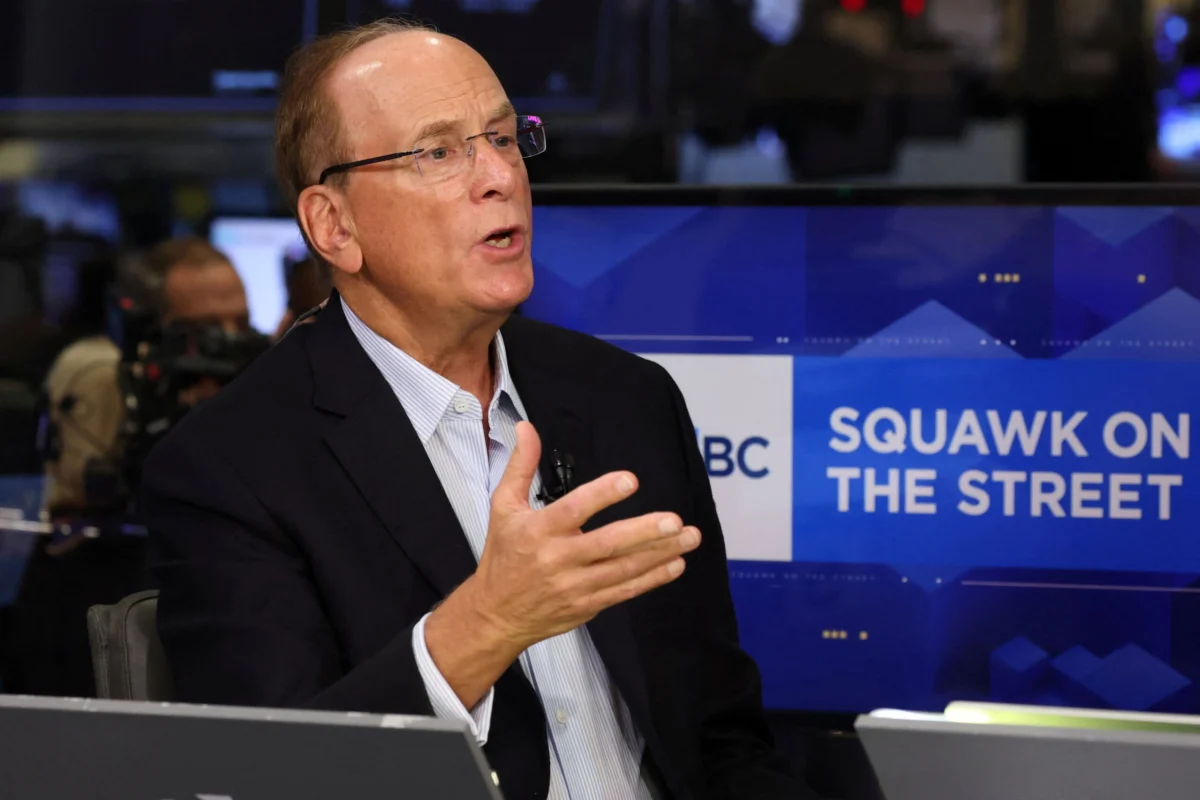
In his eagerly anticipated annual chairman’s letter, released on Monday, March 24, 2026, Larry Fink, Chairman and CEO of BlackRock, the world’s largest asset manager with a staggering $14 trillion in assets under management at the close of 2025, issued a dual-pronged message to global investors and policymakers. Fink unequivocally urged investors to steadfastly resist the pervasive temptation to time financial markets, asserting that unwavering commitment through periods of economic and geopolitical turbulence has historically yielded substantially superior returns. Simultaneously, he delivered a stark warning regarding the rapid ascent of artificial intelligence (AI), predicting its potential to profoundly exacerbate global wealth inequality, enriching those who already possess significant assets while leaving substantial segments of the population further behind.
"Over time, staying invested has mattered far more than getting the timing right," Fink articulated in his widely distributed letter. "Some of the market’s strongest days came amid the most unsettling headlines." This foundational principle of long-term investing, a cornerstone of BlackRock’s philosophy, was underscored by Fink as he pointed to the past two decades as compelling evidence. During this period, every dollar judiciously invested in the S&P 500 index grew more than eightfold. However, Fink highlighted a critical caveat: investors who, driven by fear or speculative impulse, missed merely the 10 best trading days over that same twenty-year stretch would have seen their returns slashed by more than half, illustrating the immense cost of attempting to predict market peaks and troughs.
The Enduring Power of Long-Term Investing
Fink’s admonition against market timing is not a novel concept but a perennial wisdom frequently espoused by seasoned investment professionals and academic researchers alike. It draws heavily from empirical evidence demonstrating the inherent difficulty, if not outright impossibility, of consistently and accurately predicting market movements. Numerous studies, including those by Dalbar, Inc., have consistently shown that individual investors who attempt to time the market often underperform broad market indices due to a combination of emotional decision-making, transaction costs, and the statistical improbability of correctly identifying entry and exit points. Investors tend to buy high, fueled by euphoria, and sell low, driven by panic, thereby locking in losses and missing out on subsequent recoveries.
The S&P 500’s performance over the past two decades serves as a powerful testament to Fink’s argument. From the aftermath of the dot-com bubble burst in the early 2000s, through the global financial crisis of 2008, the European sovereign debt crisis, and the unprecedented disruption of the COVID-19 pandemic, markets have faced numerous seismic shocks. Yet, a disciplined, buy-and-hold strategy has rewarded patient investors. For instance, an investment made at the depths of the 2008 crisis or during the initial panic of the COVID-19 lockdown in March 2020 would have seen remarkable appreciation in the subsequent years, far outpacing the returns of those who liquidated their holdings during those periods of heightened uncertainty. This reinforces the idea that volatility, while unsettling, often presents opportunities for long-term growth for those who remain invested.
Behavioral economics offers further insight into why market timing is so seductive yet ultimately detrimental. Cognitive biases such as loss aversion (the tendency to prefer avoiding losses over acquiring equivalent gains) and herd mentality often compel investors to make irrational decisions. The fear of missing out (FOMO) can lead to chasing frothy assets, while the fear of losing money can trigger premature selling during downturns. Fink’s letter effectively serves as a crucial reminder to anchor investment strategies in fundamental long-term growth drivers rather than succumbing to short-term market noise.
Navigating a Volatile 2026 Landscape: Geopolitics, Inflation, and Tech Disruption
Fink’s counsel arrives at a time when global markets are indeed increasingly characterized by rapid shifts in sentiment, largely influenced by an intricate web of geopolitical tensions, persistent inflationary pressures, and transformative technological disruptions. The very day his letter was released, Monday, March 24, 2026, saw a significant market rally, with major indices like the S&P 500, Dow Jones Industrial Average, and Nasdaq Composite all posting strong gains. This surge was primarily catalyzed by an unexpected announcement from President Donald Trump, who confirmed that the United States and Iran had engaged in diplomatic talks and, critically, that he was halting planned strikes on Iranian energy infrastructure.
This specific geopolitical development provided a temporary but potent dose of relief to global markets. Tensions between the U.S. and Iran had been simmering for years, frequently escalating over issues ranging from Iran’s nuclear program and its regional proxy activities to maritime security in the Strait of Hormuz, a critical choke point for global oil shipments. In the weeks leading up to Trump’s announcement, there had been growing apprehension over potential military confrontations, particularly following reports of Iranian threats to shipping and the U.S. response of deploying additional naval assets to the region. The prospect of military action against Iranian energy facilities had fueled fears of a significant spike in global oil prices, supply chain disruptions, and broader economic instability. Trump’s de-escalation signal, therefore, significantly eased these concerns, providing a tangible example of how "some of the market’s strongest days came amid the most unsettling headlines."
Beyond the immediate geopolitical flashpoints, the global economic environment in early 2026 remained complex. While some regions had seen inflation moderate from its peaks in the mid-2020s, core inflation remained sticky in many major economies, keeping central banks on alert. The delicate balance between controlling inflation and avoiding a recession continued to be a primary concern for policymakers, influencing interest rate expectations and capital flows. Investors were constantly recalibrating their portfolios in response to inflation data, central bank statements, and shifts in consumer spending patterns.
Furthermore, the backdrop of technological disruption, extending beyond just AI, continued to reshape industries and economies. Advances in quantum computing, biotechnology, sustainable energy technologies, and advanced manufacturing were creating both immense opportunities for growth and significant uncertainties regarding job displacement, skill requirements, and the competitive landscape. These rapid technological shifts often lead to sector rotations and increased market volatility as investors attempt to discern future winners and losers. Fink’s message underscores the danger of becoming overly fixated on this "noise," losing sight of the fundamental long-term trends and the intrinsic value of staying invested in a diversified portfolio designed to capture broad economic growth.
"The danger is that we focus so much on the noise that we forget what actually matters," Fink wrote. "The forces behind today’s headlines have been building for a long time. The old model of global capitalism is fracturing. Countries are spending enormous sums to become self-reliant – in energy, in defense, in technology." This observation points to a broader macroeconomic shift towards deglobalization or "friend-shoring," where nations prioritize supply chain resilience and national security over purely efficiency-driven global integration. Such a paradigm shift implies significant capital expenditures in strategic industries, potentially driving long-term investment themes even amidst short-term market fluctuations.
The AI Revolution and Widening Gaps: A Looming Challenge
While advocating for investor resilience, Fink also pivoted to a profound societal concern: the rapid rise of artificial intelligence and its potential to exacerbate existing wealth disparities. His warning is stark: "The massive wealth created over the past several generations flowed mostly to people who already owned financial assets. And now AI threatens to repeat that pattern at an even larger scale."
This observation is rooted in decades of economic data illustrating the growing chasm between capital owners and wage earners. Since the 1980s, particularly in developed economies, the share of national income accruing to capital has generally increased relative to labor. Policies favoring capital gains, globalization, and the rise of the gig economy have contributed to this trend. Those with existing investments in stocks, bonds, and real estate have seen their wealth grow substantially, often at a faster rate than the incomes of those primarily reliant on wages.
AI, Fink argues, could accelerate this pattern through several interconnected mechanisms. Firstly, AI’s primary economic impact, in many sectors, is through automation, which enhances productivity and efficiency. While this boosts corporate profits and, by extension, shareholder value, it can simultaneously displace human labor, particularly in routine and predictable tasks. This leads to job losses or downward pressure on wages for a significant portion of the workforce, further concentrating wealth in the hands of capital owners (shareholders of companies leveraging AI) rather than distributing it more broadly through wages.
Secondly, the development and deployment of cutting-edge AI technologies require enormous capital investment and specialized expertise. This naturally concentrates power and wealth among a relatively small group of large technology companies, venture capitalists, and highly skilled professionals who possess the intellectual property and infrastructure necessary to lead the AI revolution. Companies tied to AI, particularly those involved in chip manufacturing, cloud computing infrastructure, and advanced AI model development, have indeed driven a significant share of recent equity market gains. Firms like Nvidia, Microsoft, Google, and Amazon, among others, have seen their market capitalizations surge, consolidating returns among their shareholders and executives. This phenomenon is creating a new cohort of ultra-wealthy individuals and institutions, while the broader economy struggles to adapt to the rapid technological shifts.
Thirdly, AI is expected to create a "skill premium," significantly increasing demand for highly specialized roles (AI engineers, data scientists, machine learning experts) while potentially devaluing or automating many mid-skill and low-skill jobs. This widening gap in the labor market could further entrench economic inequality, as the benefits of AI primarily accrue to a select few with niche skills, leaving others struggling to find meaningful employment or facing stagnant wages. The "digital divide" – disparities in access to technology, education, and digital literacy – could exacerbate these trends, preventing many from participating in the AI-driven economy.
BlackRock’s Broader Vision and Implications for Society
As the custodian of vast amounts of global capital, BlackRock’s insights carry significant weight, influencing investment trends and corporate governance practices worldwide. Fink’s dual warnings are not merely market observations but reflect a broader concern about the sustainability of global capitalism and societal cohesion. BlackRock has long championed the concept of "stakeholder capitalism," advocating that companies should consider the interests of all stakeholders – employees, customers, suppliers, communities, and the environment – not just shareholders. Fink’s emphasis on inequality, particularly concerning AI, aligns with the "Social" component of Environmental, Social, and Governance (ESG) investing, a framework BlackRock has actively promoted.
The implications of Fink’s AI warning are profound, extending beyond financial markets to public policy and corporate strategy. For policymakers, the challenge lies in crafting legislation that can harness the immense productivity potential of AI while mitigating its disruptive social consequences. This could involve exploring new social safety nets (such as universal basic income or robust unemployment benefits), investing heavily in retraining and upskilling programs for displaced workers, reforming education systems to prepare future generations for an AI-powered world, and potentially re-evaluating taxation policies to address wealth concentration. Some economists and policymakers have also begun discussing measures to promote more equitable ownership of AI-driven capital, perhaps through broad-based employee stock ownership plans or public equity funds.
For corporations, Fink’s letter is a call to integrate ethical AI development and deployment into their core strategies. This includes considering the social impact of automation, investing in their workforce’s adaptability, and ensuring that the benefits of AI innovation are shared more broadly within their organizations and communities. Companies that proactively address these challenges may be better positioned for long-term sustainability and societal acceptance.
In conclusion, Larry Fink’s annual chairman’s letter for 2026 serves as a critical compass for navigating an increasingly complex global landscape. His reiteration of the time-tested principle of long-term investing offers a stabilizing anchor amidst the cacophony of geopolitical events and market volatility. Simultaneously, his stark warning about AI’s potential to amplify inequality presents a formidable challenge that demands urgent attention from investors, corporations, and governments worldwide. As BlackRock continues to manage trillions in assets, Fink’s dual message underscores the interconnectedness of financial stability, technological progress, and social equity, urging a collective re-evaluation of how we harness innovation for the benefit of all, rather than a select few. The imperative is clear: to remain invested in the future, both financially and socially, and to actively shape a technological revolution that fosters prosperity for a broader segment of humanity.