
 By Layla Zulfa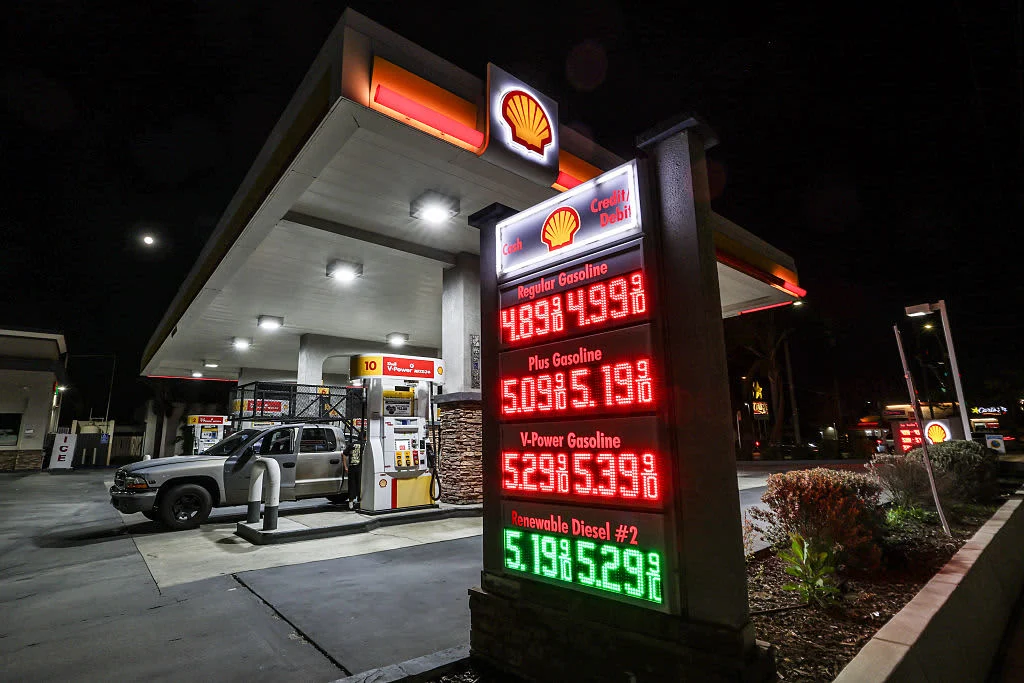
The specter of surging oil prices, exacerbated by the recent U.S.-Iran conflict, looms large over the American economy, threatening to not only derail President Donald Trump’s efforts to curb inflation but also to significantly diminish, if not entirely erase, the economic benefits of his administration’s hallmark legislative achievement: the "One Big Beautiful Bill Act" tax cuts. As crude benchmarks remain stubbornly elevated, economic analysts are warning that the anticipated boost to consumer spending from reduced tax burdens could be directly siphoned off by higher costs at the pump, effectively neutralizing a key pillar of the administration’s economic strategy.
The Economic Equation: Oil Prices vs. Tax Benefits
At the heart of this brewing economic challenge is a stark calculation presented by Raymond James. According to their analysis, if oil prices sustain an increase of more than $20 per barrel compared to pre-U.S.-Iran war levels, nearly all the positive economic impact from the individual tax cuts could be nullified. This includes both the immediate relief from smaller payroll withholdings and the more substantial benefits expected from sweetened tax refunds slated for the current filing season.
Tavis McCourt, a strategist at Raymond James, articulated the gravity of the situation in a recent note to clients: "With the $25 move last week, if the oil price stays here, it essentially offsets the fiscal benefit from the [One Big Beautiful Bill Act]." His analysis is rooted in a detailed examination of consumer spending habits and the sheer scale of the energy market. McCourt calculated that consumers collectively spent over $420 billion on gasoline in the fourth quarter of 2025 alone. Applying any sustained increase in oil market prices to this colossal expenditure reveals a direct and substantial drain on household budgets.
Specifically, McCourt’s calculations suggest that a $20 per barrel increase in oil prices could translate into American consumers spending an additional $150 billion at the gasoline pump annually. This figure stands in stark contrast to the estimated $129 billion in individual tax cuts for 2025, as projected by the Tax Foundation. The overwhelming majority of these tax savings were designed to materialize through refunds during the current filing season, intended to inject fresh capital into consumer hands and stimulate broader economic activity. Before the onset of the war on February 27, U.S. crude oil was trading at $67.02 per barrel. As of Tuesday morning, despite a significant whiplash in prices on Monday, crude has settled more than $20 higher, reaching $88.20 per barrel, firmly within the range identified by Raymond James as critical.
Background Context: The U.S.-Iran Conflict and Global Oil Volatility
The catalyst for this sudden and sharp escalation in oil prices is the recently ignited U.S.-Iran war. While the specifics of the conflict remain a subject of ongoing geopolitical analysis, its immediate impact on global energy markets has been undeniable. The Strait of Hormuz, a critical chokepoint through which approximately one-fifth of the world’s total oil supply passes, lies adjacent to Iran. Any perceived threat or actual disruption to this vital shipping lane invariably sends shockwaves through the oil market, triggering speculative buying and pushing prices upwards.
The chronology leading to this conflict likely involved a series of escalating tensions, potentially including maritime incidents, proxy conflicts in the region, or direct military confrontations. Such events typically reduce investor confidence in stable supply, leading traders to price in a "risk premium" on crude oil futures. The immediate aftermath of the declaration of hostilities or major military actions would have seen an initial spike, followed by periods of high volatility as market participants reacted to developments and pronouncements from involved parties. President Trump’s statement on Monday to a CBS News reporter that the war is "very complete," while offering a degree of reassurance, lacked a concrete timeline for de-escalation or a return to pre-conflict stability, leaving the market in a state of flux.
Historically, geopolitical conflicts in major oil-producing regions have demonstrated a consistent pattern of elevating and sustaining higher crude prices for extended periods. McCourt highlights two notable precedents: the Gulf War in 1990 and the Russian invasion of Ukraine in 2022. In both instances, it took approximately six months for oil prices to recede to levels comparable to those observed before the conflicts began. This historical pattern suggests that even if the U.S.-Iran conflict is deemed "complete" in the near term, the economic ripples, particularly in energy costs, could persist for months, effectively prolonging the period during which tax benefits are being offset.
The "One Big Beautiful Bill Act": An Expected Economic Engine
The "One Big Beautiful Bill Act" was enacted with the explicit aim of reinvigorating the American economy. Its core tenet was a significant reduction in individual income taxes, structured to put more disposable income directly into the hands of American households. The administration and its proponents argued that this fiscal stimulus would act as a powerful catalyst, boosting consumer spending, encouraging investment, and ultimately leading to a reacceleration of U.S. economic growth, particularly projected for 2026. Many economists had factored these tax cuts into their optimistic outlooks, with some even anticipating a substantial uplift, partly bolstered by advancements in artificial intelligence.
The mechanisms for delivering this stimulus were twofold: reduced payroll withholdings, providing incremental relief throughout the year, and larger tax refunds, which were expected to deliver a more substantial, lump-sum injection of cash into the economy during the tax filing season. Data from Citadel Securities indicated that as of March 1, only about 30% of these anticipated refunds had been distributed. However, projections suggested this figure would surge to approximately 75% by May 1, coinciding precisely with the period when elevated oil prices are poised to exert their maximum pressure.

Reactions and Expert Analysis: A Divided Outlook
The potential erosion of the tax cuts’ benefits has drawn sharp reactions from economic experts, revealing a nuanced debate about the resilience of the American consumer and the broader economy.
Gabriel Shahin, CEO of Falcon Wealth Planning, articulated a widely held concern, stating in an email to CNBC: "The bottom line is that if we were expecting those tax refunds to lift consumer spending, these higher oil prices are just redirecting all that cash toward energy costs. It’s essentially voiding out the economic boost we were set to see." This perspective underscores the immediate and direct impact on household budgets, where discretionary spending, a key driver of economic growth, might be curtailed in favor of essential fuel purchases.
However, a contrasting, more optimistic view is offered by Dan Niles, portfolio manager at Niles Investment Management. Niles frames the situation not as a nullification but as a critical buffer, suggesting that the tax refunds could help the economy weather the storm of higher oil prices. He draws parallels to the economic climate of 2022 and 2023, when oil prices hit similar peaks amidst surging inflation and rising interest rates. At that time, many on Wall Street broadly predicted an impending recession. Yet, the economy demonstrated surprising resilience. "You already had that stress tested a bit," Niles remarked. "So if that’s the case back then, and coming off of inflation surging in 2021, and you still didn’t get a recession, why would you think inflation down at 3% and oil at $100 would cause a recession now?"
Stephanie Roth, chief economist at Wolfe Research, provides a more tempered assessment. While acknowledging that her own estimations for consumer impact from elevated oil prices are similar to the projected benefits from the tax law, she cautions that the sustained impact hinges on the duration of high prices. Wolfe Research, in a Tuesday note, specified that oil prices would likely need to remain above $100 per barrel for an extended period for the full offsetting effect to materialize. "In all these scenarios, it has to last longer than it is now," Roth emphasized. "The impact on gas prices so far has been short-lived, and modest compared to how it may ultimately play out."
Roth also critically warns against over-relying on direct comparisons to the 2022 period, stressing that the current economic backdrop is fundamentally different. "The economic backdrop is not a mirror image of where we are today," she asserted. "Core inflation was running at 5.5% compared to 3% today. Job growth was running at around 500,000, now we’re at 37,000 over the past couple of months. So it’s just an entirely different backdrop." This distinction is crucial, as a weaker labor market and lower underlying inflation might mean the economy is less equipped to absorb a prolonged energy shock now than it was four years ago.
Broader Impact and Implications
The implications of sustained high oil prices extending beyond merely offsetting tax cuts are multifaceted and far-reaching:
- Inflationary Pressures: Elevated energy costs are a primary driver of headline inflation. Higher fuel prices translate into increased transportation costs for goods, impacting supply chains and ultimately leading to higher prices for consumers across a spectrum of products, from groceries to manufactured goods. This directly complicates President Trump’s stated objective of lowering inflation and could potentially reignite broader inflationary concerns that had recently shown signs of easing.
- Consumer Behavior Shifts: When a significant portion of disposable income is diverted to essential expenditures like gasoline, households are compelled to cut back on discretionary spending. This could impact sectors such as retail, hospitality, and entertainment, which rely heavily on consumer confidence and purchasing power. The "wealth effect" from tax refunds would be replaced by a "cost burden effect" from fuel.
- Monetary Policy Response: Should inflationary pressures persist or intensify due to energy costs, central banks, particularly the Federal Reserve, might face renewed pressure to maintain or even consider tightening monetary policy. This could mean higher interest rates for longer, impacting borrowing costs for businesses and consumers, and potentially slowing economic growth.
- Business Profitability: Industries heavily reliant on fuel, such as airlines, trucking, logistics, and manufacturing, will see their operating costs increase significantly. While some companies may absorb these costs, many will pass them on to consumers, further fueling inflation and potentially dampening demand. Smaller businesses, with less pricing power, could be particularly vulnerable.
- Political Ramifications: For the Trump administration, the situation presents a significant political challenge. The "One Big Beautiful Bill Act" was a signature achievement, and its intended economic boost was a key talking point. If the benefits are effectively neutralized by external factors like oil prices, it could undermine public perception of the administration’s economic stewardship, especially heading into future electoral cycles. Managing public expectations around inflation and economic growth will become paramount.
Market Outlook and Future Projections
Despite the concerns, the immediate impact on the overall market outlook may not be as dramatic as some fear, at least according to Tavis McCourt. He suggests that the stock market, particularly consumer discretionary stocks, might not have fully priced in a substantial surge in consumer spending solely from the tax cuts. This is evidenced by the fact that consumer discretionary stocks have underperformed the S&P 500 in 2026, indicating that investors were already cautious about relying solely on a tax-driven spending boom.
McCourt also underscores the critical role of the labor market in sustaining consumer spending. "We just have never had a sustained pullback in consumer spending without substantial job losses," he noted. While there might be some "shifts in spending" as consumers reallocate budgets from discretionary items to energy, McCourt believes it’s "probably not going to impact the overall consumer spending levels" as long as the labor market remains robust. This perspective suggests that if employment figures hold steady, the economy may still exhibit a degree of resilience, even if the anticipated boost from tax cuts is diverted.
However, the longer-term outlook remains shrouded in uncertainty. The duration of the U.S.-Iran conflict, the stability of global oil supply chains, and the ability of central banks to navigate inflationary pressures without stifling growth will all be critical determinants. While the immediate economic structure may allow for some absorption of the oil price shock, a prolonged period of elevated energy costs without a corresponding increase in real wages or alternative fiscal stimulus could gradually erode consumer confidence and spending power, potentially leading to a more significant economic slowdown than currently anticipated. The delicate balance between geopolitical stability, energy costs, and domestic fiscal policy will define the economic trajectory for the foreseeable future.