
 By Joko Widodo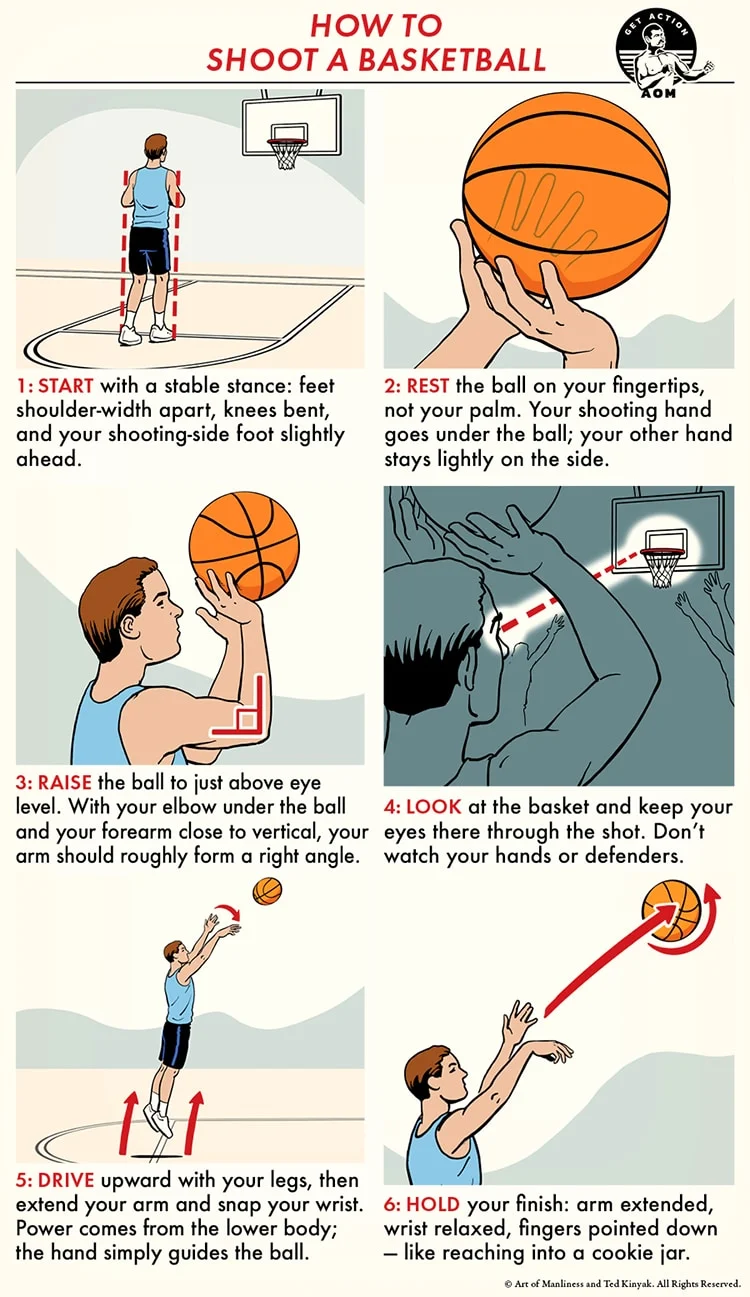
The Biomechanics of the Modern Jump Shot
The execution of a successful basketball shot is a multi-stage process that begins with the lower body. Contrary to the misconception that shooting is primarily an upper-body action, kinesiologists and elite shooting coaches emphasize that power is generated from the floor up. A stable base provides the necessary force to propel the ball toward a rim situated ten feet above the court. In a standard set or jump shot, the feet should be approximately shoulder-width apart, providing a balanced foundation. Many modern shooting specialists advocate for a slight "tilt," where the feet are angled slightly away from the shooting hand (for a right-handed shooter, the feet may point slightly to the left). This alignment helps square the shooting shoulder to the basket, reducing tension in the neck and upper back.
As the athlete transitions into the shot, the "dip" allows the player to gather momentum. Bringing the ball down to waist or thigh level before rising helps synchronize the movement of the legs with the extension of the arms. This fluid motion ensures that the energy produced by the quadriceps and calves is transferred efficiently through the core and into the release. When a player relies too heavily on arm strength, particularly during long-distance three-point attempts, accuracy tends to diminish as fatigue sets in. Data from sports science laboratories indicate that elite shooters maintain a consistent "shot pocket," ensuring the ball moves in a straight vertical line, minimizing lateral deviation.
Historical Evolution of Shooting Techniques
The methodology of shooting has undergone significant transformations since Dr. James Naismith invented the game in 1891. Originally, the "set shot"—a two-handed push from the chest with both feet firmly planted—was the standard. It was not until the 1930s and 1940s that innovators like Hank Luisetti began popularized the one-handed running shot, which eventually evolved into the modern jump shot. This shift revolutionized the game, allowing players to release the ball at the apex of a leap, making the shot significantly harder to defend.
By the late 20th century, the introduction of the three-point line in the NBA (1979) and NCAA (1986) further prioritized shooting range and precision. The 2010s saw the rise of the "pace and space" era, characterized by a heavy reliance on perimeter shooting. Analytical data from the mid-2020s shows that the average number of three-point attempts per game has increased by nearly 40% over the last two decades. This evolution has necessitated a more disciplined approach to shooting mechanics, as even a minor flaw in form can be magnified over the distance of 22 to 24 feet.
The Physics of the Arc and Rim Entry
The success of a shot is heavily dependent on the "angle of entry." Theoretical physics suggests that a ball approaching the rim at a 45-degree angle has a larger "effective target" than one on a flatter trajectory. When a ball is shot with a high arc, the rim appears more like a circle to the ball; conversely, a "flat" shot sees the rim as a narrow oval, significantly reducing the margin for error.
Furthermore, the application of "backspin" or "soft touch" is critical. By flicking the wrist upon release, the shooter imparts a backward rotation on the ball. If the ball hits the rim or backboard, this rotation creates friction that slows the ball’s momentum, increasing the likelihood of a "shooter’s roll" into the basket. Without this rotation, the ball is more likely to bounce forcefully off the hardware. Coaches often use the "BEEF" acronym—Balance, Eyes, Elbow, Follow-through—to remind players of these physical requirements during practice sessions.
Training, Repetition, and Neuroplasticity
The development of a reliable shot is an exercise in neuroplasticity. Through thousands of repetitions, the brain creates dedicated neural pathways that allow the body to perform the shooting motion subconsciously. This is often referred to as muscle memory. For professional athletes, it is not uncommon to take between 500 and 1,000 shots per day during the off-season to maintain this level of consistency.
A chronological approach to shooting practice typically follows this progression:
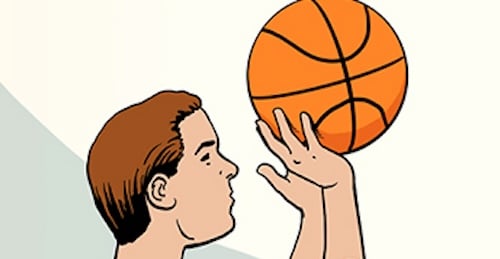
- Form Shooting: Practicing one-handed shots just inches from the rim to perfect the release and follow-through.
- Mid-Range Sets: Increasing distance while maintaining the same mechanical integrity.
- Game-Speed Drills: Incorporating movement, dribbling, and simulated defensive pressure to test the shot under stress.
- Conditioning Integration: Practicing shots while fatigued to simulate the closing minutes of a game.
Recent studies in sports psychology suggest that "rhythm" is as important as "form." While a textbook-perfect shot is the goal, many of the greatest shooters in history, such as Reggie Miller or Larry Bird, possessed unique hitches or unorthodox alignments. The common denominator among them was not aesthetic perfection, but the ability to repeat their specific motion identically every time.
Technological Advancements in Shooting Analysis
In 2026, the use of advanced technology to refine shooting form has become ubiquitous at the collegiate and professional levels. High-speed cameras and wearable sensors provide real-time data on release time, launch angle, and hand positioning. Systems like Noahlytics use sensors mounted above the rim to track every shot taken in a practice facility, providing instant feedback on the depth and left-right deviation of each attempt.
This data-driven approach has allowed coaches to identify "micro-flaws" that were previously invisible to the naked eye. For instance, if a player’s shooting percentage drops in the fourth quarter, data might reveal a two-degree decrease in their launch angle, indicating leg fatigue. This allows for more targeted strength and conditioning programs. According to recent reports from the National Association of Basketball Coaches (NABC), the integration of these technologies has contributed to a record-high free-throw percentage across Division I basketball in the 2025-2026 season.
Broader Impact on Youth Development and Community Health
Beyond the professional and collegiate ranks, the skill of shooting a basketball remains a vital component of community sports and youth development. Basketball is one of the most accessible sports globally, requiring minimal equipment and space. The pursuit of "mastering the shot" serves as a vehicle for teaching discipline, patience, and the value of incremental improvement to millions of young athletes.
Health experts also note the cardiovascular and coordination benefits of basketball. The act of "putting up shots" in a driveway or local park provides a low-impact form of aerobic exercise that improves hand-eye coordination and motor skills. As community centers across the country continue to emphasize "Sports for All" initiatives, the fundamental jump shot remains the primary entry point for many into a lifetime of physical activity.
Professional Perspectives and Future Implications
The consensus among modern basketball strategists is that shooting is no longer a specialized skill but a requirement for every position on the floor. The "positionless" basketball trend of the late 2020s means that even seven-foot centers are expected to possess a reliable perimeter shot to draw defenders away from the basket.
"The gravity created by a great shooter changes the entire geometry of the court," noted one veteran NBA scout during a recent talent combine. "If you can’t shoot, you’re playing four-on-five on the offensive end." This strategic reality has led to a surge in "shooting consultants" who work exclusively on the mechanics of professional players, emphasizing the high value placed on this single athletic act.
As March Madness progresses, the difference between a championship run and an early exit will likely be determined by which teams can maintain their shooting mechanics under the immense pressure of a national spotlight. While the flashier dunks and blocks garner the highlights, the disciplined, repeatable motion of the jump shot remains the most potent weapon in the game. Whether in a sold-out arena or a quiet driveway, the principles of balance, arc, and follow-through continue to define the essence of the sport. The ongoing refinement of these mechanics, supported by both tradition and modern science, ensures that the art of the basketball shot will remain a focal point of athletic excellence for generations to come.