 By Layla Zulfa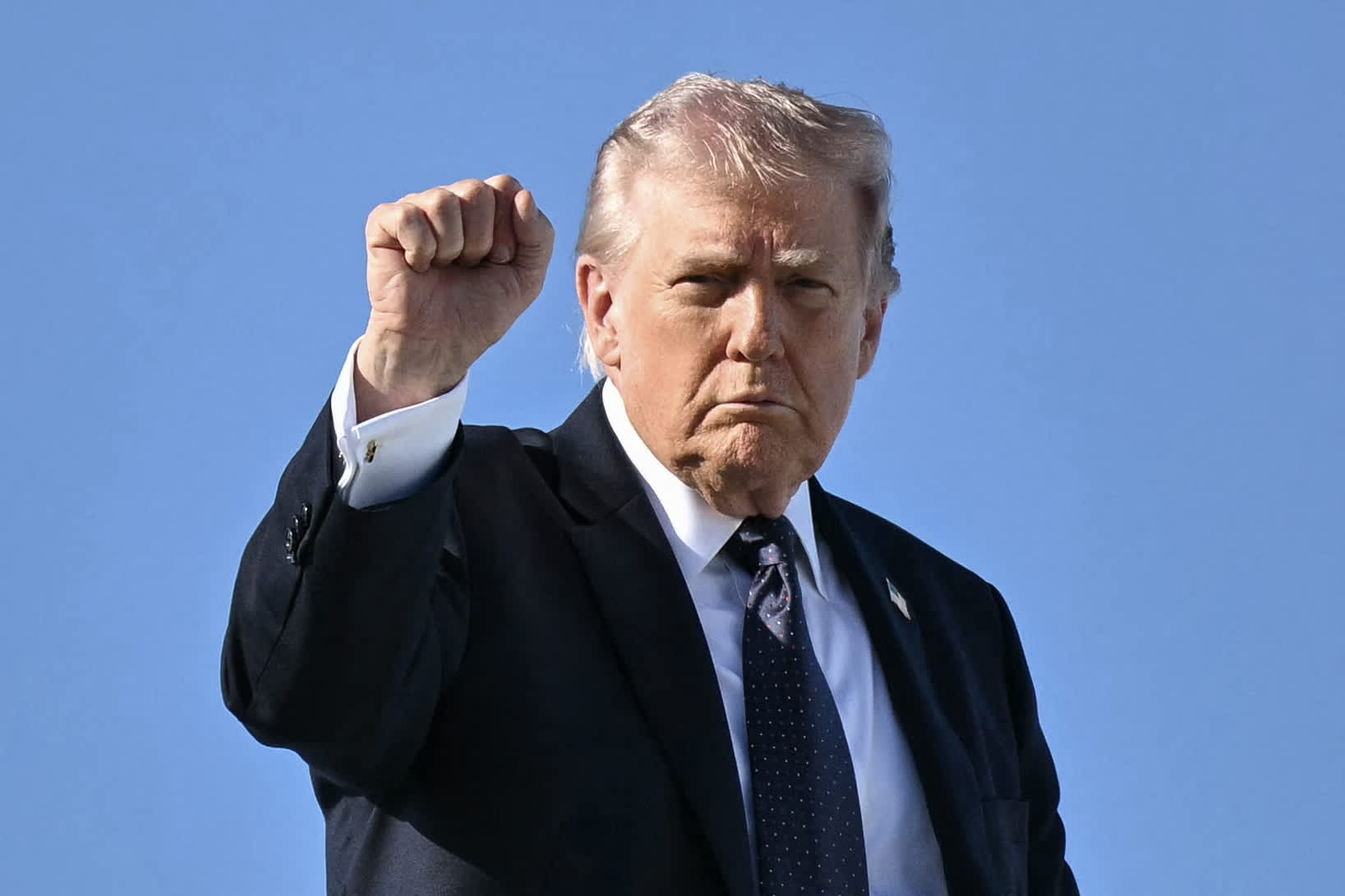
Washington D.C. — In a significant intervention that has reverberated through financial markets and political circles, former U.S. President Donald Trump has publicly thrown his support behind cryptocurrency firms in their contentious dispute with traditional banks over the ability to offer interest-like returns on stablecoins. The endorsement, delivered via a social media post late Tuesday, dramatically escalates pressure on the banking sector to concede ground in a legislative impasse that threatens the future of digital asset regulation in the United States.
The Political Intervention and Immediate Fallout
President Trump, currently on his way back to Washington, D.C. from Palm Beach International Airport in West Palm Beach, Florida, on March 1, 2026, issued a stark warning to banks, urging them to reach an accord with the burgeoning crypto industry. His post asserted, "The Genius Act is being threatened and undermined by the Banks, and that is unacceptable. They need to make a good deal with the Crypto Industry because that’s what’s in best interest of the American People." This direct challenge to the financial establishment underscores a broader shift in Trump’s stance on digital assets, moving from skepticism to a more vocal embrace.
The market reaction was swift and pronounced. Shares of Coinbase, the largest U.S. cryptocurrency exchange, surged as much as 15% in midday trading Wednesday, signaling investor optimism about the industry’s prospects and the potential for regulatory clarity. Conversely, major banking institutions experienced a slight dip, with JPMorgan Chase and Bank of America — two of the nation’s largest lenders by assets — seeing their stock fall less than 1%. While not a precipitous drop, it reflected the market’s acknowledgment of the increased political pressure on traditional finance.
The Legislative Battleground: Clarity and Genius Acts
At the heart of this dispute lies the legislative effort to establish a comprehensive regulatory framework for stablecoins. The "Genius Act," approved last year, laid foundational principles for regulated stablecoins, aiming to bring stability and oversight to a rapidly evolving segment of the digital economy. However, its companion bill, the "Clarity Act," designed to solidify these regulations and address critical operational details, has stalled in Congress. The primary point of contention preventing its passage is whether crypto firms should be permitted to offer yields on stablecoin holdings.
Stablecoins are cryptocurrencies designed to maintain a stable value, typically pegged to a fiat currency like the U.S. dollar, or to a commodity such as gold. They achieve this stability through various mechanisms, most commonly by being fully backed by reserves of traditional assets. Their utility lies in bridging the gap between volatile cryptocurrencies and traditional finance, facilitating fast, low-cost digital transactions and serving as a safe haven within the crypto ecosystem. Offering yields on these stable, dollar-pegged assets would make them significantly more attractive to mainstream investors and everyday users seeking returns on their digital holdings.
The crypto industry argues that allowing stablecoin yields is a consumer-friendly innovation, enabling individuals to earn passive income on their otherwise idle funds, similar to interest earned on traditional bank deposits. This, they contend, would democratize access to financial services and foster economic growth by encouraging participation in the digital economy. Moreover, many stablecoins are backed by U.S. Treasury bills and other high-quality short-term debt, meaning increased demand for stablecoins could indirectly boost demand for U.S. government debt, a point often emphasized by crypto advocates.
Banking Industry’s Alarm: The $6.6 Trillion Threat
Traditional banks, however, view the prospect of widespread stablecoin yields with significant apprehension, perceiving it as an existential threat to their core business model. Executives from JPMorgan and Bank of America have frequently cited a Treasury Department study from 2025, which ominously projected that banks could lose up to $6.6 trillion in deposits if stablecoins were to widely offer competitive yields. This staggering figure represents a substantial portion of the U.S. banking system’s deposit base, which is the lifeblood of their lending operations.
The potential siphoning of trillions in deposits could destabilize banks, particularly smaller regional institutions, and severely impact their ability to provide loans to businesses and consumers across the country. Banks argue that allowing less-regulated crypto firms to operate as "quasi-banks" by offering deposit-like products would introduce systemic risk into the financial system. They contend that crypto firms do not face the same stringent capital requirements, liquidity rules, and consumer protection regulations as traditional banks, creating an uneven playing field and potentially exposing the public to undue risk.
Jamie Dimon, CEO of JPMorgan Chase, has been one of the most vocal critics, articulating the banking sector’s concerns. In a recent interview, he stated, "It can’t be, you have these people doing one thing without any regulation, and these people doing another. If you do that, the public will pay. It will get bad." This sentiment reflects a deep-seated fear within the traditional financial industry that an unregulated or under-regulated parallel financial system could undermine stability and consumer trust.
Behind the Scenes: A Timeline of Confrontation
The public declaration by President Trump is the culmination of months of intense, often fraught, negotiations and behind-the-scenes maneuvering. In recent months, Trump had reportedly hosted a series of White House meetings, bringing together representatives from both the banking and crypto industries in an attempt to broker a compromise. However, according to sources with knowledge of these gatherings, the banks remained largely unyielding on the stablecoin yield issue, leading to a prolonged deadlock.
A pivotal moment preceding Trump’s social media post was a private meeting between the President and Brian Armstrong, CEO of Coinbase, at the White House shortly before Tuesday’s announcement. This detail, first reported by Politico, highlights the direct engagement between Trump and key figures in the crypto industry, suggesting a deliberate and strategic alignment. Armstrong, a prominent voice for crypto advocacy, has been a central figure in the industry’s push for regulatory clarity and the right to offer yields. His public statements, often mirroring Trump’s recent phrasing — such as "Americans should earn money on their money" and emphasizing the industry’s potential for the "People of America" — underscore a shared narrative.
The tensions between Armstrong and banking executives have been palpable. A particularly notable incident occurred in January at the World Economic Forum in Davos, Switzerland, where Jamie Dimon reportedly told Armstrong he was "full of s—" during a chance encounter. This candid exchange vividly illustrates the deep animosity and fundamental disagreement between the two sectors.
Market Reactions and Investor Sentiment
While Coinbase’s shares soared following Trump’s endorsement, reflecting a boost in investor confidence, the muted reaction from banking stocks suggests that the market is still weighing the ultimate impact. The 15% surge for Coinbase contrasts sharply with the less than 1% dip for JPMorgan and Bank of America, indicating that investors perceive a direct benefit for crypto firms should this legislative hurdle be overcome. However, the overall market remains cautious, understanding that presidential endorsements, while influential, do not guarantee legislative success.
The crypto market, as a whole, often reacts strongly to news of regulatory developments or high-profile political support. Trump’s intervention could be interpreted as a legitimizing force, potentially attracting more institutional and retail investment into the digital asset space, especially into stablecoins and platforms offering yield products. This perceived political tailwind could accelerate the mainstream adoption of crypto, further blurring the lines between traditional and decentralized finance.
Broader Implications: Regulatory Future and Political Ramifications
Trump’s decision to explicitly back the crypto industry could significantly influence the Republican-led Congress, where he still commands considerable sway. His endorsement might galvanize Republican lawmakers to push harder for the Clarity Act’s passage, potentially overcoming banking industry lobbying efforts. However, the path forward remains complex. Historically, regulatory issues, particularly those touching on financial stability, often see bipartisan divisions, but also unexpected alliances. Earlier this year, Trump’s attempt to cap credit card interest rates was successfully fended off by the banking industry, which managed to garner sufficient support from both sides of the aisle. This precedent suggests that banks possess significant lobbying power that should not be underestimated.
Beyond the immediate legislative impact, Trump’s move raises fresh questions about potential conflicts of interest. Reports indicate that the former president and his family have generated hundreds of millions of dollars in wealth from various business interests, including investments in crypto platforms like World Liberty Financial. While not directly tied to stablecoin yields, such financial entanglements inevitably draw scrutiny when the President takes a definitive stance on policies directly affecting the industry. Critics may argue that his advocacy is motivated, at least in part, by personal financial gain rather than purely public interest, a common criticism leveled against him during his presidency.
From a political strategy perspective, aligning with the crypto industry could be a calculated move by Trump to appeal to a younger, more tech-savvy demographic, as well as to libertarians and those disillusioned with traditional financial institutions. The "Americans should earn money on their money" rhetoric taps into a populist sentiment, framing the issue as a fight for the common person against powerful corporate interests. This narrative could resonate with a significant segment of the electorate, potentially bolstering his political standing as the nation approaches future electoral cycles.
Expert Analysis and Outlook
Financial analysts are divided on the long-term implications. Some believe that regulatory clarity for stablecoins, even if it comes at the expense of traditional banks, is ultimately beneficial for the U.S. by fostering innovation and maintaining its leadership in the global digital economy. They argue that the U.S. risks falling behind other nations if it stifles crypto innovation. Others caution that a hasty regulatory framework, pushed through under political pressure, could overlook critical systemic risks and consumer protection issues, potentially leading to future financial instability.
The impasse between banks and crypto firms over stablecoin yields highlights a fundamental tension between established financial infrastructure and emerging decentralized technologies. The resolution of this debate, significantly impacted by President Trump’s intervention, will not only dictate the fate of the Clarity Act but also shape the broader regulatory landscape for digital assets in the United States for years to come. The stakes are immense, impacting trillions of dollars in potential deposits, the stability of the financial system, and the future trajectory of technological innovation.