
 By Layla Zulfa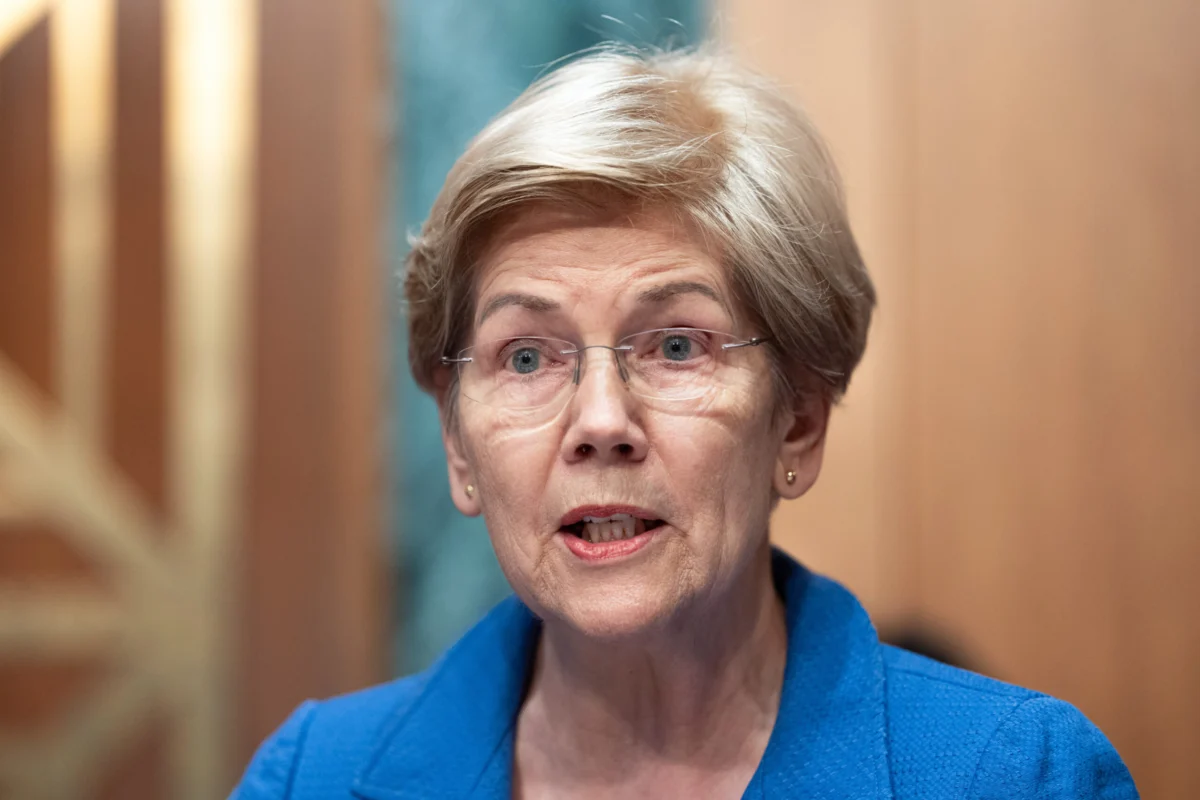
In a move that promises to ignite a contentious confirmation battle, Senator Elizabeth Warren (D-Mass.), the ranking member of the powerful Senate Banking, Housing, and Urban Affairs Committee, delivered a blistering eight-page letter on Thursday, March 26, 2026, to Federal Reserve chair nominee Kevin Warsh. The highly critical missive, first reported by CNBC, accused Warsh of having learned "nothing from your failures" during his previous tenure at the central bank and predicted he would serve as a "rubber stamp for President Trump’s Wall Street First Agenda." This formidable challenge from a prominent progressive senator casts a significant shadow over Warsh’s path to leading the nation’s central bank, a role with profound implications for the American economy.
The senator’s letter meticulously detailed Warsh’s record as a member of the Fed’s Board of Governors from 2006 to 2011, a period that encompassed the devastating 2008-09 financial crisis and the subsequent Great Recession. Warren contended that this track record "should disqualify you from a promotion," directly contradicting President Donald Trump’s stated preference for a Fed Chair who aligns with his economic philosophy. "President Donald Trump has vowed that ‘anybody that disagrees with’ him ‘will never be the Fed Chairman,’" Warren noted, adding pointedly, "And you, apparently, have passed his test." The confrontation sets the stage for a high-stakes political drama, intertwining the crucial role of the Federal Reserve with partisan politics and a nominee whose past actions are now under intense scrutiny.
The Contentious Nomination: A Collision of Ideologies
Kevin Warsh, a former investment banker with Morgan Stanley and an economic advisor in the George W. Bush administration, was appointed to the Federal Reserve Board of Governors in 2006. His nomination for Fed Chair by President Trump, who reentered the White House in January 2025, comes amidst the administration’s vocal desire for a central bank leadership more amenable to its policy aims, particularly concerning interest rates. Trump has consistently pressured the Fed for lower rates, a stance often seen as an encroachment on the institution’s critical independence. Warsh, known for his more hawkish views on monetary policy and skepticism towards extensive financial regulation, is perceived by many as a candidate likely to align with the President’s wishes, hence Warren’s "rubber stamp" accusation.
Senator Warren, a staunch advocate for consumer protection and a vocal critic of Wall Street excesses, has built her career on challenging powerful financial institutions. Her position as the ranking Democrat on the Senate Banking Committee provides her with a powerful platform to scrutinize nominees for key financial positions, especially those for the Federal Reserve. The committee plays a pivotal role in the confirmation process, conducting hearings, reviewing qualifications, and ultimately voting on whether to advance a nomination to the full Senate. Warren’s letter is not merely a political broadside but a strategic opening salvo designed to frame the narrative around Warsh’s suitability and to rally opposition within the Democratic caucus and potentially among skeptical Republicans.
A Deep Dive into the 2008 Financial Crisis and Warsh’s Role
Warren’s primary argument against Warsh centers on his performance during the period leading up to, during, and after the 2008 financial crisis. This period was marked by an unprecedented collapse of the housing market, a severe credit crunch, and the near-failure of the global financial system. The crisis plunged the United States into the Great Recession, which saw unemployment peak at 10% in October 2009, a massive contraction in GDP, and millions of Americans losing their homes and life savings. The Federal Reserve, under then-Chair Ben Bernanke, undertook extraordinary measures, including slashing interest rates to near zero, implementing quantitative easing programs, and providing emergency liquidity to financial institutions, to avert a complete economic meltdown.
Warren asserted that Warsh, as a Fed Governor, "ignored the obviously excessive risk-taking on Wall Street" in the years preceding the crisis. She specifically highlighted his alleged defense and implicit promotion of subprime mortgages, the high-risk loans made to borrowers with poor credit histories that were at the heart of the housing bubble. "When you began your service on the Board of Governors," Warren wrote, "there were ‘warning signs of the coming crisis’ in the subprime home-lending market." Yet, instead of using the Fed’s "powerful supervisory and regulatory authorities," Warsh allegedly downplayed the risks. In December 2007, just as the crisis was beginning to unfold, Warsh reportedly agreed that "subprime mortgages have gotten a bad name in this environment," a statement Warren now uses as evidence of his misjudgment.
Furthermore, Warren criticized Warsh’s advocacy for "derivatives and other forms of ‘financial innovation’ as vehicles to disperse risk and make the financial system safer." Derivatives, complex financial instruments whose value is derived from an underlying asset, were widely implicated in amplifying the crisis, particularly credit default swaps tied to subprime mortgage-backed securities. Warren’s letter emphatically stated, "Again, you were wrong," underscoring her view that Warsh fundamentally misunderstood the systemic risks these products posed.
Warren’s Scathing Indictment: Key Accusations and Specific Details
The eight-page letter meticulously outlined a series of specific charges against Warsh, forming a comprehensive indictment of his past performance and future suitability:
- Prioritizing Wall Street over American Families: Warren initiated her letter by stating her intent "to better understand what, if anything, you’ve learned from your failure to prioritize American families over Wall Street before, during, and after the 2008 financial crisis." She accused him of failing to implement policies that would improve the lives of the American public, instead focusing on the interests of large financial institutions.
- Advocacy for Bailouts and Ethics Concerns: The senator drew a direct line between Warsh’s pre-Fed career at Morgan Stanley and his actions during the crisis. She noted his seven years as a mergers and acquisitions executive for the investment bank, suggesting this background influenced his "eagerness to bail out Wall Street." Warren specifically cited his "central role helping to arrange numerous [multibillion-dollar] bailouts" and, crucially, his obtaining an "ethics waiver to deal directly with Morgan Stanley," which subsequently "received the special regulatory approvals from the Fed on an expedited basis necessary to access additional emergency support." This accusation suggests a potential conflict of interest and raises serious questions about his impartiality during a critical period.
- Harmful Monetary Policy Stance: Warren condemned Warsh’s advocacy for higher interest rates during the crisis, which she argued would have "further imperiled an ailing economy" that was already hemorrhaging jobs. The Fed’s dual mandate includes both price stability and maximum employment. During the recession, with unemployment soaring, conventional economic wisdom generally favors lower interest rates to stimulate growth. Warsh’s alleged hawkish stance, even in the face of economic collapse, led Warren to conclude, "Your monetary policy record shows a repeated failure to accurately assess the impact of inflation on the American economy."
- Post-Fed Stance Against Safeguards: Warren also criticized Warsh’s activities after leaving the Federal Reserve in 2011. She stated that he "advocated against tougher safeguards intended to prevent big bank failures and taxpayer bailouts." This directly challenges the spirit of the Dodd-Frank Wall Street Reform and Consumer Protection Act, enacted in 2010 to prevent a recurrence of the crisis. Warren implied that Warsh’s post-Fed policy recommendations demonstrate a continued lack of understanding or concern for systemic risk and consumer protection.
- Unanswered Questions for Confirmation: Buried at the end of her eight-page letter, Warren included pointed, detailed questions across 10 different subject areas. These queries are intended to elicit specific responses from Warsh during his upcoming confirmation hearing before the Senate Banking Committee, covering topics ranging from his views on financial regulation and monetary policy to his handling of conflicts of interest. The questions serve as a roadmap for Warren’s line of questioning during the public hearing, ensuring that her concerns are addressed on the record.
Warsh did not immediately respond to CNBC’s request for comment regarding the letter, a common practice for nominees under intense scrutiny, particularly before formal confirmation hearings.
The Broader Political Landscape: Trump, Powell, and Fed Independence
Warsh’s nomination is not occurring in a vacuum; it is deeply entwined with President Trump’s often-strained relationship with the Federal Reserve and its current Chair, Jerome Powell. Since reentering the White House in January 2025, Trump has repeatedly, and unsuccessfully, pressured Powell and the entire Board of Governors to cut interest rates more quickly and deeply than they have. The President’s public criticisms of the Fed’s monetary policy decisions are seen by many as a direct challenge to the central bank’s crucial independence from political influence, a cornerstone of its effectiveness.
The selection of a new Fed Chair is therefore seen as an opportunity for the Trump administration to install leadership more aligned with its economic agenda. Warren’s letter directly addresses this dynamic, portraying Warsh as a candidate chosen for his pliability rather than his independent judgment. The battle over Warsh’s confirmation is thus not just about one individual’s qualifications but also about the future direction of monetary policy and the integrity of the Federal Reserve as an autonomous institution.
Obstacles to Confirmation: Senator Tillis and the Powell Investigation
Adding another layer of complexity and uncertainty to Warsh’s nomination is an ongoing criminal investigation into current Fed Chair Jerome Powell. Senator Thom Tillis (R-N.C.), a fellow member of the Banking Committee, has publicly stated his intention to effectively block Warsh’s nomination from being considered by the full Senate until this investigation is resolved. This Republican opposition poses a significant hurdle, as Tillis’s stance could prevent the nomination from even reaching the Senate floor for a vote, regardless of the outcome of the Banking Committee’s review.
The investigation, led by Jeanine Pirro, the U.S. attorney for the District of Columbia, purportedly focuses on cost overruns related to the renovation of the Fed’s headquarters and Powell’s testimony about that project to the Banking Committee. However, the legitimacy and intent of the probe have been questioned by legal experts and even by the judiciary. District Court Judge James Boasberg, in a March 11 ruling that quashed subpoenas issued to the Fed as part of the investigation, wrote, "There is abundant evidence that the subpoenas’ dominant (if not sole) purpose is to harass and pressure Powell either to yield to the President or to resign and make way for a Fed Chair who will." This judicial observation strongly suggests a political motivation behind the investigation, further complicating the already fraught confirmation process for Warsh.
The uncertainty surrounding Powell’s future also impacts the timeline. Powell earlier in March indicated he would remain as chair pro tem if Warsh is not confirmed by May 2026, when Powell’s term as chair is set to expire. This potential interim period underscores the instability at the top of the nation’s central bank and the critical need for a smooth transition, which the current political and legal wrangling jeopardizes.
Implications for Monetary Policy and Financial Regulation
Should Kevin Warsh ultimately be confirmed as Fed Chair, the implications for both monetary policy and financial regulation would be substantial. Given his historical inclination towards more hawkish monetary policy, a Warsh-led Fed might be more predisposed to raising interest rates or less inclined to lower them aggressively, even in the face of economic slowdowns. This stance could clash with the Trump administration’s expressed desire for lower rates, potentially creating a complex dynamic between the President and his chosen Fed Chair, or it could lead to an alignment that critics fear would undermine the Fed’s independence and potentially overheat the economy if rates are kept too low for too long.
Furthermore, Warsh’s past criticisms of stricter financial safeguards, as highlighted by Warren, suggest a potential pivot towards deregulation. A Fed under his leadership might advocate for loosening some of the post-crisis regulations implemented to prevent future financial meltdowns. This approach would be welcomed by some sectors of the financial industry, which argue that excessive regulation stifles growth and innovation. However, consumer advocates and those who believe the 2008 crisis demonstrated the need for robust oversight would likely view such a shift with alarm, fearing a return to the conditions that led to the previous economic collapse.
Looking Ahead: The Confirmation Battle’s Stakes
The letter from Senator Elizabeth Warren is more than just a formal objection; it is a declaration of intent to vigorously challenge Kevin Warsh’s nomination. The ensuing confirmation battle will be a crucible for testing the political will of both the administration and its opponents, with the future leadership and direction of the Federal Reserve hanging in the balance. The stakes are immense: the Fed Chair wields immense power over interest rates, inflation, employment, and the overall stability of the financial system, directly impacting the economic well-being of every American.
As the Senate Banking Committee prepares for Warsh’s confirmation hearings, the questions posed by Warren’s letter will undoubtedly form the backbone of the Democrats’ scrutiny. The committee’s ability to navigate the complex interplay of political pressures, judicial interventions, and economic philosophies will determine whether Kevin Warsh secures the coveted position of Federal Reserve Chair or becomes another casualty in the ongoing struggle for the soul of the nation’s economic policy. The public will be watching closely as these critical debates unfold, shaping the future trajectory of the American economy.