
 By Eva Lovia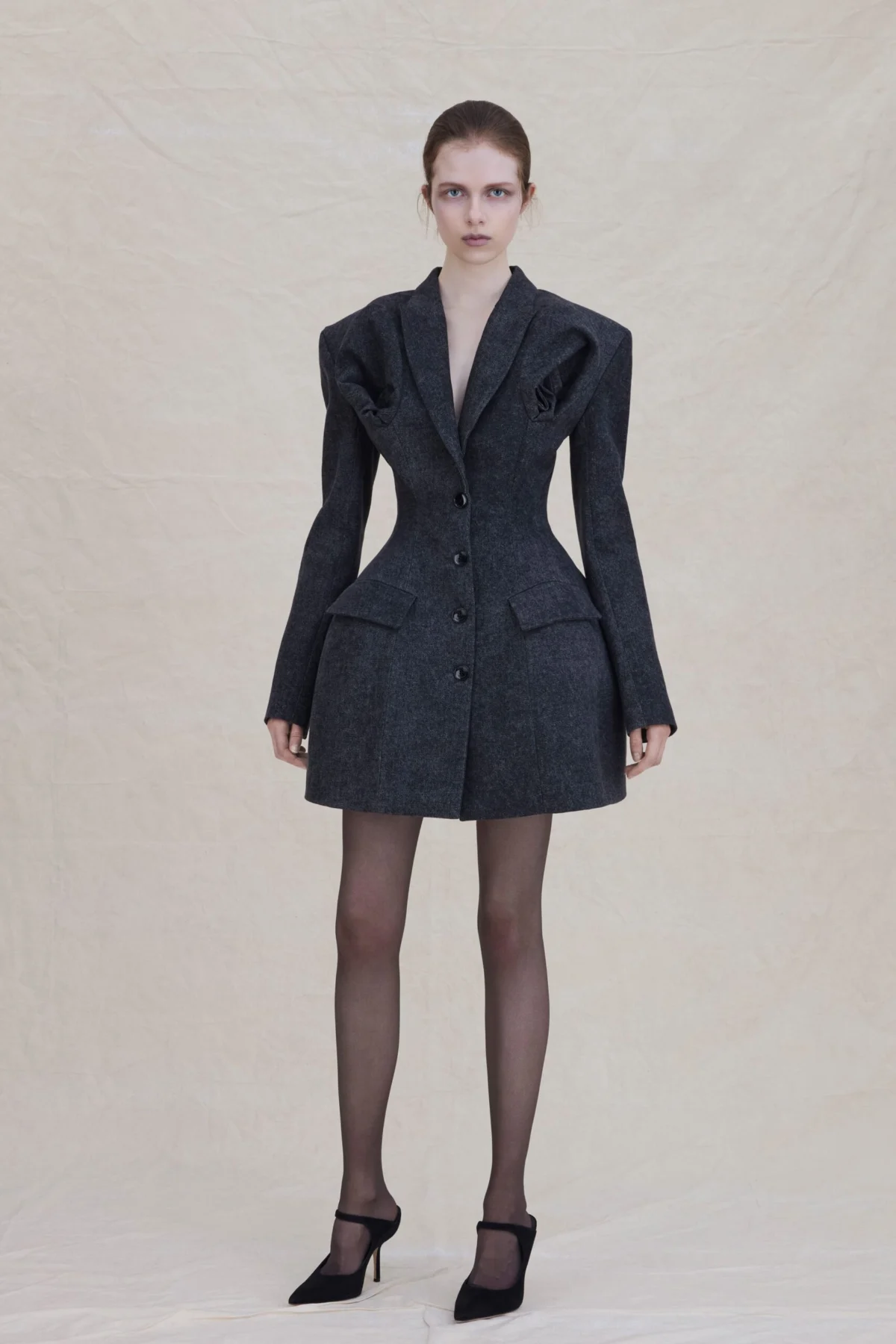
The fashion industry has long served as a mirror to global instability, offering both a reflection of societal anxieties and a sartorial refuge from them. Designer Torishéju Dumi, a rising force in the luxury landscape and a recent recipient of the LVMH Savoir-Faire Prize, has articulated this sentiment through her most recent collection. By conceptualizing clothing as a form of "loving armor," Dumi explores the delicate balance between the chaotic nature of the modern world and the structured discipline required to create high-fashion garments. Her work suggests that the act of dressing is not merely an aesthetic choice but a method of imposing order upon external turmoil. This collection serves as a significant milestone in Dumi’s career, blending her background in theatrical costume with a modern, avant-garde sensibility that challenges traditional silhouettes while honoring the rigorous techniques of haute couture.
The Conceptual Framework: Armor and the Uncanny
At the heart of Dumi’s latest presentation is the concept of the garment as a protective shell. This is perhaps most evident in the collection’s opening look, an intentional homage to Christian Dior’s iconic 1947 Bar jacket. However, where Dior’s original design focused on the celebration of the feminine form in a post-war era, Dumi’s interpretation pivots toward a more defensive and introspective architecture. She describes the piece as a "cocoon" or a "cage," utilizing a structured form that envelops the wearer. The most striking features of this jacket are the sculptural whorls situated at the front of the shoulders. These elements, which Dumi likens to "horns moved to the front," suggest a defensive posture, though she remains open to more abstract interpretations, including the idea of "black holes" that absorb the surrounding environment.
Dumi’s creative process is heavily influenced by what she describes as a "Lynchian" atmosphere—a reference to the surreal and often unsettling aesthetic of filmmaker David Lynch. This "uncanny oddity" is woven into the fabric of the collection, manifesting in shapes and textures that feel familiar yet slightly off-kilter. By acknowledging the "weird, strange place" of the current global climate, Dumi avoids a purely negative reaction. Instead, she seeks to explore the unknown, stating that if her designs represent a black hole, she is compelled to discover what lies within. This philosophical approach differentiates her from designers who focus solely on escapism, as she insists on "world-building" that takes the visceral reality of the present into account.
Technical Mastery and the Savoir-Faire Prize
The structural integrity of Dumi’s designs is rooted in traditional tailoring techniques that are increasingly rare in a fast-fashion-dominated market. The graceful, rigid shapes of her denim pieces were achieved through the use of old-fashioned canvas and horsehair—materials traditionally used in the internal construction of bespoke men’s suits to provide long-lasting structure. By applying these techniques to denim worked on its reverse face, Dumi bridges the gap between rugged utility and high-end craftsmanship.
This dedication to technical excellence is the primary reason for her 2023 LVMH Savoir-Faire Prize win. The award, which recognizes exceptional craftsmanship and the preservation of traditional skills, has provided Dumi with a platform to further experiment with complex materials. In this collection, she expanded her repertoire to include boiled wool and shearling skirt suits, designed with the philosophy that a well-constructed suit should eliminate the need for an external coat. This focus on "all-in-one" protection reinforces the theme of the garment as a self-contained environment.
The collection also highlighted a collaborative approach to craft. A silk top and skirt, featuring intricate, chunky knots, was produced in partnership with the designer’s mother. This "shared labor of love" underscores the human element of her work, contrasting the industrial nature of the fashion cycle with the intimacy of handiwork. While currently a one-off, such pieces demonstrate the potential for Dumi to scale her artisanal approach into a signature element of her brand.
Chronology of Influence: From Drama School to the Runway
Torishéju Dumi’s unique perspective is the result of a diverse educational and professional background. Her formal introduction to the arts began at age eight when she enrolled in drama school, a tenure that lasted until she was 17. This early immersion in the world of performance and character development is evident in her approach to fashion as "world-building." For Dumi, a garment is not just a piece of clothing but a costume that brings a character or a concept to life.
Following her time in drama school, Dumi transitioned into the technical side of the industry, eventually teaching a costume course at the London College of Fashion. This role allowed her to develop a deep obsession with 18th- and 19th-century costumes. Her latest collection reflects this history through the use of petticoats and corseted silhouettes, which were hallmarks of her Spring 2025 "Ship of Fools" collection. By taking apart the layers of historical dress and reassembling them with modern materials like corduroy and deadstock knits, she gives historical costume a "bit of modernity," making it feel "real and alive" for the contemporary consumer.
Materiality and Sustainability: A Modern Necessity
In an era where the environmental impact of fashion is under intense scrutiny, Dumi has integrated sustainable practices into her design process. A notable example from the collection is a knitted, draped dress made entirely from deadstock fabric. This approach aligns with a growing industry trend where designers utilize leftover textiles from larger fashion houses to create limited-edition pieces.
The collection also featured a yellow mohair tartan dress, which, like the deadstock knit, utilized a "spliced" construction. This technique involves joining different panels of fabric in unexpected ways, creating a sense of "uncanny oddity" while maintaining the elegance expected of luxury ready-to-wear. The use of corduroy for a black suit paired with a white funnel-neck shirt—a carryover from her debut collection—demonstrates a commitment to building a cohesive brand identity rather than chasing fleeting trends. This continuity is essential for emerging designers looking to establish a loyal client base in a competitive market.
Industry Impact and the Evolution of Layering
The current fashion season has been characterized by "trompe l’oeil" layering and experimental proportions, and Dumi’s collection is at the forefront of this movement. One of the most discussed pieces was a cardigan style featuring four sets of sleeves. Beyond the standard sleeves for the arms, the additional sets were designed to be adjusted and tied around the neck, waist, or hem, allowing the wearer to customize the garment’s silhouette.
This theme of modularity extended to a corseted dress-coat bustier gown, where extra sleeves served as a decorative flourish that could be tied across the bust or in the back. This level of versatility speaks to a sophisticated understanding of how modern consumers interact with their wardrobes. By providing multiple ways to wear a single piece, Dumi adds value and longevity to her garments, further distancing her work from the "disposable" nature of the broader fashion industry.
Broader Implications for the Future of London Fashion
Torishéju Dumi’s rise coincides with a pivotal moment for London-based designers. As the fashion industry grapples with economic pressures, there is a renewed focus on designers who can balance artistic vision with commercial viability and technical skill. Dumi’s ability to secure the LVMH Savoir-Faire Prize suggests that the industry’s power players see her as a vital part of fashion’s future.
Her work challenges the notion that "minimalism" must be synonymous with "simplicity." Instead, she offers a "minimalism with a twist," where the clean lines of a silhouette are often undermined or enhanced by complex internal structures and historical references. This intellectual approach to design resonates with a demographic of consumers who seek clothing that is both a conversation piece and a functional tool for navigating a complex world.
As Dumi continues to evolve, her focus on "giving costume a bit of modernity" will likely remain a central pillar of her brand. By blending the theatricality of her past with the technical rigors of her present, she is carving out a unique space in the luxury market. Her latest collection is not just a display of clothing; it is a testament to the power of design to provide order, protection, and a sense of identity in an increasingly chaotic global landscape. The "loving armor" she provides is as much for the spirit as it is for the body, marking her as a designer who understands the profound emotional weight of the clothes we choose to wear.