
The global wellness tourism industry has undergone a seismic shift over the past decade, evolving from a niche market into a multi-trillion-dollar powerhouse. According to data from the Global Wellness Institute, the wellness economy was valued at approximately $5.6 trillion in 2022, with wellness tourism growing at nearly double the rate of general tourism. Central to this expansion is the practice of yoga, which has transitioned from indoor studios to some of the most remote and geographically diverse locations on the planet. From the stark, high-altitude landscapes of the Indian Himalayas to the turquoise waters of the Maldivian atolls, the modern yoga retreat now emphasizes "external peace" as a prerequisite for internal clarity. This professional survey examines ten of the world’s most significant yoga destinations, analyzing their unique environmental contributions to the practice of asana, pranayama, and meditation.

The Evolution of Experiential Wellness
The demand for "transformative travel" has led luxury hospitality brands to integrate natural environments directly into their wellness programming. The contemporary practitioner is no longer satisfied with a standard gym setting; instead, there is a burgeoning preference for "biophilic" design—environments that increase occupant connectivity to the natural world. Research suggests that practicing yoga in outdoor settings can amplify the benefits of the exercise, reducing cortisol levels more effectively than indoor sessions. This trend is visible across several continents, where resorts are utilizing their specific topographies—jungles, deserts, and mountains—to create "time-stopping" experiences for guests.
The Indian Ocean: Aquatic Serenity and Seclusion
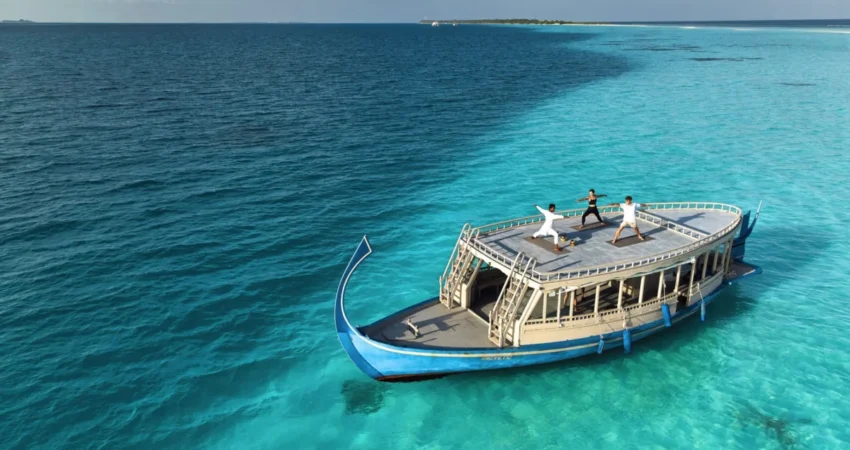
In the Maldives, the concept of the yoga studio has been completely reimagined. At Lux* South Ari Atoll, the practice is moved from land to sea. Guests engage in asanas aboard a traditional wooden dhow, a sailing vessel historically used for trade in the Indian Ocean. This experience is typically scheduled for the "golden hour"—the period shortly before sunset—integrating Tibetan Sound Bowl therapy and breathwork with the rhythmic movement of the waves. This approach utilizes the "blue space" theory, which posits that proximity to water induces a state of calm and creative focus.

Further north in the Maldives, Jumeirah Olhahali Island offers a different interpretation of aquatic yoga. The resort utilizes private sandbanks, accessible only by a five-minute speedboat ride. The "Oceanic Balance Retreat" provides a sense of absolute isolation, where the horizon remains uninterrupted. This specific environment is designed for profound clarity, stripping away the sensory overload of modern life.
The Himalayan Heartland: High-Altitude Practice
India remains the spiritual epicenter of yoga, but the focus has shifted toward high-altitude retreats in the Himalayas. The Kyagar, located in Ladakh’s Nubra Valley, sits on the ancient Silk Route. Positioned between the Siachen River and the Karakoram mountain range, the hotel offers a stark, austere landscape that encourages contemplative practice. Owner Rinchen Kalon notes that the location’s geographical significance—being surrounded by icy peaks and wildflower-laden river trails—is fundamental to the efficacy of the yoga hosted there.

Similarly, The Kumaon in Uttarakhand utilizes its elevation to offer a "watchful" yoga experience. The property’s rooftop terrace, constructed from reclaimed Himalayan slate, overlooks the Kosi River valley and the Binsar Forest. Practitioners perform Hatha yoga under the gaze of the Nanda Devi peak, one of the highest mountains in India. The integration of local materials and the scents of pine-laden breezes are cited by guests as key factors in their rejuvenation.
The Middle Eastern Elevation and the Desert Stillness
Oman and the United Arab Emirates have emerged as significant players in the wellness sector by leveraging their dramatic desert and mountain terrains. The Anantara Al Jabal Al Akhdar Resort in Oman is one of the highest hotels in the world. Its premier yoga location, Diana’s Point, is a platform named after Diana, Princess of Wales, who visited the site in 1986. The platform juts out over a canyon with a steep drop-off, offering views of the "Green Mountain." Between March and May, the valley below is filled with fragrant Damask roses, providing a natural aromatherapy experience that coincides with the resort’s full-moon yoga sessions.

In contrast, the Qasr Al Sarab Desert Resort by Anantara in Abu Dhabi utilizes the vastness of the Liwa Desert. The resort’s wellness center is positioned on the edge of the Empty Quarter, the world’s largest uninterrupted sand desert. The practice here is defined by "raw nature," with sessions held at sunrise and twilight to avoid the desert’s peak heat. The resort frequently collaborates with international gurus to offer specialized disciplines such as Yin Yoga and Yoga Nidra, catering to those seeking "silence and stillness" to escape urban chaos.
Tropical Immersion: Jungles of Sri Lanka and Thailand
The "jungle retreat" remains a cornerstone of the yoga travel industry, focusing on biodiversity and lush greenery. Haritha Villas and Spa in Hikkaduwa, Sri Lanka, features an open-air pavilion nestled within a tropical forest canopy. The sessions here are primarily Hatha-based, catering to beginners who find the background of birdsong and rustling leaves conducive to the meditative aspects of the practice.

In Phuket, Thailand, Keemala Resort and Spa emphasizes an eco-friendly, "barefoot" philosophy. The resort offers two primary spaces: a rooftop terrace with scenic views and a forest venue situated beneath a 300-year-old Takian tree. This ancient tree is considered sacred, and practitioners are encouraged to ground themselves directly to the earth without the use of mats. Keemala also features a meditation cave equipped with a waterfall, designed to facilitate deep focus and presence.
The Southern Alps and the Mediterranean Cliffs
New Zealand’s Aro Hā Wellness Retreat represents the pinnacle of subalpine wellness. Located on Lake Wakatipu near Queenstown, the retreat is world-renowned for its "Aro Hā Room," which features floor-to-ceiling views of the Southern Alps. Yoga is integrated into a rigorous daily schedule that includes subalpine hiking and wellness workshops. The alpine air and glacial water of the region are marketed as essential components of the detoxification process.

Finally, Acro Suites in Crete, Greece, offers a Mediterranean perspective on the practice. Perched on the cliffs of Mononaftis Bay, the resort’s "Asana" studios are designed with bamboo and local stone. The architecture is intended to be an extension of the Aegean landscape. Instructors lead a variety of styles, from Vinyasa to healing circles, focusing on the connection between the rugged coastal environment and the fluidity of movement.
Market Implications and Broader Impact
The proliferation of these high-end yoga destinations has significant implications for local economies and environmental conservation. Many of these resorts, such as Keemala and The Kyagar, have adopted sustainable operations to protect the very landscapes that attract their clientele. This "eco-wellness" model ensures that the influx of tourism does not degrade the natural serenity required for the practice.

Furthermore, the diversification of yoga styles—including Hatha, Vinyasa, Yin, and Yoga Nidra—allows these destinations to capture a wide demographic of travelers, from beginners to advanced practitioners. As the global population continues to prioritize mental health and stress reduction, the "destination yoga" market is expected to maintain its upward trajectory. The shift toward outdoor, picturesque, and contemplative spaces is not merely a aesthetic choice but a response to a global need for profound, restorative experiences that "stop time."
In conclusion, the top yoga spots in the world today are defined by their ability to harmonize physical practice with extraordinary geographical features. Whether sailing on a Maldivian dhow or grounding oneself beneath a Thai jungle canopy, the modern yogini is seeking an intersection of luxury, nature, and tradition. As these destinations continue to refine their offerings, they set the standard for the future of the global wellness industry.

0 Comments