
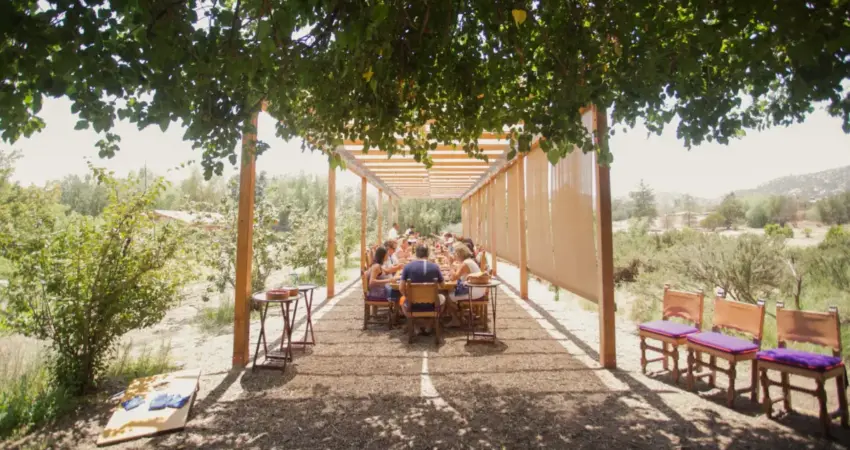
The global hospitality industry is witnessing a significant shift toward "hushpitality," a burgeoning trend where silence and sensory deprivation are marketed as premium luxury experiences. Central to this movement is the "Silent Dinner," a long-standing tradition at Rancho La Puerta in Tecate, Baja California, which has recently gained renewed attention as travelers seek respite from the persistent noise of digital and urban environments. This 90-minute, five-course meditative meal involves 16 participants who commit to absolute silence, effectively turning the absence of conversation into a structured wellness intervention. While the concept may initially appear counterintuitive to traditional social dining, industry analysts and psychologists suggest that such experiences provide critical cognitive and emotional benefits, positioning quiet tourism as a cornerstone of the 2026 travel landscape.
The Mechanics of the Silent Dinner at Rancho La Puerta
Located on 4,000 acres in the mountainous countryside of Tecate, Mexico, Rancho La Puerta has integrated silence into its programming for over 15 years. The Silent Dinner is a complimentary, voluntary event conducted in a private indoor dining room. The environment is designed to evoke a sense of communal solemnity, often compared by participants to a historical or monastic feast.
The protocol begins with the ringing of a bell, signaling the official start of the silent period. From that moment, verbal communication is strictly prohibited. To navigate the practical requirements of a multi-course meal, participants must employ non-verbal cues. For example, requests for additional service, such as extra bread or water, are communicated through miming or hand gestures. This requirement forces a heightened state of awareness and creative problem-solving.

Digital devices are entirely banned from the dining room, reinforcing the hotel’s broader policy of discouraging phone use in public areas. To mitigate the initial social anxiety often associated with silence among strangers, the table is frequently decorated with eclectic knickknacks and ceramic figures. These objects serve as focal points for external attention, providing a "company" of sorts that does not require verbal engagement.
The Historical and Philosophical Context of Quiet Tourism
Rancho La Puerta’s commitment to silence is rooted in its foundational history. Established in 1940 by Deborah and Edmond Szekely, the ranch began as a summer health camp near San Diego. The founders’ original mission was to promote a "sane, well-balanced program of living," which included physical exertion, holistic therapies, and mental stillness. Over the decades, the facility has expanded to include 86 casitas and a vast array of wellness offerings, including onsite labyrinths, silent meditation sessions, and sunrise mountain hikes free of man-made noise.
The philosophy of silence at the ranch is not merely an absence of sound but a deliberate "main course" of the guest experience. This aligns with the historical use of silence in various cultures and spiritual traditions, from Benedictine monasticism to Buddhist Vipassana retreats. However, in the modern context, these practices are being secularized and integrated into the high-end travel market to address "noise pollution"—a term increasingly used by the World Health Organization (WHO) to describe the harmful environmental sounds that contribute to stress, hearing loss, and cardiovascular issues.
Supporting Data The Rise of Hushpitality
The transition of silence from a niche spiritual practice to a mainstream travel trend is supported by significant market research. Hilton’s 2026 Trends Report explicitly identifies "hushpitality" as a major emerging trend. The report highlights a growing segment of travelers who prioritize destinations based on their ability to provide "moments of quiet" and help guests "turn down the noise of everyday life."

According to the Global Wellness Institute (GWI), wellness tourism is projected to reach $1.1 trillion by 2025, growing at an annual rate of 20.9%. Within this sector, the demand for "mental wellness" experiences—which include silent retreats, sound baths, and sensory deprivation—is among the fastest-growing sub-segments.
Furthermore, psychological studies provide a scientific basis for the efficacy of these experiences. Research published in the journal Brain, Structure and Function suggests that silence can lead to the development of new cells in the hippocampus, the region of the brain associated with memory and emotion. By removing the cognitive load of social performance and verbal processing, silent dining allows the brain to enter a "default mode" state, which is essential for self-reflection and creative insight.
Chronology of the Silent Dining Experience
The typical progression of a silent dinner at Rancho La Puerta follows a predictable psychological arc for the participants:
- Initial Resistance (Minutes 1–15): The first stage is characterized by "awkwardness" and social anxiety. Participants often struggle with the impulse to smile nervously or make eye contact to alleviate the tension of the quiet. The sounds of cutlery against plates and physiological noises like throat clearing become amplified.
- Sensory Heightening (Minutes 15–45): As the second and third courses are served—often featuring local ingredients like black bean soup or vegetarian chili—participants report a shift in focus. The taste, texture, and aroma of the food become more pronounced. The brain begins to "settle," moving away from the "to-do list" mentality toward the immediate sensory experience.
- The Reflective Shift (Minutes 45–75): By the middle of the meal, the initial discomfort usually gives way to deep introspection. Participants often report "montages" of memories, the sudden resolution of creative blocks, or a profound sense of "was-ness"—a state of being present without the need for action.
- The Re-entry (Minutes 75–90): The final stage involves a gradual preparation for the return of sound. When the bell tolls to end the session, it often causes a physical jolt as participants are pulled from their "cocoon of calm."
Participant Reactions and Social Dynamics
Contrary to the assumption that silence is isolating, the post-meal debriefings at Rancho La Puerta suggest that it actually fosters a unique form of communal bonding. When the silence is lifted, participants frequently stay behind to trade observations, often noting that they felt more "attuned" to their neighbors than they would have during a standard conversation.

Common reactions recorded during these sessions include:
- Enhanced Empathy: One participant noted that the silence allowed her to "smile at more people" than she ever had in a social setting, as the smile became the primary tool for connection.
- Emotional Catharsis: An elderly participant reported using the silence to mentally "share" the meal with his late wife, a revelation that prompted spontaneous displays of support and physical affection from other guests.
- Collaborative Non-Verbal Communication: Guests often recount the "teamwork" involved in signaling for simple items like salt or butter, which creates a shared sense of accomplishment and mutual understanding.
Broader Impact and Industry Implications
The success of silent dining at Rancho La Puerta is prompting other luxury hotels and wellness centers to adopt similar models. From "silent floors" in urban hotels to "quiet zones" in airport lounges, the hospitality industry is recognizing that peace is a finite and valuable resource.
Implications for Hotel Design
Architects and interior designers in the hospitality sector are increasingly focused on "acoustic luxury." This includes the use of sound-dampening materials, the strategic layout of communal spaces to minimize noise bleed, and the creation of "digital-free" sanctuaries. The goal is to create environments where silence is the default rather than a requested exception.
Implications for Mental Health
As burnout and digital fatigue reach record levels, silent experiences are being viewed as a form of "mental hygiene." By providing a structured environment where individuals are "unreachable" and have "no requirements" placed upon them, hotels are moving into the role of quasi-therapeutic institutions.

Economic Viability
From a business perspective, hushpitality offers a high return on investment. Silent experiences often require fewer resources than high-energy entertainment options and appeal to a high-net-worth demographic that values privacy and restoration. Moreover, these programs reinforce brand loyalty by providing a profound emotional impact that traditional luxury amenities—such as gold-plated fixtures or gourmet dining—may no longer achieve in a saturated market.
Conclusion
The 90-minute silent dinner at Rancho La Puerta serves as a microcosm of a larger shift in global travel preferences. In an era of constant connectivity, silence has transitioned from a void to be filled into a premium "main course" to be savored. By prioritizing the "was-ness" of the guest experience, the wellness tourism industry is redefining connection—not as the exchange of words, but as the shared opportunity to listen to the quiet. As the "hushpitality" trend continues to evolve toward 2026, it is likely that silence will become the ultimate luxury, offering travelers the rare chance to reconnect with themselves by simply turning down the world.

0 Comments