
The global horological landscape is currently witnessing a significant shift as consumers increasingly supplement their high-tech wearables with traditional analog timepieces. While the Apple Watch has dominated the wristwear market for nearly a decade, maintaining a market share that often exceeds 30% of all global watch shipments, a growing segment of the population is seeking a "digital detox" or a more refined aesthetic for specific social and professional contexts. This trend has revitalized interest in the sub-$100 watch category, where legacy brands and fashion-forward subsidiaries offer reliable alternatives to the intrusive notifications and frequent charging requirements of smartwatches. For many users, the return to a traditional watch is not merely a stylistic choice but a functional response to "notification fatigue," leading to a market environment where quartz-driven analog watches are finding a second life as essential wardrobe staples.
The Evolution of the Wristwear Market: From Quartz to Silicon and Back
The history of the modern wristwatch is defined by several pivotal shifts, beginning with the "Quartz Crisis" of the 1970s and 1980s, which saw battery-powered movements nearly decimate the Swiss mechanical watch industry. In a historical irony, the traditional watch industry is now facing a similar challenge from the "Smartwatch Revolution," which began in earnest around 2014 with the announcement of the first Apple Watch. According to data from Strategy Analytics, the global smartwatch market grew by double digits annually throughout the late 2010s, leading many analysts to predict the eventual obsolescence of entry-level analog watches.
However, the market has proven more resilient than expected. By 2023, industry reports indicated a "hybrid usage" pattern among consumers. Data suggests that while smartwatches remain the primary choice for fitness tracking and daily productivity, there is a measurable uptick in the purchase of analog watches for formal events, evening wear, and weekend recreation. This "analog revival" is driven by a desire for simplicity and the recognition that a traditional timepiece serves as a permanent accessory rather than a piece of rapidly depreciating consumer electronics.
Technical Analysis of Entry-Level Horology: Three Market Leaders
To understand the viability of the budget watch market, it is necessary to examine the specific models that have maintained popularity despite the tech-heavy competition. These timepieces, typically priced under $100, rely on high-quality quartz movements that offer superior accuracy to even the most expensive mechanical watches, often losing only a few seconds per month.
The Timex Expedition Scout: Durability and Practicality
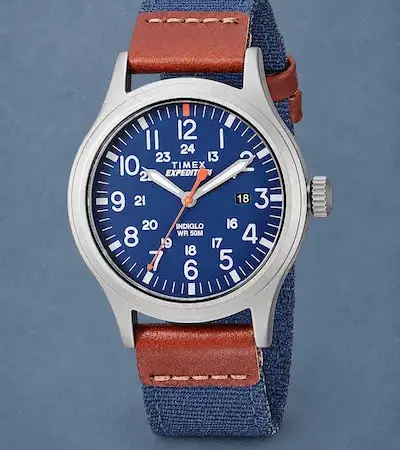
The Timex Expedition Scout represents the "field watch" category, a design lineage that dates back to the trench watches of World War I. Field watches were originally designed for military personnel who required legibility, durability, and a lack of reflective surfaces that could give away a position. The Expedition Scout adheres to these principles with a matte-finish case and a high-contrast dial featuring both 12-hour and 24-hour (military) time markers.
A key technical feature of the Timex line is the Indiglo night-light, a patented electroluminescent technology introduced by Timex in 1992. Unlike the passive luminescence (lume) found on most watches, which fades over time in the dark, Indiglo provides a bright, uniform light across the entire dial at the push of the crown. For consumers transitioning from an Apple Watch, this feature provides a familiar level of low-light visibility without the battery drain associated with an OLED screen. Market data indicates that Timex remains a dominant force in the budget sector, with the Expedition series consistently ranking as a top seller on major retail platforms due to its reputation for being "virtually indestructible."
The Relic Rylan: The Professional Entry Point
Relic, a subsidiary of the Fossil Group, targets a different consumer demographic: the professional seeking an "office-to-evening" timepiece. The Relic Rylan utilizes a stainless-steel construction, providing a weight and "wrist presence" that mimics luxury steel sports watches. Unlike the utilitarian field watch, the Rylan incorporates aesthetic flourishes such as diamond accents at the 12 o’clock position and sunray dials that catch the light.
The Fossil Group’s strategy with Relic has been to democratize the aesthetic of high-end horology. By using reliable Japanese or Chinese quartz movements and mass-production techniques for their steel cases, they offer a "jewelry-first" approach to timekeeping. For many men, the Rylan serves as an entry point into the world of metal-bracelet watches, offering a more substantial feel than the silicone straps typically found on smartwatches.
The Skagen Signatur: Minimalism and Ergonomics
The Skagen Signatur represents the "Danish Design" movement, characterized by slim profiles, minimalist dials, and an emphasis on ergonomics. Founded in 1989 and later acquired by Fossil, Skagen focused on the "less is more" philosophy. The Signatur model is particularly relevant for smartwatch users because of its thinness; while an Apple Watch Ultra can measure upwards of 14mm in thickness, the Skagen Signatur often sits at less than 8mm.
This slim profile allows the watch to slide effortlessly under a dress shirt cuff, a common pain point for users of bulky smartwatches. The Signatur’s aesthetic is devoid of the ruggedness of the Timex or the flashiness of the Relic, making it a favorite for those in creative industries or those who prefer a "Scandi-chic" wardrobe. Its use of wire lugs and quick-release leather straps also appeals to the modern consumer’s desire for customization.
Comparative Data: Smartwatches vs. Budget Analog Watches
| Feature | Smartwatch (e.g., Apple Watch) | Budget Analog (e.g., Timex/Skagen) |
|---|---|---|
| Average Price | $249 – $799 | $40 – $95 |
| Battery Life | 18 – 36 Hours | 2 – 5 Years |
| Lifespan | 3 – 5 Years (Software Obsolescence) | 10 – 20+ Years (Hardware Longevity) |
| Maintenance | Daily Charging, Software Updates | Battery Change every few years |
| Distraction Level | High (Notifications/Apps) | Zero |
| Accuracy | Atomic/GPS Sync | Quartz (+/- 15 sec/month) |
The data reveals a clear divide in the value proposition. While the smartwatch is a high-utility tool, the budget analog watch offers a superior "cost-per-wear" ratio and a significantly longer functional lifespan. This economic reality is a primary driver for consumers who are tired of the "upgrade cycle" mandated by tech companies.
Consumer Sentiment and the "Digital Detox" Movement
Psychological studies into "technostress" have highlighted the impact of constant connectivity on mental well-being. A 2022 survey by the American Psychological Association found that "constant checkers"—those who check their emails and notifications incessantly—report higher stress levels. This has led to a grassroots movement toward intentional disconnection.
In this context, the traditional watch has become a symbol of focus. Industry analysts note that wearing an analog watch allows a user to check the time without the risk of being sucked into a vortex of social media notifications or work emails. "The simple act of looking at a physical dial creates a boundary," says Dr. Elena Rossi, a behavioral psychologist specializing in digital habits. "It provides the information you need—the time—without demanding further engagement with the digital world."
Market Implications and Future Outlook
The resurgence of the sub-$100 watch market has forced legacy brands to innovate within tight price constraints. We are seeing an increase in "sustainable" materials, such as solar-powered movements and straps made from recycled ocean plastics, as brands attempt to appeal to younger, environmentally conscious consumers who may be purchasing their first non-smartwatch.
Furthermore, the "Watch Enthusiast" culture, fueled by platforms like Instagram and YouTube, has removed the stigma once associated with "cheap" watches. Influential figures in the horological world frequently praise Timex and Casio for their heritage and reliability, positioning them as "cool" alternatives to the ubiquitous smartwatch. This cultural shift ensures that the budget analog sector remains a vibrant part of the global economy.
As we look toward the latter half of the decade, the watch industry is likely to stabilize into a two-tiered system. The smartwatch will remain the "workhorse" for fitness and productivity, while the traditional watch—even at the budget level—will be cherished as a tool for personal expression and digital relief. The success of models like the Timex Expedition Scout, Relic Rylan, and Skagen Signatur proves that in an era of hyper-complexity, there remains a profound market demand for the simple, the reliable, and the analog.
In conclusion, the transition from a smartwatch to a traditional timepiece is more than a fashion trend; it is a recalibration of the consumer’s relationship with time and technology. By offering style and functionality for under $100, these watches provide a low-risk entry point for anyone looking to reclaim their attention from the digital screen while maintaining the timeless utility of a well-crafted wrist-mounted tool.

0 Comments