
The global horology market is witnessing a notable shift as a growing segment of consumers, previously loyal to the multifunctional capabilities of smartwatches, begins to reintegrate traditional analog timepieces into their daily wardrobes. This movement, driven by a combination of "digital detox" trends and an appreciation for classic aesthetics, has highlighted a thriving sub-sector of the industry: the high-quality, budget-friendly watch priced under $100. As the Apple Watch enters its second decade of market dominance, the endurance of the traditional wristwatch serves as a testament to the lasting value of simplicity, durability, and style in personal accessories.
The Evolution of Wristwear: From Utility to Connectivity and Back
To understand the current market dynamics, one must examine the trajectory of the watch industry over the last century. For decades, the wristwatch was a primary tool for timekeeping, evolving from military field watches in the early 20th century to the high-precision mechanical movements of the mid-century and the quartz revolution of the 1970s. However, the landscape shifted dramatically in 2015 with the launch of the Apple Watch, which redefined the wrist as a hub for biometric data, notifications, and communication.
According to market data from IDC, Apple currently holds a significant share of the wearables market, with millions of units shipped annually. Despite this, industry analysts have observed a phenomenon known as "smartwatch fatigue." Users who have spent years tethered to haptic alerts and daily charging cycles are increasingly seeking "analog interludes"—periods where they opt for a traditional watch to minimize distractions during social events, professional networking, or personal downtime.
This shift has created a unique opportunity for brands like Timex, Fossil (via its Relic line), and Skagen. These manufacturers have maintained a foothold in the sub-$100 category, offering consumers a low-risk entry point into the world of traditional horology. For those accustomed to the $400-to-$800 price range of premium smartwatches, the discovery of functional, stylish timepieces for a fraction of the cost has become a compelling narrative in consumer behavior.
The Field Watch Standard: Analysis of the Timex Expedition Scout
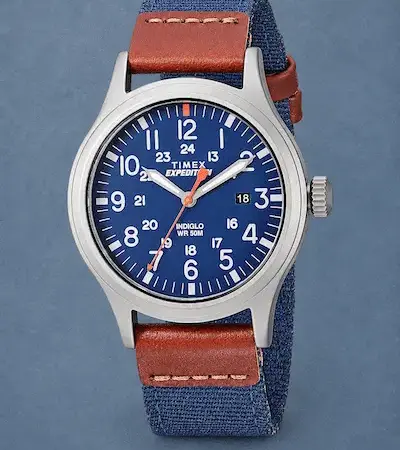
The field watch remains one of the most resilient designs in the history of horology. Originally developed for military personnel who required legibility, durability, and reliability under duress, the field watch has transitioned into a staple of casual menswear. The Timex Expedition Scout represents the modern iteration of this legacy, positioned as a primary example of high-value manufacturing at an accessible price point.
The Expedition Scout is characterized by its utilitarian design. It features a straightforward Arabic numeral dial, a date complication, and a rugged case typically paired with a nylon or leather strap. A key technical feature that distinguishes Timex in the budget category is the Indiglo backlight technology. Developed by the company in the early 1990s, Indiglo provides an electroluminescent glow that covers the entire dial, offering superior legibility in low-light conditions compared to the phosphorescent paint used on many competitors.
From a manufacturing perspective, Timex utilizes reliable quartz movements that require minimal maintenance. While these movements lack the intricate craftsmanship of Swiss mechanical calibers, they offer superior accuracy, often varying by only a few seconds per month. For the consumer looking for a "grab-and-go" watch that does not require the constant connectivity of a smartwatch, the Expedition Scout offers a functional simplicity that has earned it praise even among collectors of high-end luxury watches.
Bridging Professionalism and Value: The Relic by Fossil Rylan
While the field watch caters to the rugged and casual market, there is a distinct demand for budget-friendly "dress" watches that can transition from a corporate environment to formal evening events. Fossil Group, a powerhouse in the fashion watch industry, addresses this through its Relic brand. The Relic Rylan model serves as a case study in how manufacturers achieve a premium aesthetic using cost-effective materials.
The Rylan utilizes stainless steel construction and a multi-link bracelet, mimicking the silhouette of much more expensive luxury sports watches. By utilizing quartz movements and streamlined manufacturing processes, Relic is able to offer features such as contrasting indices and diamond accents at a price point below $100.
Market analysts suggest that the success of lines like Relic is rooted in the "Lipstick Effect"—a psychological phenomenon where consumers continue to purchase small luxury items even during economic downturns. A stainless steel watch provides a sense of permanence and professional intentionality that a plastic-cased smartwatch or fitness tracker may lack. In networking environments, where non-verbal cues and personal presentation are paramount, the traditional metal watch remains a symbol of classic professionalism.
Minimalist Design Philosophy: The Skagen Signatur
Representing a third pillar of the budget watch market is the minimalist movement, exemplified by the Skagen Signatur. Founded in 1989 and inspired by the Danish coastal town of Skagen, the brand focuses on Scandinavian design principles: clean lines, slim profiles, and a lack of superfluous ornamentation.
The Signatur model highlights the importance of ergonomics in watch design. Unlike the "clunky" profile often associated with early-generation smartwatches, the Signatur is designed to be thin enough to slide effortlessly under a dress shirt cuff. This "slim-line" engineering is a specific technical achievement in the budget category, as it requires a compact movement and a precision-engineered case.
The aesthetic appeal of minimalism has seen a resurgence alongside the "Quiet Luxury" trend in fashion. Consumers are moving away from loud, branded accessories in favor of subtle, well-designed pieces that complement rather than dominate an outfit. The Signatur’s use of wire lugs and simple leather straps emphasizes the dial’s geometry, making it a versatile choice for a wide demographic, from young professionals to retirees.
Supporting Data: The Resilience of the Analog Market
Data from the Federation of the Swiss Watch Industry and various retail tracking firms indicate that while the low-end "fashion watch" market (watches under $200) saw a dip during the initial rise of the smartwatch, it has stabilized and begun to recover in specific niches.
- Consumer Demographics: A 2023 survey of watch buyers indicated that nearly 40% of Gen Z consumers are interested in traditional watches as a way to express personal style outside of the digital ecosystem.
- Price Sensitivity: The $50 to $100 price bracket is the most active for "first-time" buyers who are testing their interest in horology before committing to "entry-level luxury" brands like Seiko, Tissot, or Hamilton, which typically start at $300 to $500.
- Longevity and Sustainability: Unlike smartwatches, which have a functional lifespan of 3 to 5 years due to battery degradation and software obsolescence, a $50 quartz watch can last for decades with simple battery changes, appealing to environmentally conscious consumers.
Industry Perspectives and Chronology of Change
The chronology of the modern watch market can be divided into three distinct eras. First, the Quartz Crisis (1970s-1980s), where Japanese technology nearly bankrupted the Swiss mechanical industry by providing cheaper, more accurate watches. Second, the Mechanical Renaissance (1990s-2010s), where traditional watches were rebranded as luxury status symbols. Finally, the Hybrid Era (2015-Present), where smartwatches and traditional watches coexist.
Industry experts argue that the current market is not a zero-sum game. "The smartwatch is a tool, but the analog watch is an heirloom or a piece of jewelry," says Michael Clerizo, a noted horology historian. This sentiment is echoed by retail data showing that many consumers now own both: a smartwatch for fitness and work productivity, and one or more traditional watches for social occasions and weekends.
Official responses from traditional watchmakers have shifted from defensiveness to adaptation. Brands like Timex and Fossil have leaned into their heritage, reissuing "archive" designs from the 1960s and 70s to capitalize on the vintage trend. By keeping prices accessible, they ensure that the "entry-level" of the hobby remains populated.
Broader Impact and Future Implications
The continued relevance of the sub-$100 watch has broader implications for the retail and technology sectors. It suggests that despite the rapid advancement of wearable technology, there remains a fundamental human desire for tactile, single-purpose objects. The traditional watch does not require an internet connection, does not track the user’s location, and does not demand attention through vibrations.
Furthermore, the "democratization of style" provided by brands like Timex, Relic, and Skagen allows individuals to cultivate a diverse collection of accessories without significant financial strain. As the "digital detox" movement gains momentum, it is likely that the demand for simple, reliable, and inexpensive timepieces will continue to grow.
In conclusion, the traditional watch is far from obsolete. Whether it is the rugged practicality of the Timex Expedition Scout, the polished professionalism of the Relic Rylan, or the minimalist elegance of the Skagen Signatur, these timepieces offer a reprieve from the digital noise of the modern world. For the cost of a few months of a premium app subscription, consumers can secure a piece of functional art that requires no updates, no charging, and provides a timeless connection to the history of timekeeping itself. The market’s shift back to basics serves as a reminder that in an age of infinite complexity, there is profound value in a device that simply tells the time.

0 Comments