
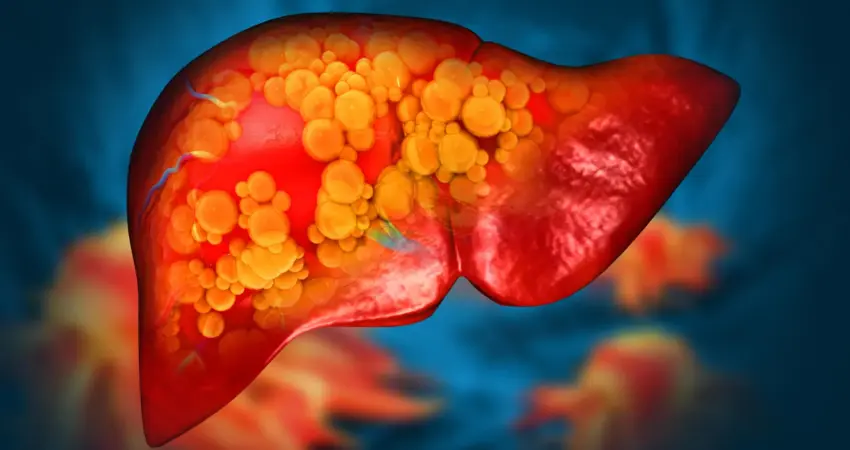
That late-night snack might have consequences beyond extra calories. Researchers at Oregon Health & Science University (OHSU) have found that eating late in the evening is associated with a significantly higher risk of liver disease, suggesting that when you eat could be an important factor in protecting your liver. The groundbreaking study, published in the prestigious journal Clinical Gastroenterology and Hepatology, analyzed data from nearly 200,000 individuals, revealing a robust correlation between late-night eating patterns and the prevalence of serious liver conditions, including metabolic dysfunction-associated steatotic liver disease (MASLD), commonly known as fatty liver disease, and cirrhosis.
The OHSU research team discovered that individuals who regularly consumed food after dinner or even after bedtime exhibited a 20% to 30% elevated risk of developing liver disease compared to their counterparts who abstained from late-night meals. This finding marks a significant advancement in understanding the multifactorial nature of liver health, moving beyond solely focusing on dietary composition to emphasize the critical role of meal timing.
Unveiling the Connection: A Deep Dive into the OHSU Study
For years, the health implications of late-night eating have been a subject of public discourse and scientific inquiry, primarily linked to concerns about weight gain and cardiovascular health. However, the OHSU study aimed to specifically address whether this habit also poses a tangible threat to the liver.
"A few studies have hinted at this idea, but this is among the first long-term analyses to explicitly draw the connection to fatty liver disease," stated lead author Robert Wilechansky, M.D., a hepatologist at OHSU with a specialization in liver transplantation. His expertise in the complexities of liver disease lent significant weight to the investigation’s findings.
The Foundation of the Research: A Vast Data Repository
To rigorously investigate this association, researchers meticulously examined data pooled from three prominent, long-standing nationwide studies: the Nurses’ Health Study, the Nurses’ Health Study II, and the Health Professionals Follow-up Study. These comprehensive datasets, collectively encompassing information from nearly 200,000 participants, provided an unparalleled opportunity to explore the intricate relationship between lifestyle choices and health outcomes over extended periods.
Participants in these studies had contributed detailed information regarding their dietary habits, daily routines, physical activity levels, and other pertinent lifestyle factors. The OHSU team strategically divided these participants into distinct groups based on their self-reported typical eating times. These patterns were then systematically compared with reported diagnoses of fatty liver disease and cirrhosis.
The results were striking and consistent across the board. Individuals who identified as regular late-night eaters demonstrated a statistically significant 20% to 30% higher risk of developing liver disease when compared to those who adhered to earlier eating schedules. This revelation compels a re-evaluation of dietary guidelines and public health messaging regarding the optimal timing for food consumption.
The Pervasive Threat of Fatty Liver Disease
Fatty liver disease, now formally recognized as MASLD, is a growing public health concern, affecting an estimated 30% of the U.S. population. This condition arises when excessive fat accumulates within the liver cells. While often asymptomatic in its early stages, MASLD can, in some individuals, progress to inflammation, leading to liver cell damage and potentially culminating in cirrhosis. Cirrhosis is a severe and irreversible condition characterized by extensive scarring of the liver, which impairs its vital functions and can lead to liver failure.
It is crucial to note, as Dr. Wilechansky emphasized, that not all individuals diagnosed with fatty liver disease will develop its more severe manifestations. "It’s important to remember, of the people who developed fatty liver disease, only a small fraction develop serious forms of the condition like liver cirrhosis," he explained. "Even so, the big take-away here is that confining your calorie intake to several hours before bedtime might be beneficial." This nuanced perspective highlights the importance of proactive measures for a significant portion of the population.
The Liver’s Internal Clock: Circadian Rhythms and Metabolism
A compelling explanation for the observed link between late-night eating and liver disease lies in the body’s sophisticated internal biological clock, known as circadian rhythms. These natural, approximately 24-hour cycles govern a multitude of physiological processes, including sleep-wake patterns, hormone secretion, and critically, metabolism.
The liver plays a central role in metabolic regulation, tirelessly working to process nutrients, maintain stable blood sugar levels, and manage the body’s energy reserves. When we consume food during periods when our bodies are biologically programmed to rest and prepare for sleep, it can disrupt these finely tuned processes. This disruption may lead to impaired nutrient processing, inefficient energy storage, and ultimately, contribute to the metabolic dysregulation that underpins fatty liver disease.
Dr. Wilechansky’s interest in this particular connection was partly fueled by existing research on night shift workers. Individuals who work non-traditional hours often experience a misalignment between their work and sleep schedules and their natural circadian rhythms. This desynchronization has been consistently linked to increased rates of obesity and cardiovascular disease, suggesting that temporal disruption of bodily functions can have profound health consequences.
"We know the liver is very much in tune with the body’s circadian rhythms," Dr. Wilechansky remarked. "So we’re interested in changing the timing of eating in a way that could make a difference in health without changing the composition of what people eat." This focus on meal timing as a potential intervention is particularly appealing, as modifying when meals are consumed may be a more accessible strategy for many individuals than making drastic changes to their dietary content.
Andrew McHill, Ph.D., an associate professor at OHSU specializing in sleep and circadian physiology and a co-author of the study, underscored the growing body of evidence supporting the critical role of timing in health. "We are seeing over and over again that the timing of behaviors, whether it’s sleep, eating, or exercise, really matters," said Dr. McHill. "For example, we have shown that eating during the night, when the internal biological clock is promoting sleep, reduces the ability of your body to metabolize foods as efficiently and can eventually lead to obesity, diabetes, and now poor liver health."
Pre-clinical studies involving animal models have further corroborated these findings, identifying the liver as a particularly vulnerable organ when the natural interplay between eating and sleeping is disrupted. These investigations provide a biological rationale for the epidemiological observations made in the OHSU study.
Future Directions: Can Earlier Eating Offer Protection?
While the OHSU study presents compelling evidence linking late-night eating to an increased risk of liver disease, the researchers are careful to emphasize that the study design, being observational, cannot definitively establish a cause-and-effect relationship. The analysis relied on self-reported data regarding eating habits, which can sometimes be subject to recall bias or imprecise descriptions.
"These limitations mean that other factors could help explain the association," the authors noted in their publication. "More carefully controlled research is needed to determine whether eating earlier actually improves liver health."
To address this crucial gap, Dr. Wilechansky is currently involved in a new clinical study at OHSU. This ongoing research is actively recruiting participants to directly investigate the impact of meal timing on liver health. Unlike previous studies that relied on retrospective dietary reports, this trial will involve direct monitoring of meal timing and will assess whether shifting food consumption to earlier hours leads to measurable improvements in individuals with pre-existing fatty liver disease. The outcomes of this prospective study could be pivotal in determining whether meal timing warrants a prominent place alongside established dietary and lifestyle recommendations for managing metabolic and liver health.
The authors concluded their paper with a clear statement: "Our findings add to the growing body of literature linking late-evening eating patterns to adverse metabolic and liver outcomes."
Broader Implications for Public Health
The implications of this research extend beyond individual dietary choices, holding potential significance for public health strategies and clinical practice. As the prevalence of both obesity and fatty liver disease continues to rise globally, interventions that are accessible and sustainable are desperately needed. The notion that simply adjusting the timing of meals, without necessarily overhauling entire diets, could offer a protective benefit is a promising avenue for future public health campaigns and clinical guidance.
For individuals seeking to optimize their liver health, the current findings offer a clear and actionable suggestion: consider consolidating calorie intake into the earlier parts of the day. Allowing a substantial period between the last meal and bedtime may provide the liver with the necessary time to perform its metabolic functions optimally, potentially mitigating the risk of accumulating excess fat and progressing to more severe liver conditions.
The research team also included Kevin Casey, M.P.H., Andrew Chan, M.D., Ph.D., and Tracey Simon, M.D., from Massachusetts General Hospital in Boston, underscoring the collaborative nature of this significant scientific endeavor. The research was generously supported by the American Association of the Study of Liver Diseases Foundation, award CTORA24-179910, highlighting the commitment of leading medical organizations to advancing our understanding of liver health.

0 Comments