
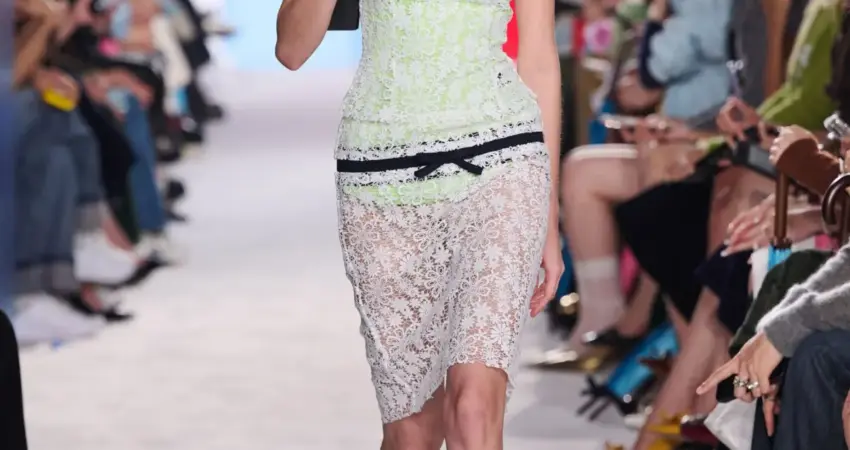
The presentation of Shushu/Tong’s Spring 2027 collection, titled Darling Melancholy, transformed the Shanghai runway into a cinematic tableau inspired by the 1964 Jacques Demy classic, The Umbrellas of Cherbourg. Designers Liushu Lei and Yutong Jiang utilized the thematic framework of French New Wave cinema to explore a synthesis of mid-century European aesthetics and contemporary East Asian subcultures. Upon entering the venue, attendees were greeted by the sight of colorful umbrellas placed on every seat—a direct homage to the film’s iconic visual language—signaling a collection that would balance the weight of nostalgia with the levity of modern commercial fashion.
Conceptual Framework and Creative Inspiration
The Spring 2027 collection marks a significant evolution for Shushu/Tong, a brand that has become synonymous with the "girly" aesthetic in the global luxury market. For this season, the designers looked toward the 1960s, a decade defined by radical shifts in youth culture and the liberation of women’s silhouettes. By citing Mary Quant and André Courrèges, Lei and Jiang tapped into the mod movement’s emphasis on geometric precision and youthful rebellion. However, this Western historical reference was filtered through what the designers described as an "Asian lens," incorporating their childhood obsessions with Japanese anime and the "schoolgirl" uniform codes that have defined the brand since its inception in 2015.
The title "Darling Melancholy" suggests a preoccupation with the bittersweet nature of romance, yet the execution on the runway leaned heavily toward the "darling" rather than the "melancholy." While Demy’s film is noted for its heartbreaking conclusion hidden behind a vibrant, saturated color palette, Shushu/Tong chose to amplify the saturation while minimizing the sorrow. The result was a collection that felt resiliently upbeat, replacing the film’s tragic undertones with a sense of "unreal prettiness" that caters to a modern consumer base seeking escapism through high-end apparel.
Collection Analysis: Silhouettes, Textiles, and Details
The garments showcased a mastery of proportion, a hallmark of the London College of Fashion-trained duo. The collection was characterized by short, feminine silhouettes that maintained a neat, structured appearance despite the whimsy of the embellishments. Key design elements included:
- Balloon Skirts and Petal Edges: The designers utilized structural volume to create balloon skirts that mimicked the organic curves of flower petals. These were often paired with petal-edged hems, reinforcing the botanical themes present throughout the show.
- Macramé Lace and Textural Contrast: Intricate macramé lace appeared in various candy-colored combinations, providing a tactile depth to the lightweight spring fabrics. This artisanal approach was contrasted with sleek, sporty details that emerged toward the middle of the presentation, grounding the hyper-feminine aesthetic in contemporary utility.
- Embellishments and Beaded Daisies: A "drizzle" of beaded daisies and floral motifs decorated the surfaces of dresses and separates. These details served to maintain the collection’s upbeat mood, ensuring that the "melancholy" mentioned in the title remained a conceptual ghost rather than a visual reality.
The color palette was a direct reflection of the 1960s Technicolor era, featuring mint greens, lemon yellows, soft pinks, and lavender. These "candy colors" were handled with a sophistication that prevented the collection from feeling juvenile, catering instead to the "well-groomed" aesthetic favored by the brand’s loyal followers.
Chronology of the Spring 2027 Presentation
The show began with a sequence of looks that established the 1960s mod influence. Models emerged in structured mini-dresses and A-line coats that echoed the work of Mary Quant, though updated with the signature Shushu/Tong bow motifs and exaggerated collars.
As the show progressed, the influence of Japanese anime became more pronounced. The "schoolgirl" archetype was deconstructed and rebuilt using luxury materials, moving from the rigid structure of the opening looks to softer, more voluminous shapes. The midpoint of the show introduced the aforementioned sporty elements—drawstrings, performance-adjacent fabrics, and streamlined cuts—which acted as a palate cleanser before the final segment of high-romance evening wear.
The finale focused on the collection’s most intricate pieces: gowns featuring heavy macramé and extensive beading. Throughout the entire progression, the accessories remained a focal point. Each model carried a boxy, ladylike bag clutched in the crook of the arm. These bags, described by observers as resembling "Pop Art toys," provided a modern, graphic contrast to the soft textures of the clothing.
Market Context and the "Cute Economy" in China
Shushu/Tong’s success is deeply intertwined with the rise of the "cute economy" (often referred to as kawaii culture in Japan or meng in China) within the luxury sector. Data from market research firms indicates that Gen Z and Millennial consumers in East Asia are increasingly drawn to brands that offer a distinct subcultural identity rather than traditional, heritage-based luxury.
According to recent retail reports from Shanghai, the "girly" aesthetic—characterized by ruffles, bows, and pastel hues—has seen a 25% year-over-year increase in market share within the independent designer segment. Shushu/Tong sits at the apex of this trend. The brand’s front row at Shanghai Fashion Week was populated by "VICs" (Very Important Customers) and influencers whose digital footprints drive immediate sell-through rates. Observations from the event noted that many of these high-net-worth individuals were already engaging with the collection via digital pre-order platforms before the final model had left the runway.
Design Perspectives: Official Statements and Intent
In a post-show briefing, Liushu Lei and Yutong Jiang elaborated on their decision to interpret the 1960s through a contemporary Asian perspective. "We wanted to capture the optimism of that era but also the way it has been filtered through the media we grew up with," Lei stated. "The 1960s in Europe were about a certain kind of freedom, but in our childhood memories of anime, those same silhouettes represent a kind of dreamlike, unreal perfection."
The designers addressed the discrepancy between the collection’s title and its cheerful appearance, noting that the "melancholy" was intended to be an internal state rather than an external fashion statement. Jiang added, "The clothes are the armor against the melancholy. Even if the story is sad, the girl in the story is still dressed perfectly."
Broader Impact and Industry Implications
The Darling Melancholy collection reinforces Shanghai’s growing status as a global fashion capital capable of fostering unique creative voices that challenge Western-centric narratives. By successfully blending French cinematic history with Asian pop culture, Shushu/Tong has demonstrated a sophisticated approach to cross-cultural synthesis.
Industry analysts suggest that Shushu/Tong’s ability to maintain a consistent brand identity while evolving its thematic inspirations is a key factor in its longevity. While many independent labels struggle to move beyond their initial "viral" moment, Lei and Jiang have built a robust business model centered on high-quality craftsmanship and a deep understanding of their core demographic’s psychological drivers.
The collection also highlights a broader trend in the fashion industry: the move toward "disarmingly wearable" luxury. Despite the theatrical nature of the runway show and the whimsical references, the individual pieces—the skirts, the boxy bags, and the knitwear—possess a high degree of commercial viability. This balance between editorial creativity and retail readiness is essential in an era where fashion houses must compete with both traditional luxury giants and fast-fashion imitators.
Conclusion
Shushu/Tong’s Spring 2027 showing at Shanghai Fashion Week serves as a testament to the power of narrative-driven design. By taking the heartbreak of The Umbrellas of Cherbourg and reimagining it through a lens of vibrant, anime-inspired optimism, the brand has created a collection that is both nostalgic and forward-looking. As the brand continues to expand its footprint in international markets, the "Darling Melancholy" collection will likely be remembered as a definitive moment where the "Shushu/Tong girl" grew into a more complex, cinematically-inspired figure, ready to face the world with a pink umbrella and a perfectly proportioned balloon skirt.

0 Comments