
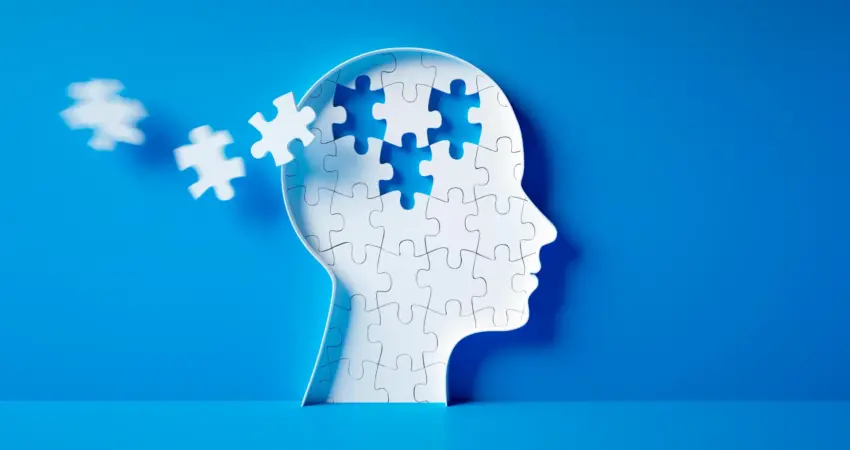
Growing older is often associated with a perceived decline in cognitive abilities, particularly memory. However, a groundbreaking proposal from researchers at the University of Arizona suggests this narrative may be incomplete, offering a more nuanced understanding of cognitive aging. Instead of solely focusing on deterioration, scientists are exploring the idea that the aging brain undergoes a natural adaptation, prioritizing the utilization of accumulated knowledge and wisdom over the precise recall of every detail. This shift, termed the adaptive aging hypothesis, posits that the brain optimizes its function for a different life stage, one where experience and understanding become paramount.
A Paradigm Shift in Understanding Cognitive Aging
The University of Arizona’s research, published in the prestigious journal Perspectives on Psychological Science, challenges the conventional view of aging as an irreversible descent into cognitive impairment. Lead researcher Fabian-Xosé Fernandez, an associate professor of cognition and neural systems, articulates this shift: "If we look at normative aging as a story of just decline, we are really missing the boat. The older brain is optimized for different things than the younger brain, predominantly the sharing of stored expertise and social relationships." This perspective reframes age-related cognitive changes not as a malfunction, but as a deliberate evolutionary strategy.
The adaptive aging hypothesis draws upon insights from molecular biology and advanced brain imaging techniques. These tools reveal that the brain’s neural networks and their functional emphasis evolve over time. Rather than a universal deficit, these changes are interpreted as a natural developmental progression, akin to the maturation processes observed in earlier life stages. This new framework suggests that the cognitive landscape of an older adult is not necessarily a depleted one, but rather a landscape reconfigured for different, yet equally vital, purposes.
The Hippocampus-Frontal Cortex Balance: A Shift in Neural Priorities
Central to the adaptive aging hypothesis is the intricate interplay between two key brain regions: the hippocampus and the frontal cortex. The hippocampus is renowned for its role in forming and retrieving declarative memories – specific details about events, including when, where, and who was involved. In contrast, the frontal cortex is crucial for higher-order cognitive functions, such as abstract reasoning, pattern recognition, and extracting the overarching "gist" or meaning from experiences.
The hypothesis proposes that during healthy aging, there is a natural and gradual recalibration of activity between these two regions. As individuals advance into their fifth and seventh decades of life, there is a discernible trend of reduced reliance on the hippocampus for detailed memory encoding and retrieval. Concurrently, the frontal cortex becomes more engaged. This reallocation of neural resources allows the brain to prioritize the interpretation of new information through the lens of a vast, accumulated knowledge base, rather than expending significant energy on memorizing every new piece of data with granular precision.
This observed shift has been noted across both human populations and animal models, suggesting an evolutionary underpinning. Fernandez elaborates, "The fact that you see this across people and animal models suggests there is an evolutionary driving force. One could argue you are developing your entire life, and development occurs in lockstep with the needs of your brain. When you’re younger, the hippocampus turns on because you don’t have a knowledge base or know how the world works. A kid absorbs information like a sponge because they are building an archive of information. In early life, the balance is tilted toward recollecting declarative memories with precision, detail, and context." This highlights a lifelong developmental trajectory, where cognitive priorities evolve to meet the demands of each life stage.
Evolutionary Imperatives: The Wisdom of Age
The adaptive aging hypothesis posits that this cognitive transition is not merely a coincidental biological phenomenon but a strategically advantageous evolutionary adaptation. As individuals age, their primary biological imperative may shift from acquiring new information to effectively utilizing and transmitting the knowledge and wisdom accumulated over a lifetime.
The enhanced role of the frontal cortex, with its capacity for abstraction and meaning-making, equips older adults to excel in roles that demand judgment, guidance, and the distillation of complex information. This aligns with the observed strengths of older adults in areas such as teaching, mentoring, storytelling, and the intergenerational transfer of cultural and practical knowledge. These are activities that benefit more from understanding underlying principles and life lessons than from recalling minute details of past events.
Fernandez explains the evolutionary logic: "Given those goals, it makes sense that you aren’t interested in nitty-gritty details. You are interested in safeguarding the vast knowledge you already have. Evolution may be saying that if you make it long enough, there’s a need to transmit this information, so we put into motion biological changes that enforce and protect your semantic and autobiographical memories." This perspective suggests that the brain’s aging process is geared towards preserving and leveraging a lifetime’s worth of expertise, making older adults invaluable repositories of societal memory and practical wisdom.
Distinguishing Healthy Aging from Neurodegenerative Disease
A critical implication of the adaptive aging hypothesis lies in its potential to clarify the distinction between normal cognitive aging and neurodegenerative diseases like Alzheimer’s. While both conditions involve changes in memory, the underlying biological mechanisms and their manifestations differ significantly.
Fernandez emphasizes that Alzheimer’s disease is not simply an extreme version of normal aging. "When I was in grad school, people thought about Alzheimer’s as a more intense version of cognitive aging, but that is just not the case," he states. "They are completely different." The adaptive aging process is a gradual, biologically driven recalibration, typically unfolding between the fifth and seventh decades. In contrast, Alzheimer’s disease is characterized by pathological processes, such as the accumulation of amyloid and tau proteins, which disrupt normal brain function in ways that are fundamentally distinct.
One key differentiator lies in hippocampal activity. In healthy aging, the deemphasis of hippocampal function is considered a normal adaptation. However, in Alzheimer’s disease, the hippocampus can exhibit hyperactivity. This abnormal activation, rather than supporting cognitive development, actively disrupts memory and understanding circuits. "In normative aging, hippocampal activation is deemphasized, which is probably what should be happening in a 70-year-old. But in many cases of Alzheimer’s, it turns out the hippocampus is hyperactive," Fernandez explains. "This beautiful developmental transition is completely disrupted in Alzheimer’s disease by pathological processes that mess with episodic memory and interfere with circuits that allow you to think about your own life, lexicon, and vocabulary." This disruption can impair the ability to recall personal experiences and access core knowledge, including language and conceptual understanding. Understanding these divergences is crucial for both diagnostic accuracy and the development of targeted therapeutic interventions.
Embracing the Strengths of the Aging Brain: A Societal Imperative
The adaptive aging hypothesis calls for a fundamental re-evaluation of how society perceives and values aging. Instead of solely focusing on cognitive abilities that naturally wane, there is a need to recognize and cultivate the unique strengths that emerge with age. The current societal emphasis on maintaining the precise recall abilities characteristic of younger brains may, paradoxically, work against the natural adaptive processes of the aging brain.
"For many individuals, the weight of how you process information should probably not be so hippocampal-centric by the sixth or seventh decade," suggests Fernandez. This implies that encouraging older adults to engage in activities that leverage their accumulated knowledge, critical thinking, and wisdom should be prioritized over tasks that demand rote memorization or rapid information processing.
Creating environments that foster social interaction and intergenerational connection can play a pivotal role in unlocking these latent strengths. These interactions provide invaluable opportunities for the exchange of experiences, the sharing of expertise, and the preservation of knowledge that might otherwise be lost. Such connections not only benefit older adults by validating their contributions but also enrich younger generations with invaluable life lessons and historical context.
Fernandez articulates this potential: "People see older individuals and look at them as not being on par with younger individuals across a lot of metrics. The way I look at it is that you’ve got someone with a brain that has been active for several decades and has seen a lot. There is tremendous value there, and we don’t do a good job of unlocking it." This perspective highlights the untapped potential within the aging population and underscores the need for societal structures that actively harness this reservoir of experience.
Broader Implications and Future Directions
The implications of the adaptive aging hypothesis extend beyond individual cognitive experience, influencing public health policy, educational strategies, and even the design of technology. By shifting the focus from deficit to adaptation, researchers and policymakers can develop more effective interventions and support systems for older adults.
Supporting Data: Research on cognitive aging has consistently shown declines in certain cognitive functions, such as processing speed and working memory, by as much as 20-30% between young adulthood and older age. However, other cognitive abilities, such as vocabulary and general knowledge, tend to remain stable or even improve with age. For instance, studies utilizing the Wechsler Adult Intelligence Scale (WAIS) have demonstrated a pattern of declining performance on "fluid" intelligence tasks (reasoning, problem-solving) while "crystallized" intelligence (learned knowledge, vocabulary) shows resilience or enhancement in older adults. This aligns with the adaptive aging hypothesis’s emphasis on the preservation and utilization of accumulated knowledge.
Background Context: The traditional view of cognitive aging as a unidirectional decline has been influenced by early research that often focused on pathological aging or used methodologies that did not adequately account for the plasticity and adaptive capacity of the aging brain. The advent of neuroimaging technologies like fMRI and PET scans in the late 20th and early 21st centuries has provided unprecedented insights into brain function across the lifespan, paving the way for more sophisticated models of cognitive change.
Timeline of Understanding:
- Mid-20th Century: Dominance of the "wear and tear" or "decline" model of aging, often focusing on deficits.
- Late 20th Century: Emergence of the "plasticity" concept in neuroscience, suggesting the brain’s capacity for change throughout life. Early research begins to identify differences in brain activation patterns in older adults.
- Early 21st Century: Advances in neuroimaging allow for detailed investigation of neural correlates of cognitive aging. The concept of "cognitive reserve" gains traction, suggesting that education and lifelong engagement can buffer against age-related decline.
- Present Day: The adaptive aging hypothesis emerges as a significant theoretical advancement, proposing a biological and evolutionary basis for cognitive shifts in later life, moving beyond a simple deficit model.
Statements from Related Parties (Inferred):
- Gerontologists: Might express cautious optimism, emphasizing the need for further empirical validation but acknowledging the potential of the hypothesis to reframe research and interventions. They might advocate for more longitudinal studies to track these neural shifts and their functional consequences.
- Educators and Lifelong Learning Advocates: Could see this hypothesis as a powerful argument for continued learning and engagement in older adulthood, highlighting the brain’s capacity to adapt and utilize new knowledge.
- Healthcare Providers: May find the distinction between healthy aging and Alzheimer’s particularly valuable for patient counseling and diagnostic clarity, potentially leading to more targeted support for individuals experiencing cognitive changes.
Analysis of Implications:
The adaptive aging hypothesis has profound implications for how we approach aging in society. Firstly, it encourages a shift from a deficit-oriented perspective to one that celebrates the strengths and contributions of older adults. This could lead to increased social inclusion, more meaningful engagement in the workforce and community, and a richer intergenerational exchange of knowledge. Secondly, it has the potential to refine diagnostic criteria and treatment strategies for neurodegenerative diseases, by providing a clearer baseline for what constitutes normal, adaptive cognitive change. Finally, it challenges educational systems and public health initiatives to design programs that support and leverage the unique cognitive profile of the aging brain, rather than attempting to force it into younger cognitive molds.
In conclusion, the adaptive aging hypothesis offers a compelling new lens through which to view cognitive changes associated with growing older. By recognizing the brain’s capacity for adaptation and the evolutionary advantage of wisdom and accumulated knowledge, this perspective moves beyond a narrative of inevitable decline, illuminating the enduring value and sophisticated reorientation of the aging mind. It underscores the potential for a more holistic and empowering understanding of a universal human experience.

0 Comments