
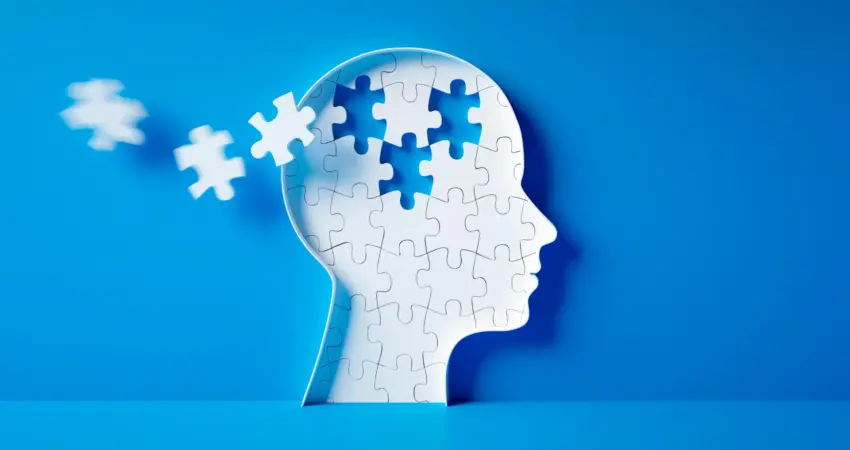
Growing older is often associated with memory loss and declining mental abilities. However, scientists are questioning whether these changes tell the whole story. Rather than simply becoming less capable, the brain may be adapting to a new stage of life in which accumulated knowledge, wisdom, and understanding become more important than remembering every detail. This paradigm shift, explored by researchers at the University of Arizona, proposes that cognitive aging is not solely a narrative of decline but a sophisticated evolutionary adaptation, optimizing the brain for the transmission of expertise and the navigation of complex social landscapes.
A New Perspective on Cognitive Aging
For decades, the prevailing scientific understanding of cognitive aging has largely focused on decline, viewing changes in memory and processing speed as inevitable detriments. This perspective, often characterized by a reductionist approach to neuroscience, has led to a societal bias that equates advanced age with diminished cognitive capacity. However, a groundbreaking proposal from the University of Arizona challenges this long-held view. Published in the prestigious journal Perspectives on Psychological Science, the research introduces the "adaptive aging hypothesis," suggesting that the observed alterations in the aging brain are not merely signs of deterioration but rather a natural and beneficial evolutionary adjustment.
The University of Arizona team, drawing on a confluence of findings from molecular biology, advanced brain imaging techniques such as functional magnetic resonance imaging (fMRI), and longitudinal cognitive studies, posits that the aging brain undergoes a fundamental shift in its operational priorities. Instead of focusing on the rapid acquisition and precise recall of novel information, as is characteristic of younger brains, the older brain becomes more adept at leveraging its vast repository of accumulated knowledge and experience. This recalibration, the researchers argue, equips individuals with unique strengths crucial for societal functioning, particularly in roles involving mentorship, teaching, and the preservation of cultural heritage.
Dr. Fabian-Xosé Fernandez, an associate professor of cognition and neural systems at the University of Arizona and a lead author on the study, eloquently articulates this shift: "If we look at normative aging as a story of just decline, we are really missing the boat. The older brain is optimized for different things than the younger brain, predominantly the sharing of stored expertise and social relationships." This perspective reframes the narrative of aging from one of loss to one of specialized development, highlighting the emergence of new cognitive proficiencies.
The Brain’s Shifting Landscape: From Hippocampus to Frontal Cortex
At the heart of the adaptive aging hypothesis lies a nuanced understanding of how different brain regions contribute to memory and cognition. Two key players in this cognitive orchestra are the hippocampus and the frontal cortex. The hippocampus, a seahorse-shaped structure deep within the temporal lobe, is critically involved in the formation and retrieval of episodic memories – the detailed accounts of specific events, including their context, time, and place. It acts as a high-fidelity recorder, meticulously cataloging new experiences.
In contrast, the frontal cortex, particularly the prefrontal cortex, is the brain’s executive control center. It is responsible for higher-order cognitive functions such as planning, decision-making, abstract reasoning, and the extraction of meaning and gist from information. While the hippocampus excels at storing the "what, where, and when" of an experience, the frontal cortex focuses on the "why" and "so what," identifying patterns, drawing inferences, and integrating new information with existing knowledge frameworks.
The adaptive aging hypothesis proposes that a significant change occurs in the functional balance between these two critical regions as we age. In healthy aging, there is a discernible shift away from a heavy reliance on hippocampal activity and a growing engagement of the frontal cortex. This is not to say the hippocampus becomes inactive, but rather its dominance in memory processing wanes, while the frontal cortex assumes a more prominent role.
This recalibration has profound implications. As individuals accumulate a lifetime of experiences, their brains possess a rich tapestry of knowledge. Instead of dedicating significant resources to precisely cataloging every new detail, which might be redundant given existing knowledge, the aging brain can more efficiently process information by connecting it to established frameworks. This allows for a deeper understanding of overarching themes and the extraction of valuable insights, a process often referred to as "gist-based processing."
Empirical evidence supports this model. Studies utilizing fMRI have shown decreased hippocampal activation during certain memory tasks in older adults, accompanied by increased activation in prefrontal areas. This pattern is consistent with a shift towards prioritizing meaning-making and knowledge integration over detailed recall. For instance, when asked to recall a story, younger adults might focus on remembering specific names, dates, and dialogue, while older adults might be more adept at summarizing the plot, identifying the moral of the story, and relating it to broader life lessons.
Evolutionary Underpinnings: Wisdom for the Collective
The adaptive aging hypothesis is not merely a description of cognitive changes; it proposes an evolutionary imperative behind them. The observed shift in brain function is suggested to be a survival advantage, not just for the individual, but for the species. Dr. Fernandez points to the presence of similar cognitive shifts in animal models, hinting at a deep-seated evolutionary driving force. "The fact that you see this across people and animal models suggests there is an evolutionary driving force," he stated. "One could argue you are developing your entire life, and development occurs in lockstep with the needs of your brain."
In early life, the brain is a blank slate, a sponge absorbing an immense volume of information to build a foundational understanding of the world. The hippocampus is highly active during this period, ensuring the precise encoding of declarative memories – facts and events. This is crucial for survival and learning in a novel environment. As individuals mature, their knowledge base expands exponentially. The evolutionary pressure then shifts from pure acquisition to the effective utilization and transmission of this accumulated wisdom.
This is where the older brain’s adaptation becomes invaluable. The ability to distill complex situations, draw upon past successes and failures, and offer nuanced guidance becomes paramount. Older adults, with their extensive life experience, are uniquely positioned to serve as repositories of collective knowledge and cultural memory. Their insights can inform younger generations, helping them navigate challenges, avoid pitfalls, and build upon the foundations laid by their predecessors. This intergenerational transfer of knowledge is a cornerstone of human societal development.
The frontal cortex’s enhanced role in later life facilitates this transmission. By focusing on understanding relationships, identifying underlying principles, and applying existing knowledge, older adults can effectively mentor, teach, and guide. This perspective suggests that societal structures that foster intergenerational interaction and value the contributions of older adults are not just socially beneficial but are also evolutionarily advantageous, promoting the continuity and advancement of human societies.
Distinguishing Healthy Aging from Neurodegenerative Disease
A critical implication of the adaptive aging hypothesis is its potential to clarify the distinction between normal cognitive aging and neurodegenerative diseases like Alzheimer’s. For a long time, Alzheimer’s was often conceptualized as an extreme manifestation of age-related cognitive decline. However, the adaptive aging hypothesis underscores that these are fundamentally different processes.
"When I was in grad school, people thought about Alzheimer’s as a more intense version of cognitive aging, but that is just not the case," Dr. Fernandez emphasized. "They are completely different."
In healthy aging, the shift from hippocampal dominance to frontal cortex engagement is a gradual, controlled process, typically unfolding between the fifth and seventh decades of life. It represents a functional optimization. In contrast, Alzheimer’s disease is characterized by pathological processes that disrupt brain function in a detrimental manner. These processes, often involving the accumulation of abnormal proteins such as amyloid-beta and tau, interfere with neuronal communication and ultimately lead to cell death.
One key differentiator lies in hippocampal activity. While healthy aging is associated with a de-emphasis of hippocampal function, Alzheimer’s disease can paradoxically involve hyperactivity of the hippocampus in its early stages. This hyperactivity is not indicative of efficient memory processing but rather a sign of pathological disruption. The disease-related changes can overwhelm and ultimately damage the very neural circuits responsible for forming new memories and accessing existing ones, including semantic memory (knowledge of facts and concepts) and autobiographical memory (recollection of personal experiences).
The adaptive aging hypothesis provides a framework for understanding why this distinction is crucial. The "beautiful developmental transition" of healthy aging, characterized by a shift towards wisdom and experience-based cognition, is fundamentally disrupted by the pathological cascade of Alzheimer’s. This disruption can lead to a profound inability to recall personal life events, access one’s lexicon, or even recognize familiar faces, highlighting the devastating impact of the disease. By meticulously differentiating the adaptive changes of normal aging from the destructive processes of neurodegeneration, researchers can develop more targeted diagnostic tools and therapeutic interventions.
Embracing the Strengths of the Aging Brain: A Societal Reimagining
The adaptive aging hypothesis carries significant implications for how society perceives and supports older adults. It calls for a fundamental reimagining of what constitutes "successful" brain aging. The current societal emphasis often prioritizes the cognitive abilities that tend to decline with age, such as rapid information processing and detailed recall. This can lead to older adults feeling undervalued and marginalized.
Dr. Fernandez suggests that placing an excessive focus on hippocampal-centric memory processing in later life might be counterproductive. "For many individuals, the weight of how you process information should probably not be so hippocampal-centric by the sixth or seventh decade," he states. Instead, society should actively cultivate and appreciate the cognitive strengths that emerge with age.
This requires creating environments that foster social interaction and provide opportunities for intergenerational exchange. When older and younger individuals engage in meaningful dialogue, share stories, and collaborate on projects, the unique cognitive assets of older adults are brought to the fore. This not only benefits the older individuals by providing a sense of purpose and continued engagement but also enriches the younger generations with invaluable wisdom and perspective.
The researchers advocate for a shift in societal evaluation, moving beyond a narrow focus on metrics where older adults may appear to lag. Instead, there should be a greater recognition of the profound value that comes from decades of lived experience and active brain engagement. "People see older individuals and look at them as not being on par with younger individuals across a lot of metrics," Fernandez observes. "The way I look at it is that you’ve got someone with a brain that has been active for several decades and has seen a lot. There is tremendous value there, and we don’t do a good job of unlocking it."
The adaptive aging hypothesis offers a compelling vision: growing older is not simply a passive process of cognitive erosion. It is an active, adaptive phase of life where the brain reconfigures itself to harness the power of accumulated knowledge and wisdom. By embracing this perspective, society can foster a more inclusive and supportive environment for older adults, unlocking their immense potential to contribute to the collective good and ensuring that the invaluable legacy of human experience is effectively transmitted across generations. This shift in understanding has the potential to transform how we view aging, from a period of decline to a rich era of wisdom, mentorship, and profound contribution.

0 Comments