
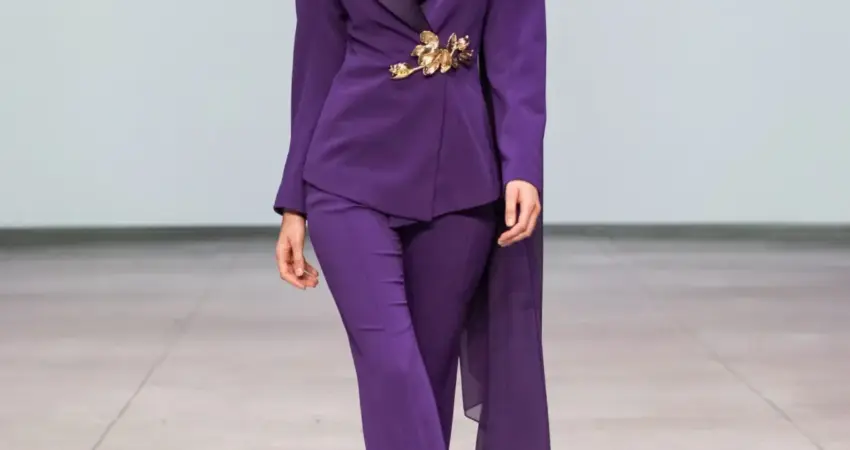
The Spring 2027 collection from Guadalajara-born designer Alfredo Martínez marks a significant pivot toward high-concept storytelling, utilizing the physiological stages of sleep and the literary works of Sor Juana Inés de la Cruz as a foundational framework. Presented in a structured three-chapter format, the runway show offered a complex exploration of femininity, drawing a direct line between 17th-century Mexican philosophy, 1980s Parisian haute couture influences, and the hyper-dramatic aesthetics of Latin American television. While the thematic connection to the rapid eye movement (REM) cycles and the subconscious remained abstract in the construction of the garments, the collection succeeded in reinforcing Martínez’s position as a premier architect of structured luxury in the Mexican fashion market.
The Conceptual Framework: From Sor Juana to Somnology
The collection was explicitly divided into three segments, intended to mirror the progression of the human sleep cycle. Martínez cited "Primero Sueño" (First Dream), the celebrated silva by the 17th-century polymath and nun Sor Juana Inés de la Cruz, as a primary intellectual touchstone. The poem, which navigates the soul’s liberation from the body during sleep to seek universal knowledge, provided a philosophical backdrop for a collection that sought to balance the ethereal with the grounded.
Despite the heavy literary and biological themes, the transition from concept to textile was interpreted through the lens of character archetypes rather than literal dreamscapes. Industry analysts noted that while the "stages of sleep" narrative provided a rhythmic pacing to the show, the garments themselves remained firmly rooted in the reality of high-fashion commerce. The strength of the presentation lay not in its adherence to somnology, but in its masterful execution of 20th-century fashion history and cultural nostalgia.
The 1987 Influence and the Saint Laurent Legacy
A pivotal element of the Spring 2027 collection was Martínez’s deep dive into the year 1987. This specific chronological focus served as an homage to a transformative era in global fashion, particularly the work of Yves Saint Laurent. During the late 1980s, Saint Laurent was refining the "Power Woman" silhouette—a look characterized by exaggerated shoulders, cinched waists, and an unapologetic sense of authority.
Martínez’s interpretation of this era was unmistakable. The runway featured an array of sharp, structured shoulders that have become a hallmark of his brand identity. By revisiting the 1987 aesthetic, Martínez tapped into a current global trend toward "vintage-modernism," where designers look to the late 20th century to find silhouettes that resonate with contemporary professional women. The use of pencil skirts and tailored blazers served as a nod to the sartorial armor of the 1980s, updated with 21st-century textile technology to ensure fluidity and comfort.
Telenovela Archetypes: The Villain as a Style Icon
Beyond the European influences, Martínez integrated a deeply Mexican cultural staple: the 1980s telenovela. The designer articulated a fascination with the "heroines and villains" of these televised dramas, noting that the villains, in particular, often possessed the most commanding wardrobes. These characters were defined by their "larger-than-life" personas, requiring clothing that could match their emotional intensity and social dominance.
"I really went all in on the drama this time," Martínez stated in a pre-show briefing. "It’s part of who I am, but I don’t bring it out that often." This dramatic flair manifested in pieces designed for specific "life scenes" rather than mere occasions. Martínez described several "dream women" who served as muses for the collection:
- The Spectacular Divorcee: Represented by sharp tailoring and a defiant, polished aesthetic.
- The Resilient Professional: A woman who has just finished crying but must present a facade of absolute composure.
- The High Achiever: Figures exuding "on top of the world" confidence through gold accents and bold colors.
This character-driven approach allowed the collection to resonate emotionally with the audience, framing fashion as a tool for narrative performance and emotional defense.
Color Palette and Materiality: The Introduction of the Orchid
The Spring 2027 palette was a departure from the more muted tones of previous seasons, moving through a sophisticated spectrum of black, violet, and varying shades of green. The inclusion of chartreuse and seafoam green provided a vibrant contrast to the darker, more traditional "power" colors. Gold accents were used strategically to reinforce the 1980s glamour theme, appearing in buttons, accessories, and embroidery.
One of the most notable technical developments in this collection was Martínez’s foray into floral motifs. Historically, the designer has favored solid colors and geometric precision. However, for Spring 2027, he introduced the orchid as a central visual theme. The orchid appeared in the second chapter of the show, featured on fluid dresses and separates. This choice of flower—often associated with strength, luxury, and rare beauty—aligned with the "villainous elegance" of the telenovela inspiration. The transition to florals was handled with restraint, ensuring that the softness of the prints did not undermine the architectural strength of the garments.
Market Position and Regional Impact
Alfredo Martínez remains a central figure in the Guadalajara fashion scene, a city that has increasingly become a rival to Mexico City in terms of creative output and manufacturing quality. The Mexican luxury goods market has seen a steady growth rate, with an estimated annual increase of 5-7% over the last five years. Designers like Martínez are crucial to this ecosystem, bridging the gap between bespoke artisanal work and scalable luxury ready-to-wear.
By consistently delivering collections that prioritize "spectacular" dressing, Martínez has secured a loyal demographic of high-net-worth individuals and celebrities in Latin America. His ability to revisit and evolve his own design codes—such as the pencil skirt and the structured shoulder—without falling into repetitive patterns is cited by retailers as a key driver of his commercial longevity.
Critical Analysis of the "Sleep" Narrative
While the collection was lauded for its craftsmanship, some fashion critics pointed out the disconnect between the "stages of sleep" concept and the final product. In a professional analysis of the show, it was observed that the "drama" of the telenovela and the "power" of 1987 were the dominant forces, often overshadowing the more subtle, philosophical themes of Sor Juana’s poetry.
However, the consensus among industry observers is that in the luxury sector, the "story" serves as a marketing vessel for the "product." If the garments are technically superior and aesthetically compelling, the abstract nature of the inspiration is often secondary. Martínez’s Spring 2027 collection succeeded in the most critical metric: it provided a clear, desirable vision of femininity that balances vulnerability with an outward projection of strength.
Chronology of the Collection Development
The development of the Spring 2027 collection followed a rigorous timeline that reflects the growing professionalization of the Mexican fashion industry:
- Research Phase (Early 2026): Martínez began exploring the archives of 1980s Saint Laurent and the philosophical texts of Sor Juana Inés de la Cruz.
- Conceptualization (Mid 2026): The decision to split the collection into three sleep-themed chapters was finalized.
- Fabric Sourcing (Late 2026): Selection of silks, wool blends, and the development of the custom orchid prints.
- Production (Winter 2026-2027): Tailoring of the signature structured shoulders in his Guadalajara atelier.
- Show Presentation (Spring 2027): The debut of the collection to international buyers and domestic media.
Broader Implications for Mexican Fashion
The success of Martínez’s latest offering signals a broader trend in the Latin American fashion industry: a move away from "folkloric" tropes toward a more globalized, sophisticated luxury language. By referencing European masters like Saint Laurent while simultaneously celebrating local icons like Sor Juana and the telenovela, Martínez is creating a hybrid identity that appeals to both local and international markets.
As the Spring 2027 season concludes, the focus shifts to the commercial viability of these high-drama pieces. Retailers have expressed particular interest in the "seafoam and gold" combinations, predicting they will be high-performers in the spring social season. Alfredo Martínez has once again proven that while the dream might be abstract, the business of looking "spectacular" is a reality he has mastered.

0 Comments