
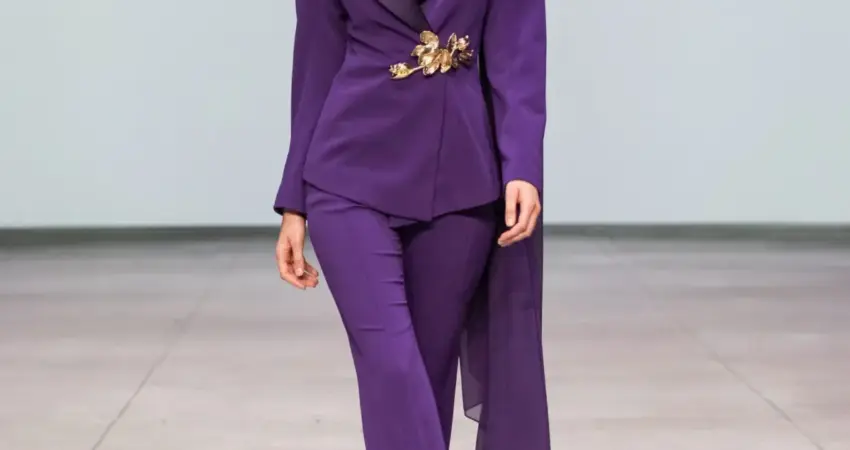
The Guadalajara-born designer Alfredo Martínez presented his Spring 2027 collection this week, offering a sophisticated exploration of high-octane glamour, historical literary references, and the dramatic tropes of 1980s Latin American media. The presentation, structured into three distinct chapters, served as a testament to Martínez’s established position within the Mexican fashion industry as a master of structure and sharp tailoring. By weaving together the cerebral poetry of Sor Juana Inés de la Cruz with the visceral, visual language of the 1980s "power woman," Martínez delivered a collection that prioritized the emotive power of the garment over abstract conceptualism.
The Conceptual Framework: Sleep Stages and Literary Echoes
Martínez identified the various stages of sleep as the primary starting point for the Spring 2027 collection. This physiological framework was intended to guide the audience through a narrative arc of dreaming, though the designer admitted that the translation from the subconscious to the sartorial was more atmospheric than literal. To anchor the collection in Mexican intellectual history, Martínez cited the work of Sor Juana Inés de la Cruz, the 17th-century Hieronymite nun and scholar known for her contributions to the Spanish Golden Age. Specifically, the collection drew from the themes of her poem "Primero Sueño" (First Dream), which explores the soul’s quest for knowledge during sleep.
While the connection between the complex Baroque poetry of Sor Juana and the structured silhouettes of the runway was not immediately apparent to every observer, the underlying sense of intellectual drama was palpable. The collection functioned as a bridge between the historical "woman of letters" and the modern "woman of action," suggesting that the dream state is where these archetypes converge. The show’s three-chapter structure mirrored the transition from the light stages of sleep to the deep, REM-heavy cycles where the most vivid—and often most dramatic—narratives unfold.
A Decisive Return to 1987 and the YSL Influence
A significant portion of the collection’s DNA can be traced back to a specific moment in fashion history: 1987. This year represents a pinnacle of 20th-century power dressing, characterized by a transition from the excess of the early eighties toward a more refined, yet still commanding, elegance. Martínez explicitly referenced the work of Yves Saint Laurent during this period, an influence that manifested in the collection’s impeccable proportions and the confident use of color.
The late 1980s was an era where the blazer and the pencil skirt became the uniform of the emerging female executive class, a trend that Martínez has spent years perfecting within the Mexican market. By looking back to 1987, the designer did not merely replicate vintage patterns; instead, he analyzed the construction techniques that gave those garments their longevity. The result was a series of looks that felt timeless rather than retro, proving that well-executed structure remains relevant across decades. This historical grounding provided a necessary counterweight to the more ethereal "sleep" concept, ensuring the collection remained rooted in high-end wearable luxury.
The Telenovela Archetype: Drama as a Design Principle
Beyond the halls of literature and the archives of French couture, Martínez looked toward the cultural phenomenon of the 1980s Latin American telenovela. These soap operas, which dominated television screens across the continent during that decade, were famous for their larger-than-life characters, particularly the "villanas" or female antagonists. These women were defined by their sharp wit, their commanding presence, and, most importantly, their impeccable wardrobes.
Martínez noted before the show that he intended to "go all in on the drama" this season, tapping into a side of his creative personality that he often keeps reserved. The "villain" archetype in Mexican television—exemplified by iconic figures who wore shoulder pads as armor and silk as a weapon—served as the muse for the collection’s most striking pieces. This wasn’t drama for the sake of theater, but drama as a form of self-actualization. The designer sought to capture the essence of a woman who views her clothing as an extension of her authority, whether she is a heroine or an anti-heroine.
Narrative Silhouettes: The Spectacular Woman
In previous seasons, Martínez has built collections around specific historical women, such as the artist Carmen Mondragón or the icon Paloma Picasso. For Spring 2027, however, he shifted his focus toward situational archetypes—images of women in various states of emotional and professional flux. This "dream woman" was not a single individual but a series of personas defined by their resilience and their commitment to aesthetics.
Martínez described several specific scenarios that informed the design process: the woman navigating the complexities of a divorce who chooses to look spectacular as a form of defiance; the woman who has just endured an emotional breakdown but must compose herself to face the public; and the high-achiever celebrating a milestone. The common thread among these characters is the use of fashion as a tool for composure and strength. By designing for these "situations," Martínez tapped into the psychological reality of his clientele, offering garments that act as a sartorial support system for the complexities of modern life.
Technical Execution: Shoulders, Skirts, and the Orchid Motif
The technical hallmarks of the Alfredo Martínez brand were on full display throughout the Spring 2027 presentation. He reaffirmed his status as the "undisputed king" of the structured shoulder in Mexico, utilizing internal padding and precise tailoring to create a silhouette that is both intimidating and elegant. The pencil skirt, another signature of the house, was reimagined with modern proportions, emphasizing a lean, vertical line that elongated the models’ forms.
The color palette for the season was a sophisticated mix of deep violets, rich blacks, and varying shades of green. The transition from chartreuse to seafoam green provided a refreshing visual rhythm, while gold accents—often in the form of hardware or metallic textiles—reinforced the 1980s glamour theme.
Perhaps the most significant departure for the designer was the prominent use of floral motifs. Historically, Martínez has shied away from florals, preferring solid colors and geometric patterns. This season, however, he embraced the orchid. The flower took center stage in the middle chapter of the show, appearing on fluid dresses and separates. The choice of the orchid was intentional; unlike softer, more romantic florals, the orchid possesses a structural, almost alien beauty that aligns with Martínez’s penchant for strength. These pieces offered a moment of softness within the collection, providing a "fluid" alternative to the rigid tailoring of the opening and closing chapters without sacrificing the brand’s characteristic edge.
Market Analysis and Industry Implications
The Spring 2027 collection arrives at a pivotal time for the Mexican fashion industry. As Mexico City continues to solidify its reputation as a global fashion capital, designers like Alfredo Martínez are leading the charge by blending local cultural narratives with international standards of luxury production. Martínez’s ability to revisit and evolve his own design codes—rather than chasing fleeting trends—has allowed him to build a loyal domestic following while attracting international attention.
From a commercial perspective, the collection is strategically positioned to perform well in the luxury sector. The emphasis on "spectacular" dressing for specific life events aligns with current consumer behavior in the high-end market, where buyers are increasingly looking for "investment pieces" that carry a strong narrative. By leaning into the 1980s aesthetic, Martínez is also tapping into a broader global trend toward maximalism and power dressing, which has seen a resurgence in both European and American markets.
Chronology and Future Outlook
The presentation of the Spring 2027 collection marks the beginning of a busy year for the Martínez brand. Following the runway show, the collection is expected to move into a series of private trunk shows and showroom appointments across North and South America.
- Phase 1: Runway Debut (Current): The collection established the visual and thematic language for the season, generating critical acclaim for its tailoring and the introduction of the orchid motif.
- Phase 2: Commercial Integration (Q3 2026): Pieces will be available for pre-order through exclusive luxury retailers, with a focus on the structured blazers and evening wear.
- Phase 3: Global Distribution (Q1 2027): The full collection is slated to hit flagship stores and international boutiques, coinciding with the Spring 2027 retail season.
In conclusion, Alfredo Martínez’s Spring 2027 collection is a masterclass in the fusion of personal heritage and professional craft. While the connection to the stages of sleep remained an abstract backdrop, the tangible results—the clothes themselves—spoke volumes. By drawing from the intellectual depth of Sor Juana Inés de la Cruz and the unapologetic glamour of 1980s television, Martínez has created a collection that celebrates the multifaceted nature of femininity. It is a collection for the woman who understands that in the drama of life, her wardrobe is her most powerful script. As the designer continues to refine his signatures, he remains a central figure in the evolution of contemporary Mexican luxury, proving that style, when executed with conviction, is the ultimate form of storytelling.

0 Comments