
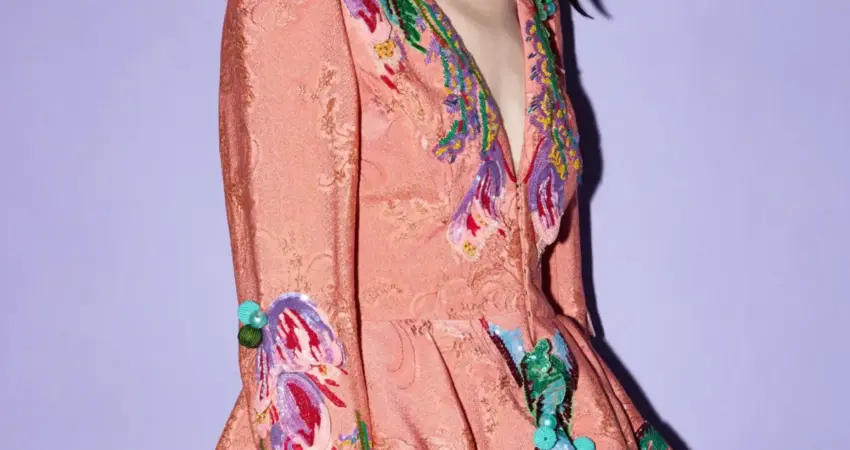
The Australian luxury fashion house Romance Was Born has officially unveiled the second installment of its Spring 2027 collection, a move that signals a strategic shift in the brand’s release cycle and a deeper commitment to archival research. Designers Luke Sales and Anna Plunkett, the creative duo behind the Sydney-based label, released the new series of looks just eight weeks after their initial spring debut. Referred to by the designers as "Part Two," the collection continues an aesthetic dialogue with historical decorative arts, specifically drawing from a 19th-century wallpaper scrapbook discovered within the Powerhouse Museum Archive. This secondary release transitions from the structured formality of the earlier spring pieces toward a more exuberant, event-oriented wardrobe, reinforcing the brand’s reputation for high-concept maximalism and textile innovation.
Archival Inspiration and the Powerhouse Museum Partnership
The creative genesis of the Spring 2027 cycle is rooted in the Powerhouse Museum (Museum of Applied Arts and Sciences) in Sydney, where Romance Was Born currently maintains its design studio. This proximity to one of Australia’s most significant repositories of material culture has allowed Sales and Plunkett unprecedented access to historical artifacts. The central inspiration for the current season is an antique wallpaper scrapbook, a massive volume containing hundreds of intricate patterns, floral motifs, and textured samples from a bygone era of interior design.
Luke Sales, speaking from Rome via FaceTime, emphasized that the depth of the archive necessitated a multi-part release. The designers found the volume of visual information within the scrapbook too vast to be contained within a single traditional collection. By bifurcating the season, the brand has been able to explore specific chapters of the archive with greater technical precision. This approach mirrors a growing trend in the global luxury market where heritage-rich brands utilize "drops" to maintain consumer engagement and allow for more specialized artisanal production.
The Powerhouse Museum Archive serves as a critical resource for Australian designers seeking to ground contemporary fashion in historical context. For Romance Was Born, a brand founded in 2005 on the principles of storytelling and kitsch-glamour, the archive provides a structural framework that prevents their maximalist tendencies from becoming purely chaotic. The wallpaper patterns serve as the blueprint for the collection’s complex prints and textures, ensuring that every garment carries a sense of historical weight.
Technical Execution and Materiality
The "Part Two" collection is characterized by an absolute rejection of minimalism. In a move that distinguishes the brand from the "quiet luxury" trends seen elsewhere in the 2027 market, Romance Was Born has ensured that no single piece in the collection is unadorned or solid-colored. The technical focus remains heavily on embroidery and jacquard weaving, techniques that require significant lead times and high levels of craftsmanship.
Key pieces in the new release include:
- Mock-Neck Striped Button-Downs: These garments feature traditional shirting silhouettes but are subverted through the addition of "dangling flora"—three-dimensional embroidered elements that move with the wearer.
- Feather-Trimmed Hems: Wispy feathers are used as a recurring motif, appearing on collars, cuffs, and hemlines to add a sense of kinetic energy to the silhouettes.
- Lace Integration: The collection utilizes black and navy lace to provide a darker, more "edgy" contrast to the vibrant wallpaper prints. This is seen most prominently in a floral embroidered dress featuring a high frontal slit.
- Jacquard Ensembles: A "funky green" vintage-inspired set serves as a centerpiece, utilizing a heavy jacquard weave that mimics the tactile quality of the original Victorian-era wallpaper samples.
The inclusion of denim in this collection is a rare nod to casualwear for the brand, though Sales notes that even these pieces are treated with the same level of decorative intensity as the eveningwear. The denim is not presented as a staple, but rather as a canvas for the same archival prints found throughout the rest of the line.
Chronology of the Spring 2027 Release Cycle
The rollout of the Spring 2027 collection reflects a departure from the traditional biannual fashion calendar.
- Initial Research Phase (Late 2026): Sales and Plunkett began their residency at the Powerhouse Museum, identifying the wallpaper scrapbook as the primary source material for the upcoming year.
- Spring Part One Debut (Early 2027): The first installment focused on "formal" interpretations of the archival patterns, emphasizing structured tailoring and more rigid silhouettes.
- Mid-Season Development: Following the initial launch, the design team spent two months refining the "Part Two" pieces, focusing on "party-ready" attire that utilized lighter fabrics and more movement-oriented details.
- Part Two Launch (Two Months Post-Debut): The current release serves as an extension of the narrative, filling the gap between spring and the upcoming high-summer/resort offerings.
- Future Outlook: The designers have indicated that the wallpaper archive will continue to inform their textile development throughout the remainder of 2027 and into 2028.
This staggered release strategy allows the brand to manage production schedules more effectively, particularly given the labor-intensive nature of their embroidered and jacquard-heavy designs. It also ensures that the brand remains at the forefront of the fashion conversation during the transition between major seasons.
Economic and Industrial Implications for Australian Luxury
The success of Romance Was Born’s archival-led strategy highlights a broader shift in the Australian fashion industry. As global supply chains remain complex and consumer interest in sustainable, "slow" fashion grows, brands that focus on artisanal quality and local heritage are finding a dedicated audience.
Data from the Australian Fashion Council (AFC) suggests that luxury labels focusing on "textile innovation" and "heritage storytelling" have seen a 12% increase in domestic market share over the last two years. By leveraging the Powerhouse Museum Archive, Romance Was Born is positioning itself not just as a clothing label, but as a cultural custodian. This alignment with public institutions provides a level of brand prestige that is difficult to replicate through traditional marketing.
Furthermore, the decision to split the collection into parts addresses the "content fatigue" often experienced by consumers in the digital age. By providing a fresh narrative every few months, the brand maintains high visibility on social media platforms and in luxury retail spaces without the need for an entirely new thematic overhaul. This "see-now, wear-now" hybrid model is increasingly favored by independent luxury houses that operate outside the massive conglomerates of LVMH or Kering.
Critical Analysis of the "Part Two" Shift
Industry analysts note that "Part Two" represents a more accessible side of Romance Was Born’s maximalism. While "Part One" was noted for its rigidity and "museum-piece" quality, "Part Two" embraces the "party" atmosphere. The shift from black and navy lace to "funky green" sets suggests a calculated move to appeal to a younger, more social-media-active demographic that prioritizes statement pieces for events and nightlife.
The use of the term "scratching the surface" by Luke Sales indicates that the brand is moving toward a long-term thematic consistency. In an era where many brands pivot wildly between aesthetics to chase trends, Romance Was Born’s commitment to a single archival source for multiple collections suggests a maturity in their business model. It allows for deeper exploration of textile techniques—such as the evolution of their "dangling flora" embroidery—which can become a recognizable brand signature.
Responses from the Fashion Community
While official reviews from major fashion publications are still being compiled, early reactions from boutique buyers and fashion historians have been positive. Historians have praised the brand for its "sensitive yet bold" reinterpretation of 19th-century domestic aesthetics, noting that wallpaper patterns often represent a forgotten history of female artistry and home life.
Retailers have noted that the "Part Two" collection addresses a specific demand for high-end occasion wear that is distinct from the minimalist evening gowns currently saturating the market. The inclusion of feathers and lace, combined with the historical weight of the jacquard, offers a "tactile luxury" that resonates with collectors of the brand.
Future Projections for Romance Was Born
Looking ahead, the brand’s trajectory appears to be firmly rooted in the intersection of art and commerce. Sales has confirmed that the upcoming year will see even more "textile development" derived from the Powerhouse Museum Archive. This suggests that the brand may be moving toward a more bespoke or limited-edition model for its most complex pieces, while using the "Part Two" style releases to maintain a broader commercial presence.
The Spring 2027 cycle will likely be remembered as the moment Romance Was Born fully integrated its studio environment with its creative output. By literally living and working within the archive, Sales and Plunkett have closed the gap between inspiration and execution. As the brand continues to "see it all through," the fashion industry will be watching to see how many more chapters can be pulled from a single antique scrapbook.
In conclusion, Romance Was Born’s Spring 2027 Part Two is more than just a seasonal update; it is a testament to the power of archival research in modern fashion. Through technical mastery of embroidery and a strategic approach to collection releases, the brand has successfully expanded its narrative, offering a compelling vision of Australian luxury that is both historically grounded and unapologetically contemporary.

0 Comments