
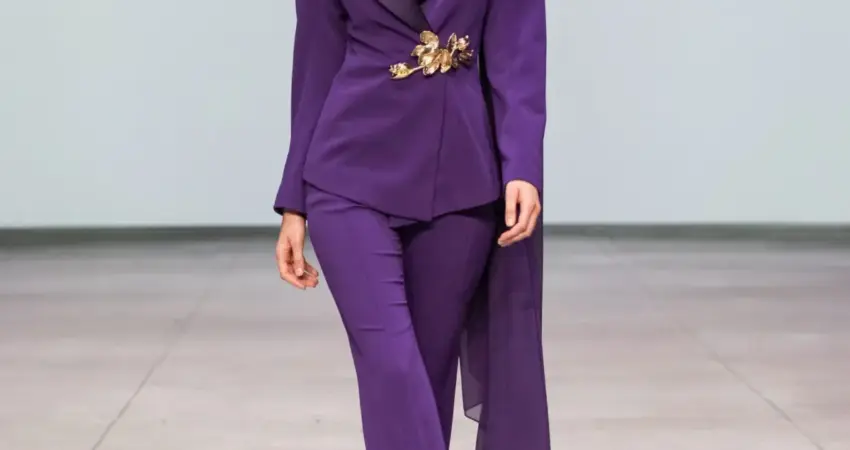
The Guadalajara-born designer Alfredo Martínez has unveiled his Spring 2027 collection, a presentation that serves as a sophisticated intersection of literary surrealism, 1980s high-fashion nostalgia, and the dramatic tropes of Latin American television. Traditionally known for his precision tailoring and sharp, architectural silhouettes, Martínez utilized this season to explore the subconscious, citing the various stages of sleep and the complex poetry of Sor Juana Inés de la Cruz as his primary intellectual catalysts. While the thematic link between the physiological process of dreaming and the physical garments remained abstract, the collection succeeded in reinforcing Martínez’s status as a premier architect of modern Mexican luxury.
The show was structured into three distinct chapters, each intended to represent a different phase of the sleep cycle or a different emotional state. However, the narrative strength of the collection lay less in its metaphysical inspirations and more in its tangible connection to 1987—a pivotal year for global fashion. This period, characterized by the dominant influence of Yves Saint Laurent and the rise of "power dressing," provided the aesthetic blueprint for Martínez’s latest work. By merging these historical references with the heightened drama of 1980s soap operas, the designer created a wardrobe for a woman who views fashion as a tool for both emotional expression and social command.
Literary and Cultural Foundations: From Sor Juana to the Small Screen
The inclusion of Sor Juana Inés de la Cruz, the 17th-century Hieronymite nun and polymath, suggests an attempt to ground the collection in Mexican intellectual history. Specifically, the designer referenced her poem "Primero Sueño" (First Dream), a dense, philosophical work that describes the soul’s journey during sleep. In the context of the runway, this translated into a collection that felt like a series of "characters" or "scenes" rather than a singular, linear progression.
Martínez’s fascination with the 1980s extended beyond the atelier and into the cultural zeitgeist of Latin America. He specifically highlighted the influence of telenovelas, which during that decade became a global export for Mexico. These programs were defined by their "larger-than-life" heroines and, perhaps more importantly, their impeccably dressed villains. "I really went all in on the drama this time, the kind of drama you see in soap operas," Martínez stated during a pre-show briefing. He noted that the "villain" archetype—characterized by cold elegance, sharp shoulders, and an unwavering sense of poise—offered the perfect canvas for his signature tailoring.
Technical Execution: The Signature Silhouette and New Developments
Martínez has long been regarded as the "undisputed king" of the structured shoulder in the Mexican fashion industry. The Spring 2027 collection did not deviate from this reputation; instead, it refined it. The technical focus remained on the pencil skirt and the blazer, two staples that Martínez has mastered over a decade of design. The shoulders were not merely padded but sculpted, providing a frame for the body that suggested authority and resilience.
The color palette for the season was deliberate and evocative. It moved through a spectrum of:
- Deep Violets and Blacks: Representing the nocturnal themes and the "villainous" elegance of the 1980s.
- Chartreuse and Seafoam Green: Providing a startling, modern contrast that felt both organic and synthetic.
- Gold Accents: Used sparingly but effectively to reinforce the sense of luxury and 80s-era opulence.
A significant departure for Martínez this season was the introduction of floral motifs. Historically, the designer has favored solid colors or geometric patterns. For Spring 2027, he introduced the orchid as a central visual element. Appearing in one of the three chapters, the orchid was utilized on fluid dresses and separates. This choice softened the collection’s overall impact without compromising its strength. The orchid, often associated with exoticism and strength, served as a bridge between the rigid structure of the tailoring and the "dream-like" fluidity the designer sought to evoke.
The Narrative of the "Spectacular Woman"
A core component of Martínez’s design philosophy is the celebration of women in various states of transition. In previous seasons, he has looked to specific historical figures, such as Paloma Picasso (Fall 2022) and the artist Carmen Mondragón (Fall 2025). This season, however, he shifted toward archetypal situations.
The designer described the collection as being for the woman who demands to look "spectacular" regardless of her internal or external circumstances. He categorized the collection’s muses into three distinct emotional profiles:
- The Resilient Professional: The woman facing a personal crisis, such as a divorce, who uses clothing as a suit of armor to maintain her public image.
- The Vulnerable Heroine: The woman who has just finished crying but must immediately transition into a social or professional setting, requiring an "amazing" look to mask her vulnerability.
- The High Achiever: The woman at the pinnacle of her career, feeling "on top of the world" and dressing to reflect that dominance.
This focus on the emotional utility of fashion resonated with the audience, positioning the clothes not just as luxury items but as tools for navigating the complexities of modern life.
Chronology and Evolution of the Martínez Brand
To understand the significance of the Spring 2027 collection, it is necessary to view it within the timeline of Martínez’s career. Since his emergence in the Guadalajara fashion scene, Martínez has consistently focused on a high-octane, glamorous aesthetic that contrasts with the more minimalist or streetwear-focused trends that have dominated the global market in recent years.
- 2010–2015: Establishment of the brand identity, focusing on evening wear and bespoke tailoring for the Mexican elite.
- 2022: The Paloma Picasso-inspired collection brings international attention to his ability to modernize 1980s aesthetics.
- 2025: The Carmen Mondragón (Nahui Olin) collection explores more fluid, artistic silhouettes while maintaining structural integrity.
- 2027: The current collection represents a synthesis of his past work, combining the sharp tailoring of his early years with the thematic depth and floral experimentation of his more recent output.
Market Analysis and Industry Implications
The Spring 2027 collection arrives at a time when the Mexican luxury market is experiencing significant growth. According to recent industry data, the demand for "Made in Mexico" luxury goods has increased by approximately 12% over the last three years, driven by both domestic consumption and an increase in international exports. Martínez’s ability to tap into a specific "Latin American Glamour" that is both culturally relevant and internationally viable puts him at the forefront of this movement.
Industry analysts note that Martínez’s consistency is his greatest commercial asset. By revisiting his own design codes—such as the pencil skirt and structured shoulder—he builds brand loyalty among a clientele that values longevity over fleeting trends. The introduction of the orchid motif and softer fabrics suggests a strategic move to broaden his market appeal, reaching customers who may find his traditional tailoring too severe.
Furthermore, the collection’s reliance on "drama" and "character" aligns with the current "maximalist" trend in high fashion, where consumers are increasingly looking for pieces that offer a narrative or a sense of escapism. By leaning into the telenovela aesthetic, Martínez is not just selling clothes; he is selling a persona of power and sophistication that has deep roots in the regional consciousness.
Conclusion: A Masterclass in Brand Identity
While the connection to the "stages of sleep" may have remained a secondary thought for many observers, the Spring 2027 collection was an undeniable success in terms of craftsmanship and brand evolution. Alfredo Martínez demonstrated that a designer does not need to reinvent themselves every season to remain relevant. Instead, by refining his signatures and carefully integrating new elements like the orchid print, he has created a collection that feels both nostalgic and forward-looking.
The collection serves as a reminder that in the world of Alfredo Martínez, the "dream" is not a state of unconsciousness, but a heightened state of reality where every woman has the opportunity to be the heroine—or the impeccably dressed villain—of her own story. As the Mexican fashion industry continues to gain traction on the global stage, Martínez remains a central figure, proving that drama, when executed with precision and elegance, is a timeless fashion statement.

0 Comments