
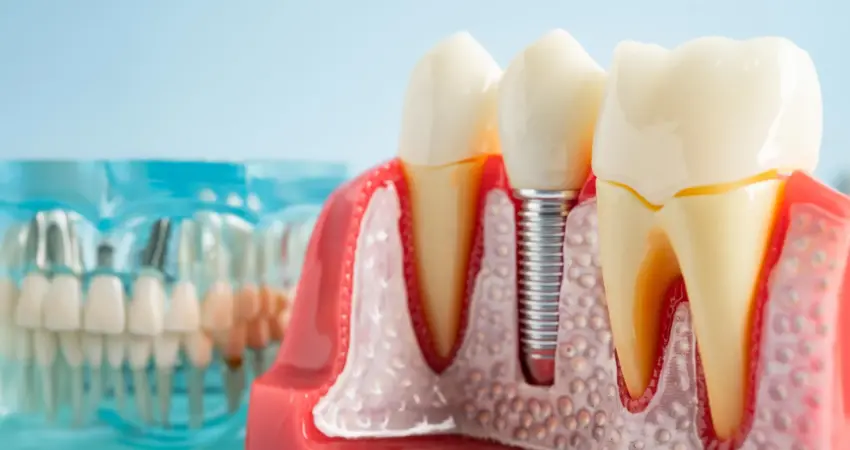
For millions worldwide who have opted for the stability and function of dental implants, the prospect of a permanent solution to tooth loss has been a significant advancement. These sophisticated prosthetics offer a fixed, aesthetically pleasing, and highly functional alternative to removable dentures. However, a persistent and concerning complication, peri-implantitis, a severe infection that erodes the supporting jawbone, affects an estimated 10% to 20% of implant recipients. This aggressive condition has long baffled medical professionals due to its resistance to conventional antibiotic treatments, a mystery that a groundbreaking study from Rutgers School of Dental Medicine is now beginning to unravel.
Published in the prestigious journal PNAS Nexus, the research pinpoints a novel mechanism: bacteria, in conjunction with the very material of the implants, titanium, trigger a cascade of immune system dysregulation. Scientists have discovered that as bacteria colonize implant surfaces, they induce a slow corrosion process, releasing microscopic titanium particles into the surrounding gum and bone tissues. These particles, in turn, disrupt the function of crucial immune cells, specifically macrophages, trapping them in a perpetual state of hyper-inflammation that paradoxically hinders their ability to fight infection and progressively destroys the jawbone.
This discovery marks a pivotal moment in understanding and potentially treating peri-implantitis, offering the first credible drug target for a condition that not only impacts a substantial portion of implant patients but also imposes a significant economic burden on healthcare systems globally, estimated at over $1 billion annually.
The Persistent Enigma of Peri-implantitis
The perplexing nature of peri-implantitis has long been a subject of intense research. Clinically, it shares striking similarities with periodontitis, the well-understood gum disease that affects natural teeth. Both conditions are initiated by the same common oral bacteria and manifest with inflammation and bone loss. However, their responses to treatment diverge dramatically.
For natural teeth afflicted with periodontitis, a combination of targeted antibiotics and meticulous professional cleaning typically achieves resolution. In contrast, the same therapeutic approaches for peri-implantitis demonstrate success in less than half of cases. Even when treatment is initiated, the underlying jawbone often continues its destructive deterioration, leaving patients with limited recourse and facing the potential loss of their implants.
For decades, the primary focus of research into peri-implantitis has been on identifying and combating the specific bacterial strains involved. However, the persistent therapeutic failures prompted researchers at Rutgers to broaden their investigation. Led by Dr. Georgios Kotsakis, senior author of the study and assistant dean for clinical research at Rutgers School of Dental Medicine, the team shifted their attention to another critical factor: the implant material itself.
The Unseen Threat: How Titanium Becomes a Double-Edged Sword
The Rutgers study meticulously details the process by which titanium, a material lauded for its biocompatibility and osseointegration (the ability to fuse with bone), can inadvertently become a source of pathology. Bacteria that accumulate on the implant surface create acidic biofilms. These biofilms, over time, act as a corrosive agent, slowly etching away at the titanium. This gradual degradation releases an astonishing quantity of microscopic titanium particles, each significantly smaller than a human red blood cell.
The release of these particles is not confined to the direct action of bacterial biofilms. Routine dental maintenance, particularly the use of instruments designed for cleaning natural teeth, can also dislodge these metallic fragments. When metal scalers, which are harder than titanium, are used on implant surfaces, they can scrape and damage the implant material, further contributing to particle liberation. This insight underscores the importance of specialized techniques and instruments for implant maintenance.
Hijacking the Immune System: A Microscopic Deception
Once these minuscule titanium fragments are released into the surrounding tissues, they initiate a sophisticated hijacking of the body’s natural defense mechanisms. The surfaces of these titanium particles attract a potent bacterial toxin known as lipopolysaccharide (LPS). This binding creates a deceptive composite particle that the immune system misinterprets. Instead of recognizing them as inert debris, macrophages – the specialized white blood cells responsible for engulfing and neutralizing pathogens – perceive these titanium-LPS complexes as unusually large, indigestible bacteria.
The macrophages attempt to engulf and break down these foreign entities. However, their cellular machinery is ill-equipped to process titanium. This futile effort leads to a prolonged and excessive inflammatory response. The macrophages become trapped in a state of chronic activation, churning out vast quantities of inflammatory signaling molecules, including the cytokine interleukin-1 beta (IL-1β). This protein is a key player in numerous inflammatory conditions, including rheumatoid arthritis and Alzheimer’s disease, highlighting the systemic implications of this localized immune dysfunction.
The consequence of this persistent, misdirected inflammation is the gradual breakdown of the bone that anchors the dental implant. Simultaneously, the compromised state of the macrophages renders them less effective at combating the actual bacterial infection that initiated the inflammatory cascade. Laboratory experiments vividly demonstrated this impairment: macrophages exposed to titanium particles were found to engulf less than half the number of bacteria compared to those not exposed to the particles.
"These particles are little magnets that attract the bacterial toxin, and they hijack the immune system, preventing it from clearing bacteria," explained Dr. Kotsakis. "You have a perfect storm that defies antibiotics." This eloquent description captures the essence of how a combination of bacterial activity and implant material degradation creates a scenario where conventional treatments are rendered ineffective.
Pinpointing the Molecular Culprit: A Novel Therapeutic Target
With a clearer understanding of how titanium particles disrupt immune defenses, the Rutgers research team delved deeper to identify the specific molecular pathway responsible for this damaging reaction. Their investigation zeroed in on TRPC1, a type of calcium channel found within the membranes of macrophages. Calcium channels are critical for regulating a wide array of cellular functions, including inflammatory responses.
The study revealed that the TRPC1 calcium channel plays a central role in the inflammatory cascade triggered by the titanium particle-LPS complexes. To validate the importance of this channel, the researchers utilized genetically engineered mice that lacked the TRPC1 gene. When these mice were exposed to the same combination of titanium particles and bacteria that would typically induce severe peri-implantitis, their immune systems responded with remarkable efficacy.
These TRPC1-deficient mice exhibited significantly smaller abscesses, produced substantially fewer inflammatory signaling molecules, and crucially, regained their ability to clear bacteria effectively. The disabling of the TRPC1 channel effectively prevented the destructive disease process that was observed in control mice possessing functional TRPC1. This finding strongly suggests that TRPC1 is a critical mediator of the detrimental immune response in peri-implantitis.
The implications of this discovery are profound. It opens the door to developing novel therapeutic strategies that target the immune system’s dysregulated response, rather than solely relying on antibiotics, which have proven insufficient. The National Institutes of Health has recognized the significance of this work, providing funding for Dr. Kotsakis and his team to explore potential drug candidates that can modulate the TRPC1 pathway in human cells. This research represents a significant step towards developing treatments that can effectively combat peri-implantitis and save millions of implants from eventual failure.
Prevention Remains Key: The Evolving Landscape of Implant Care
While the discovery of a novel therapeutic target offers immense hope for future treatment, the findings also powerfully reinforce the importance of existing preventive measures. Regular professional cleaning remains the cornerstone of peri-implantitis prevention. However, the research highlights that the methods of cleaning are as crucial as the frequency.
For many years, a common practice in dental offices involved using the same metal scalers to clean both natural teeth and dental implants. The Rutgers team, along with other researchers, has since demonstrated that these abrasive metal instruments can indeed damage and corrode titanium surfaces. This damage can not only release additional titanium particles but also create microscopic irregularities that promote further bacterial colonization, thereby accelerating the onset or progression of peri-implantitis.
Recognizing these risks, contemporary dental practices have largely transitioned to employing non-abrasive cleaning methods for dental implants. These include specialized plastic or composite instruments, ultrasonic scalers with non-metallic tips, and air polishing devices. These modern techniques are designed to effectively remove plaque and calculus without compromising the integrity of the implant surface, significantly reducing the risk of particle liberation and subsequent complications.
Broader Implications and Future Directions
The revelation that microscopic titanium particles, a byproduct of implant degradation, can so profoundly disrupt immune function has far-reaching implications. It not only explains the recalcitrance of peri-implantitis to antibiotics but also raises questions about the long-term behavior of implant materials in the body. While titanium is considered highly biocompatible, this study illustrates that under specific conditions, it can contribute to inflammatory pathology.
The economic impact of peri-implantitis is substantial. The cost of treating failed implants, including explantation, bone grafting, and re-implantation, can be tens of thousands of dollars per patient. On a global scale, this translates to billions in healthcare expenditure. Developing effective treatments based on the TRPC1 pathway could lead to significant cost savings and improve patient outcomes.
Furthermore, this research may pave the way for the development of novel implant materials or surface modifications designed to resist bacterial corrosion and particle release. Future studies may also explore diagnostic tools that can detect the presence of titanium particles or assess macrophage activation levels in patients at risk for peri-implantitis, allowing for earlier intervention.
The work by Dr. Kotsakis and his team represents a significant leap forward in our understanding of a complex and debilitating condition. By uncovering the intricate interplay between bacteria, titanium, and the human immune system, they have provided a scientific foundation for developing targeted therapies and reinforcing the critical importance of meticulous implant care. This breakthrough offers renewed hope for the millions of individuals who rely on dental implants for their oral health and quality of life.

0 Comments