
The Catalyst of Personal Tragedy and Scientific Inquiry
The shift in Vic Strecher’s professional focus from general public health to the specific study of purpose was precipitated by a profound personal loss. In 2010, his 19-year-old daughter, Julia, passed away due to a sudden heart attack. Julia had been a heart transplant recipient at age nine, living a vibrant life despite her medical challenges. Her death forced Strecher into a period of deep introspection and academic reassessment.
Before this event, Strecher’s work primarily involved digital health interventions and behavior change through technology. Following the loss, he began to investigate the "will to live" and the "will to thrive" through a scientific lens. This journey led him to the works of Viktor Frankl and various longitudinal studies that suggested a correlation between a sense of meaning and survival. Strecher’s subsequent research has sought to quantify how a self-transcending purpose—aims that look beyond the self—can fundamentally alter human physiology.

The Biological Impact of Purposeful Living
The core of Strecher’s argument rests on a growing body of empirical evidence linking purpose to tangible health outcomes. Research in the field of psychoneuroimmunology has demonstrated that individuals with a high sense of purpose exhibit lower levels of pro-inflammatory gene expression. Chronic inflammation is a known precursor to numerous age-related diseases, including heart disease, diabetes, and certain cancers.
Cardiovascular and Neurological Resilience
Data from the Rush University Memory and Aging Project, which followed over 900 older adults, indicated that those with a strong sense of purpose were 2.4 times less likely to develop Alzheimer’s disease compared to those with low purpose. Furthermore, autopsy results of participants who had high purpose but showed the physical hallmarks of Alzheimer’s (such as plaques and tangles) revealed that they maintained significantly higher cognitive function during their lives than their peers with similar brain pathology but less purpose.
In terms of cardiovascular health, a meta-analysis published in Psychosomatic Medicine involving over 136,000 participants found that having a high sense of purpose was associated with a 17% reduced risk of all-cause mortality and a significantly lower risk of cardiovascular events, such as strokes and myocardial infarctions.
Cellular Longevity and Telomeres
One of the most striking areas of research discussed by Strecher involves telomeres—the protective caps at the ends of chromosomes. Shortened telomeres are a primary marker of biological aging and cellular stress. Studies conducted by Nobel laureate Elizabeth Blackburn and health psychologist Elissa Epel suggest that individuals who engage in "eudaimonic" activities (those focused on meaning and purpose) have longer telomeres and higher levels of telomerase, the enzyme responsible for repairing them, compared to those focused solely on "hedonic" pleasure.
Defining Purpose in a Modern Context
A critical distinction made during the discussion is the difference between goals and purpose. While goals are specific, measurable achievements—such as losing weight or reaching a certain salary—purpose is an ongoing direction. Strecher describes it as a "strong current" that carries an individual forward, making the daily "tug-of-war" of decision-making less taxing.
The Four Pillars of a Purposeful Life
Strecher identifies four primary domains where individuals typically find and cultivate purpose:

- Family: The commitment to the well-being and growth of loved ones.
- Work: Finding meaning in one’s professional contributions, whether through service or innovation.
- Community: Engaging with and contributing to the broader social fabric.
- Personal Growth: The continuous pursuit of self-improvement and learning.
The most effective purposes, according to behavioral data, are those that are "self-transcending." When an individual’s goals are focused on benefiting others or contributing to a larger cause, they experience a more significant "buffering effect" against stress.
Chronology of the Purpose Movement in Behavioral Science
The integration of purpose into mainstream health advice has followed a specific timeline over the last two decades:
- 2003–2005: Early studies on the "Blue Zones"—regions where people live significantly longer—identify "Ikigai" (a reason for being) as a core component of longevity.
- 2010: Vic Strecher begins his deep dive into purpose following his daughter’s death, transitioning from traditional health metrics to meaning-based interventions.
- 2013: The publication of seminal research in the Proceedings of the National Academy of Sciences (PNAS) shows that different types of happiness (hedonic vs. eudaimonic) have different effects on the human genome.
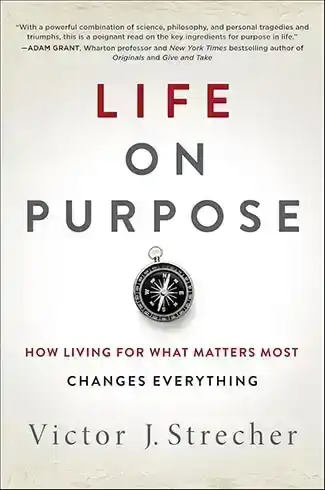
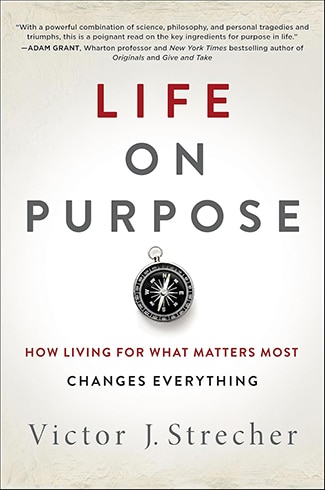
- 2016: Strecher publishes Life on Purpose, synthesizing decades of research into a guide for the general public.
- 2020–Present: In the wake of the global pandemic and the "Great Reshuffle," the search for purpose becomes a central theme in corporate wellness and public health policy as a remedy for rising rates of depression and anxiety.
Implications for Public Health and Policy
The findings presented by Strecher have significant implications for how public health is managed. Traditionally, health interventions have focused on the "how" of behavior change—how to quit smoking, how to exercise more, or how to eat better. However, Strecher’s research suggests that the "why" is more important.

When an individual has a clear purpose, they are more likely to adhere to medical regimens, engage in preventative screenings, and maintain healthy habits without the need for constant external motivation. This shift from extrinsic to intrinsic motivation could potentially save billions in healthcare costs related to lifestyle-based chronic diseases.
The Economic and Workplace Factor
The corporate world has also begun to take note of these findings. Organizations that foster a sense of purpose among employees report higher retention rates, increased productivity, and lower rates of burnout. According to data from Gallup, employees who feel their work has meaning are 67% more engaged than those who do not.
Analysis: The Future of Purpose-Driven Interventions
As society grapples with an "epidemic of loneliness" and "deaths of despair" (suicide and substance abuse), the scientific community is increasingly looking at "purpose deficits" as a contributing factor. The podcast highlights that finding purpose is not a "one-and-done" event but an iterative process of alignment.

Strecher’s work suggests that we are moving toward a more holistic view of human health. In this new paradigm, a "purpose prescription" might be considered as vital as a prescription for exercise or medication. The challenge for the future lies in making the tools for finding purpose accessible to all socio-economic groups, as those in lower-income brackets often face systemic barriers that make the pursuit of long-term meaning more difficult than immediate survival.
Conclusion: A Paradigm Shift in Human Flourishing
The insights shared by Vic Strecher emphasize that purpose is the "DNA of flourishing." By organizing life around what matters most, individuals can create a synergy between their mental aspirations and their physical reality. The data is clear: those who live with intention do not just feel better—they live longer, their brains stay sharper, and their bodies remain more resilient against the inevitable stresses of the human experience.
As the "Art of Manliness" continues to explore the intersections of character and health, the message of Episode 1107 serves as a definitive marker. It posits that the most important tool a man can possess is not a specific skill or a habit, but a "north star" that guides his actions and sustains his vitality through the highest peaks and the deepest valleys of life. The science of purpose is no longer a soft science; it is a critical component of 21st-century medicine and personal development.

0 Comments