
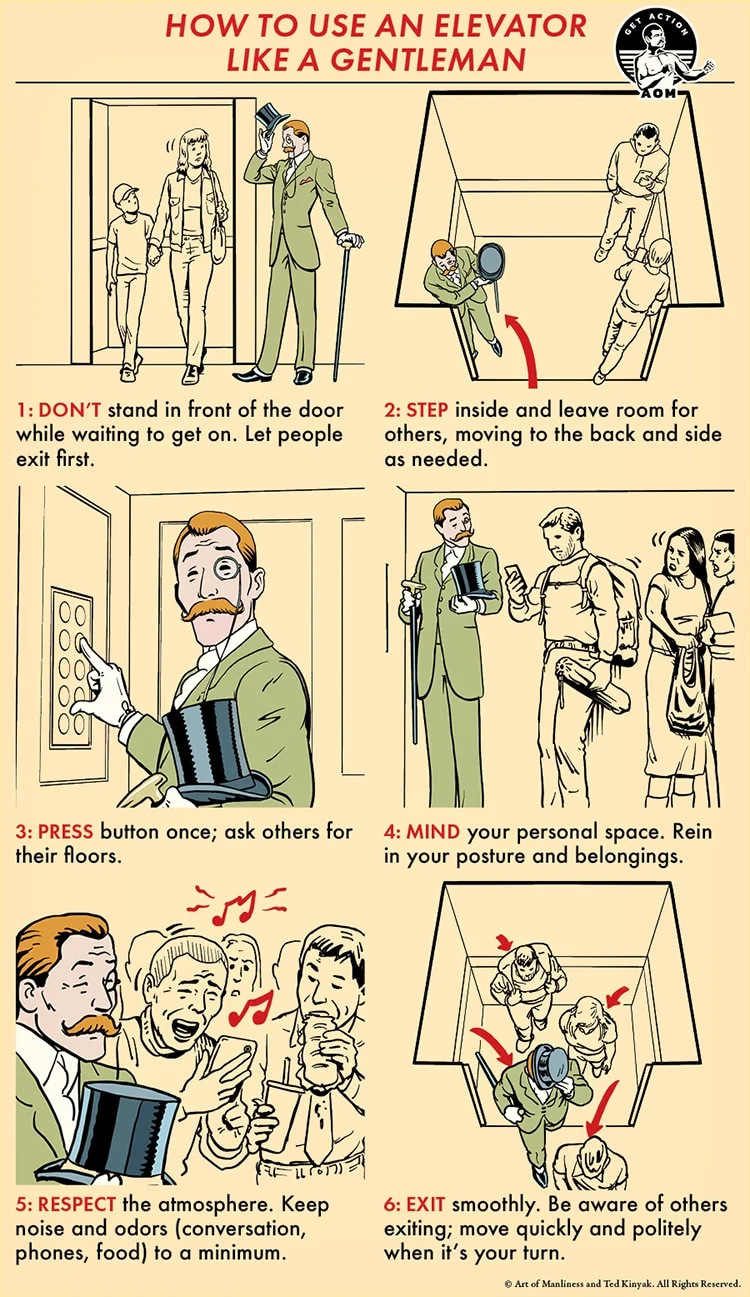
In the vertical corridors of modern urban landscapes, the elevator serves as one of the few remaining spaces where individuals from disparate walks of life are brought into involuntary physical proximity. As metropolitan density increases and architectural trends favor high-rise developments, the sociological implications of elevator conduct have become a subject of renewed interest for etiquette experts and urban planners alike. The elevator, though a mundane utility, functions as a microcosm of society, demanding a specific set of non-verbal cues and restrained behaviors to maintain order and minimize interpersonal friction.
The Sociology of Personal Space and Proxemics
The fundamental challenge of elevator etiquette lies in the violation of personal space. According to the theory of proxemics, developed by anthropologist Edward T. Hall in the 1960s, humans maintain four distinct zones of space: intimate, personal, social, and public. An elevator ride frequently forces strangers into the "intimate" zone (less than 1.5 feet), a situation that naturally triggers a mild "fight or flight" response in the human nervous system.
To mitigate this biological discomfort, a gentlemanly approach emphasizes "civil inattention." This concept, coined by sociologist Erving Goffman, describes the process whereby individuals acknowledge each other’s presence without being intrusive. In practice, this involves a brief nod or a small smile upon entry, followed by a shift in gaze to a neutral location, such as the floor indicator, the door, or a handheld device. By consciously managing one’s presence, a passenger can transform a cramped, potentially hostile environment into a space of mutual respect.
A Chronology of Vertical Transport and Etiquette Evolution
The history of elevator etiquette has evolved in tandem with the technology itself. The mid-19th century saw the introduction of the first passenger elevators, which were often lavishly upholstered "vertical parlors" found in high-end hotels. During this era, elevators were operated by uniformed staff, and the etiquette was formal; men were expected to remove their hats in the presence of women, and conversation was conducted in hushed tones.
The transition to self-service elevators following World War II necessitated a shift in social norms. The removal of the elevator operator placed the burden of logistics—pressing buttons and holding doors—onto the passengers themselves. This period marked the birth of the modern "gentlemanly" standard: the individual standing nearest the control panel assumed the role of the de facto operator, assisting others with floor selections.
By the early 21st century, the proliferation of mobile technology introduced new disruptions. The "silent ride" tradition was challenged by the ability to remain connected to the outside world. Today, the standard of etiquette has adjusted to include the "digital silence" rule, where audible phone conversations and media playback are considered significant breaches of social decorum.
Core Protocols for Entry, Transit, and Exit
The mechanics of a polite elevator ride are governed by a set of unwritten but essential rules. These protocols are designed to maximize efficiency and minimize physical contact.
The Priority of Egress
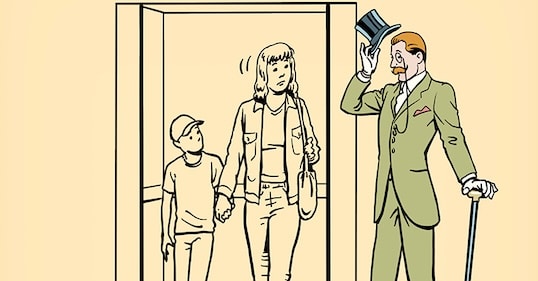
The most critical rule of elevator movement is that those exiting must be allowed to do so before others attempt to board. This is not merely a matter of politeness but a logistical necessity. A gentleman stands to the side of the doors to provide a clear path for departing passengers. Only once the threshold is clear should one enter the cabin.
Spatial Distribution
Once inside, passengers should follow the "checkerboard" pattern of distribution. In a nearly empty car, passengers should occupy the corners. As the car fills, individuals should move toward the center or the back to accommodate newcomers. A gentleman remains aware of his physical footprint, ensuring that bags, umbrellas, or briefcases are held close to the body rather than protruding into the limited floor space of others.
Managing the Controls
The passenger standing nearest the button panel occupies a position of service. A gentleman in this position will offer to press buttons for those who cannot reach them, asking, "Which floor?" with a brief, polite tone. Conversely, if one is standing far from the panel, it is standard practice to ask for assistance rather than reaching across other passengers, which risks unwanted physical contact.
Data on Passenger Grievances and Social Friction
Surveys conducted by urban research groups and property management firms consistently highlight the primary sources of irritation during vertical transit. A 2023 study on urban workplace environments identified the following as the "Top Five Elevator Pet Peeves":
- Loud Mobile Phone Usage: Over 65% of respondents cited audible phone conversations as the most disruptive behavior.
- Body Odor and Strong Fragrances: In a confined space with limited ventilation, olfactory intrusion is magnified. This includes the "reheated fish" scenario mentioned in anecdotal reports, where passengers carry pungent food into the cabin.
- Door-Closing Aggression: Pressing the "close door" button while another person is visibly approaching is viewed as a sign of extreme discourtesy.
- Lack of Spatial Awareness: Standing directly in front of the door while others are trying to exit or enter.
- Inappropriate Conversation: Discussing sensitive business matters or personal details in a public lift.
These data points suggest that the modern definition of a gentleman in an elevator is primarily defined by "restraint." By avoiding these behaviors, an individual contributes to a more harmonious urban environment.
The "Close Door" Button Controversy
A specific point of technical and social interest is the "close door" button. Since the passage of the Americans with Disabilities Act (ADA) in 1990, many elevators in the United States are programmed to ignore the "close door" button for a set period to ensure that individuals with mobility aids have sufficient time to enter.
In many modern systems, the button only functions when the elevator is in "independent service" or "fireman service" mode. Therefore, the act of repeatedly pressing the button is often a futile gesture that serves only to signal impatience to fellow passengers. A gentlemanly approach favors patience, allowing the programmed cycle to complete naturally rather than engaging in performative haste.
Official Responses and Corporate Guidelines
In response to the challenges of high-density living and working, many corporate entities have begun integrating "Elevator Conduct" sections into their employee handbooks. Major property management firms, such as JLL and CBRE, often provide signage in elevator lobbies that encourages "Quiet Zones" and "Priority Boarding" for those with physical disabilities or heavy loads.
Human resources consultants argue that elevator behavior is a leading indicator of a company’s internal culture. A workplace where employees hold doors and greet one another briefly in the elevator tends to report higher levels of general psychological safety and collaboration. Conversely, an elevator environment characterized by silence, avoided eye contact, and "door-closing" behavior often mirrors a siloed or high-stress corporate atmosphere.
Broader Impact and the Psychology of Urban Civility
The implications of elevator etiquette extend beyond the few seconds spent in transit. As the world continues to urbanize, the "micro-interactions" of daily life—such as those in elevators, subways, and lobbies—play a crucial role in maintaining the "social fabric" of a city.
Sociologists suggest that when individuals practice small-scale courtesy, it reduces the overall "urban stress" experienced by the population. The act of holding a door or stepping aside to let someone pass is a recognition of the other person’s humanity. In the context of an elevator, these actions serve as a buffer against the dehumanizing effects of crowded city life.
The concept of using an elevator "like a gentleman" is ultimately about the mastery of one’s environment through self-control. It is an exercise in being present without being intrusive. By adhering to these standards, individuals do more than just travel between floors; they uphold a standard of civility that facilitates the smooth functioning of modern society.
Conclusion: The Invisible Influence of Etiquette
In the final analysis, the goal of elevator etiquette is to be unmemorable. A successful ride is one characterized by a total lack of friction, where passengers enter, travel, and exit with a seamless efficiency that requires no conscious correction. A gentleman understands that his role in this space is to be a stabilizing force—providing assistance where needed, maintaining a respectful silence, and ensuring that the brief journey is as comfortable as possible for everyone involved. As architectural marvels continue to push the boundaries of height, the human element of the vertical journey remains grounded in the timeless principles of awareness, restraint, and consideration.

0 Comments