
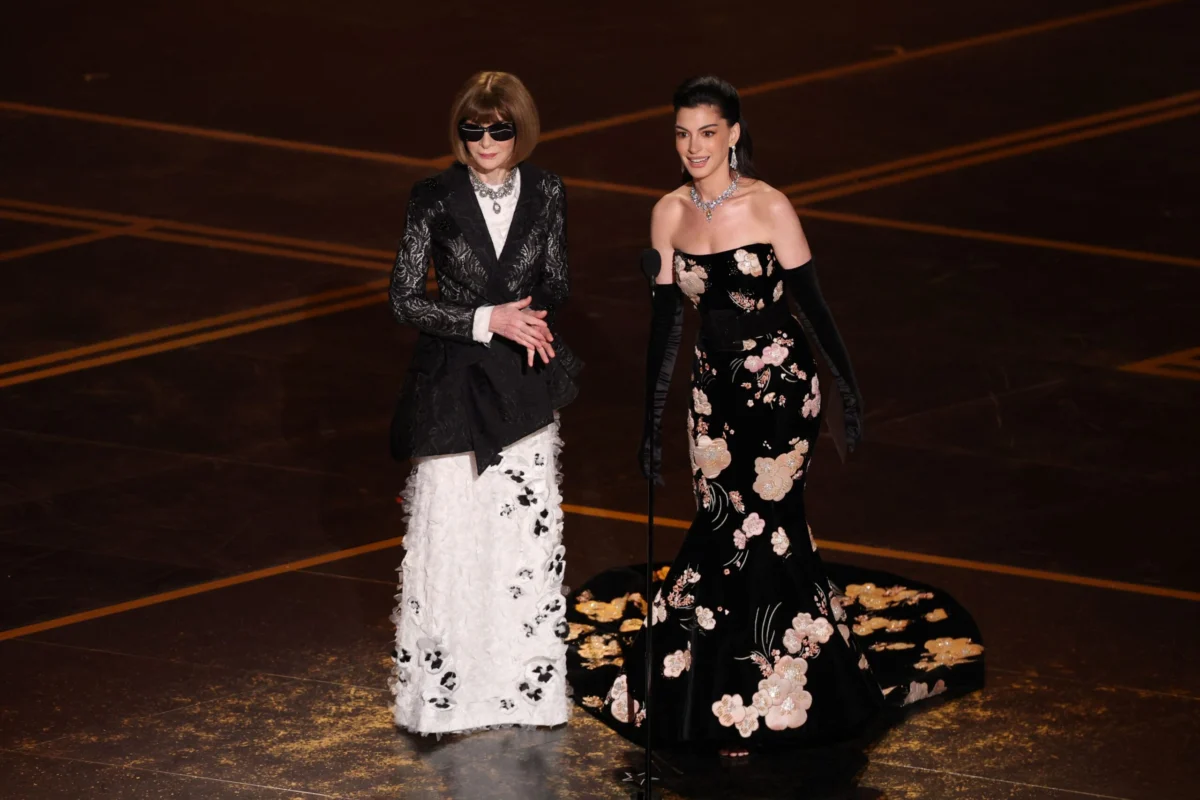
The 98th Academy Awards, held at the Dolby Theatre in Los Angeles, provided a definitive intersection of cinema and high fashion during the presentation of the awards for Best Costume Design and Best Makeup and Hairstyling. In a rare appearance on the Oscar stage, Anna Wintour, the Global Editorial Director of Vogue and Chief Content Officer of Condé Nast, joined Academy Award-winning actress Anne Hathaway to honor the technical achievements of the year’s most visually striking productions. The segment, which quickly became a highlight of the evening’s broadcast, combined a poignant tribute to the late Valentino Garavani with a scripted nod to the enduring cultural legacy of the 2006 film The Devil Wears Prada.
The primary focus of the presentation was the recognition of the creative team behind the gothic masterpiece Frankenstein. Costume designer Kate Hawley was awarded the Oscar for Best Costume Design, while the award for Best Makeup and Hairstyling went to the collaborative team of Mike Hill, Cliona Furey, Jordan Samuel, and Megan Many. The film, noted for its meticulous attention to historical accuracy blended with surrealist horror elements, had been a frontrunner throughout the awards season, previously securing wins at the BAFTA Awards and the Costume Designers Guild Awards.
A Cinematic Reunion and Scripted Satire
The chemistry between Wintour and Hathaway on stage was framed by a deliberate reference to their shared history within the fashion-media landscape. As the two took the stage to the recognizable orchestral cues from The Devil Wears Prada, the audience was immediately reminded of Hathaway’s breakout role as Andrea "Andy" Sachs and the long-held association between Wintour and the character of Miranda Priestly.
In a moment of scripted levity that trended across social media platforms within minutes, Hathaway turned to Wintour to inquire about the reception of her ensemble. “Anna, just curious, what do you think of my dress tonight?” Hathaway asked with a choreographed display of trepidation. Wintour, maintaining her signature stoic persona, bypassed the question entirely, responding with a curt, “And the nominees for best costume design are…”
The interaction concluded with a final meta-textual reference when Wintour addressed Hathaway as “Emily” before exiting the stage. This was a direct homage to the character Emily Charlton, played by Emily Blunt in the original film, whom Miranda Priestly frequently ignored or misidentified. The exchange served as an unofficial promotional beat for the highly anticipated sequel, The Devil Wears Prada 2, which has been a central topic of industry discussion following its first-look reveal earlier in the year.
The Significance of the Valentino Tribute
Beyond the humor, the evening carried a weight of solemnity regarding the recent passing of legendary Italian fashion designer Valentino Garavani. Anne Hathaway, a long-time muse and personal friend of the designer, chose the occasion to pay a visual and verbal tribute to his life’s work. Hathaway arrived on the red carpet and appeared on stage wearing a custom Valentino gown, a choice that industry analysts noted was both a professional statement and a personal gesture of mourning.
Valentino, who passed away in early 2026, was a towering figure in the fashion world for over six decades. His relationship with Hathaway was documented extensively, beginning with her early career and culminating in his design of her wedding dress in 2012. Hathaway had recently attended his funeral in Rome in January 2026, where she joined global dignitaries and fashion elite to honor his legacy.
In a statement released via social media and echoed in her presence at the ceremony, Hathaway described Valentino as a "dear and cherished friend" who played a pivotal role in her personal and professional development. She noted his tradition of sending flowers on her birthday and their shared moments of levity outside the public eye. The choice of a Valentino gown for the 98th Academy Awards was seen as a final, high-profile salute to a man who significantly influenced the "Old Hollywood" aesthetic that the Oscars continue to celebrate.
Technical Achievements: The Success of Frankenstein
The winners of the evening, Kate Hawley and the makeup team for Frankenstein, represented a triumph for high-concept genre filmmaking. Hawley’s work on the film involved the creation of over 200 bespoke costumes that required a fusion of 19th-century tailoring with avant-garde textures. According to production data, the costume department spent 18 months in pre-production, sourcing authentic period fabrics from European mills to ensure the film’s visual integrity.
In the Makeup and Hairstyling category, Mike Hill and his team were recognized for their innovative use of prosthetic technology. The 2026 adaptation of Frankenstein utilized a hybrid of traditional practical effects and subtle digital enhancements. The team reported that the lead actor’s daily transformation took upwards of five hours, involving the application of medical-grade silicone prosthetics designed to mimic human tissue in various stages of reanimation.
The victory for Frankenstein marks a continuing trend in the Academy’s recognition of films that prioritize practical craftsmanship. Industry observers noted that while the Best Picture race often focuses on narrative weight, the craft categories remain a stronghold for technical innovation and historical research.
Chronology of the 2026 Awards Season Transition
The 2026 Oscars served as a transition point for several major industry narratives. The timeline of events leading up to the ceremony highlights the strategic alignment of fashion and film promotion:
- January 2026: The fashion world mourns the death of Valentino Garavani. Anne Hathaway and other high-profile figures attend the funeral in Rome, signaling a shift in red-carpet expectations for the upcoming awards season.
- February 2026: Vogue releases its exclusive first look at The Devil Wears Prada 2, sparking renewed interest in the 2006 original and its connection to Anna Wintour.
- March 2026 (Pre-Show): Designers and stylists confirm a "return to elegance" on the Oscar red carpet, with many paying homage to late 20th-century masters.
- The Ceremony: Wintour and Hathaway’s presentation bridges the gap between the commercial interests of a new film sequel and the artistic tribute to a deceased icon.
Broader Industry Impact and Implications
The presence of Anna Wintour on the Oscar stage is a significant indicator of the deepening ties between the Academy of Motion Picture Arts and Sciences (AMPAS) and the global fashion industry. Historically, the Oscars have functioned as the most important runway in the world, but the formal inclusion of a figure like Wintour as a presenter underscores the institutionalization of fashion within the cinematic awards framework.
Data from the last decade shows that the "red carpet economy"—the combined value of brand placements, media impressions, and subsequent retail sales driven by Oscar night—has grown by an estimated 25%. For brands like Dior, which dressed Wintour, and Valentino, the visibility afforded by the 2026 ceremony is worth tens of millions of dollars in earned media value.
Furthermore, the "Prada" reunion highlights the power of nostalgia in contemporary marketing. By leaning into a 20-year-old film’s tropes, the Academy and the presenters successfully captured the attention of multiple generations of viewers. This strategy appears to be a response to fluctuating television ratings, as the Academy seeks to create "viral" moments that transcend the traditional broadcast and live on digital platforms.
The 2026 Academy Awards will likely be remembered not just for the films that won, but for the way it navigated the complex emotions of the industry. Between the celebration of new technical heights in Frankenstein and the somber, stylish farewell to Valentino, the evening served as a reminder that the art of the screen is inextricably linked to the art of the garment. As Hathaway and Wintour exited the stage, they left behind a moment that was simultaneously a masterclass in brand management and a genuine expression of artistic respect.

0 Comments