
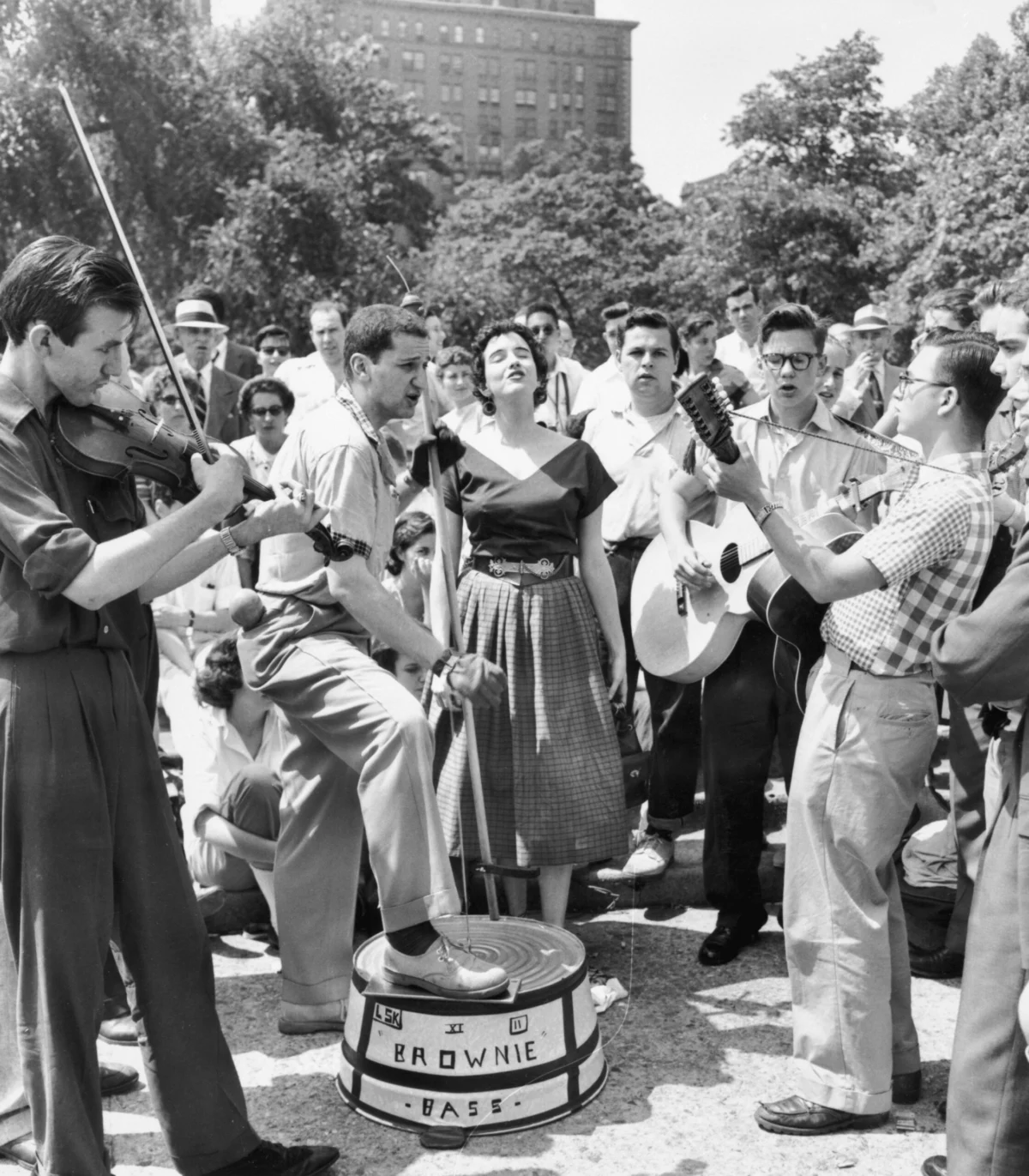
The cultural landscape of the mid-1990s has witnessed an unexpected but undeniable resurgence of the Beat Generation, a movement that first captured the American imagination in the late 1940s and 1950s. While Allen Ginsberg, one of the movement’s primary architects, had expressed doubt in the 1970s regarding the "Salvation of America" proclaimed by his peers, the final decade of the 20th century has proven his earlier pessimism premature. Today, the "Beat spirit" has permeated fashion, film, literature, and academia, suggesting that the quest for spontaneity and "kicks" remains a fundamental component of the American psyche.
The 1995 Beat Renaissance: Evidence of a Cultural Shift
The current revival is not merely a niche interest for aging bohemians but a full-scale institutional and commercial phenomenon. In 1995, New York University (NYU) hosted major conferences dedicated to the Beats and specifically to Jack Kerouac. Demographic data from these events indicates a significant generational hand-off: approximately 70 percent of attendees at the Kerouac conference were under the age of 25. This younger cohort is engaging with Beat ideals through modern mediums, including the "Literary Kicks" website and new portable editions of Kerouac’s fiction.
The institutionalization of the movement will culminate in November 1995 with the Whitney Museum of American Art’s exhibition, "Beat Culture and the New America: 1950–1965." This exhibition seeks to frame the Beats not as mere eccentrics, but as the architects of a "New America" that challenged the post-World War II status quo. Simultaneously, Hollywood has signaled its renewed interest; director Francis Ford Coppola recently held an open audition in New York for a film adaptation of On the Road. The event drew over 5,000 hopefuls, many sporting the iconic berets and goatees associated with the era, underscoring the enduring visual and narrative appeal of Sal Paradise and Dean Moriarty.
Historical Context: Origins and the Definition of "Beat"
To understand the current revival, it is necessary to examine the movement’s origins. The term "Beat" was first adopted by Jack Kerouac in 1948. Originally, it meant "exhausted" or "at the bottom of the world"—a state of being rejected by society and living on the street. However, the definition eventually expanded to include "beatific," implying a spiritual or Zen-like state of enlightenment found through experience rather than traditional religious structures.
The movement was characterized by several core tenets:
- Spontaneity: A commitment to "first thought, best thought," prioritizing raw emotion over polished revision.
- Experimentalism: The use of drugs (marijuana, peyote, Benzedrine), jazz (specifically bebop), and non-traditional sexualities to expand consciousness.
- Rejection of Consumerism: A vocal opposition to the "gray flannel suit" culture of the 1950s, the rise of suburbia, and the McCarthy-era political climate.
- Literary Innovation: The development of "spontaneous prose" and long-form poetry, influenced by the rhythms of Charlie Parker and Dizzy Gillespie.
Chronology of the Beat Influence (1944–1995)
The trajectory of the Beat Generation can be traced through several key milestones:
- 1944–1948: The core group—Kerouac, Ginsberg, and William S. Burroughs—meets in New York City near Columbia University, forming the nucleus of the movement.
- 1952: John Clellon Holmes publishes Go, recognized as the first Beat novel.
- 1955: Allen Ginsberg’s first public reading of "Howl" at the Six Gallery in San Francisco marks the movement’s arrival in the public consciousness.
- 1957: The publication of Kerouac’s On the Road becomes a national sensation, defining the "Beat Generation" for the mainstream.
- 1959: The media-created "beatnik" stereotype takes hold, exemplified by characters like Maynard G. Krebs on The Many Loves of Dobie Gillis.
- 1960s: The Beat influence transitions into the Hippie movement, though Kerouac himself famously distanced himself from the new counterculture.
- 1980s: A renewed interest in William Burroughs and Allen Ginsberg begins in the New York club scene, with appearances by figures like Lou Reed and Sting.
- 1995: The current "Beat Renaissance" manifests through major museum retrospectives, fashion trends, and a surge in coffeehouse culture.
The Commercialization and Appropriation of Style
One of the most striking aspects of the 1995 revival is the way in which "Beat style" has been appropriated by the fashion and advertising industries. While the original Beats often wore clothing sourced from the Salvation Army—nubby sweaters, threadbare khakis, and flannel shirts—modern designers have transformed this "aesthetic of poverty" into high-end luxury.
Donna Karan’s fall collection heavily featured black skinny pants and flats; Ralph Lauren has incorporated berets and striped T-shirts into his "Ralph" line; and Miuccia Prada’s recent shows have utilized black pencil pants and boxy coats reminiscent of the 1950s underground. Daisy von Furth, designer for X-Girl, noted that while her brand appropriates the "fisherman’s T-shirts and black leggings" of the era, the focus is often on "style over content."
The Gap famously utilized the image of Kerouac and Ginsberg in advertisements claiming they "wore khakis," a move that writers like Joyce Johnson, Kerouac’s former girlfriend, find ironic. She points out that Kerouac’s actual wardrobe was often "gaudy Hawaiian shirts" and whatever he could manage to pick up, rather than a curated fashion statement.
Impact on Modern Media and the Arts
The Beats’ influence is perhaps most visible in the evolution of American media and the arts. Their rejection of linear narrative and their embrace of the "raw" have become staples of modern production.
Music:
The lineage from the Beats to modern rock and alternative music is direct. Bob Dylan has long acknowledged his debt to Kerouac’s language. In the 1990s, the late Kurt Cobain collaborated on a recording with William S. Burroughs, and Sonic Youth guitarist Lee Ranaldo cites the Beats as a primary influence on the band’s disenfranchised view of modern life. The Grateful Dead’s ethos of improvisational performance is also viewed as a direct descendant of the Beat "spontaneous" philosophy.
Film and Television:
The "road movie" genre—from Thelma & Louise to My Own Private Idaho—follows the picaresque blueprint established by On the Road. Directors like Jim Jarmusch and Richard Linklater utilize the "slacker" aesthetic and black-and-white cinematography to evoke the Beat atmosphere. Furthermore, the non-linear, imagistic editing found in MTV videos and the films of Oliver Stone can be traced back to the experimental cinema of Beat filmmakers like Kenneth Anger and Bruce Conner.
Digital Media:
Even emerging technologies are not immune. The forthcoming CD-ROM "The Beat Experience" attempts to digitize the counterculture, allowing users to navigate a virtual "Beat pad." John Carlin, the director of the project, notes that the goal is to portray the movement with "sincerity" rather than irony, reflecting a broader 1990s trend away from the jaded cynicism of the previous decade.
Gender Dynamics and Internal Critiques
Despite the romanticization of the movement, modern analysis has brought to light the complicated internal dynamics of the Beat Generation, particularly regarding gender. Joyce Johnson has observed that the Beats were able to maintain their nomadic, "unbuttoned" lifestyle because the women in their lives often held steady jobs and provided the domestic stability the men lacked.
Feminist thinker Barbara Ehrenreich offers a nuanced view, suggesting that while the Beats were "phallocratic" and often exclusionary toward women, they unintentionally aided the women’s movement. By attacking the suburban family model and the "glamour of buying a new fridge," the Beats provided the first major critique of the consumer culture that many women would later find suffocating.
Within the literary community, there is also resistance to the "Beat" label. Some younger poets, such as those in the "UNbearables" group, have picketed NYU conferences, accusing the institutions of "commodifying the myth of the outsider." There is a palpable tension between the desire to honor the Beats and the fear of being consumed by their "overweening psychic space."
Implications and Future Outlook
The 1995 Beat revival suggests a collective yearning for the "passion, sincerity, and whimsy" that characterized the original movement. As cultural critic Dave Hickey notes, the current state of "boredom" is preferable to "apathy," as boredom implies a desire for something more substantial.
However, the movement’s legacy is fraught with contradictions. Allen Ginsberg’s recent sale of his personal archives to Stanford University for $1 million and William Burroughs’ appearance in Nike advertisements highlight the paradox of a counterculture that has been fully integrated into the establishment it once mocked.
Ultimately, the Beats sought to recall America to its origins—a "nationalistic, patriotic rebellion" in the vein of Huckleberry Finn. Whether the current generation can maintain that spirit of genuine inquiry without devolving into "unwitting parody" remains to be seen. For now, the "mad ones" who "burn, burn, burn like fabulous yellow roman candles" continue to serve as a potent, if commercially complicated, symbol of American restlessness.

0 Comments