
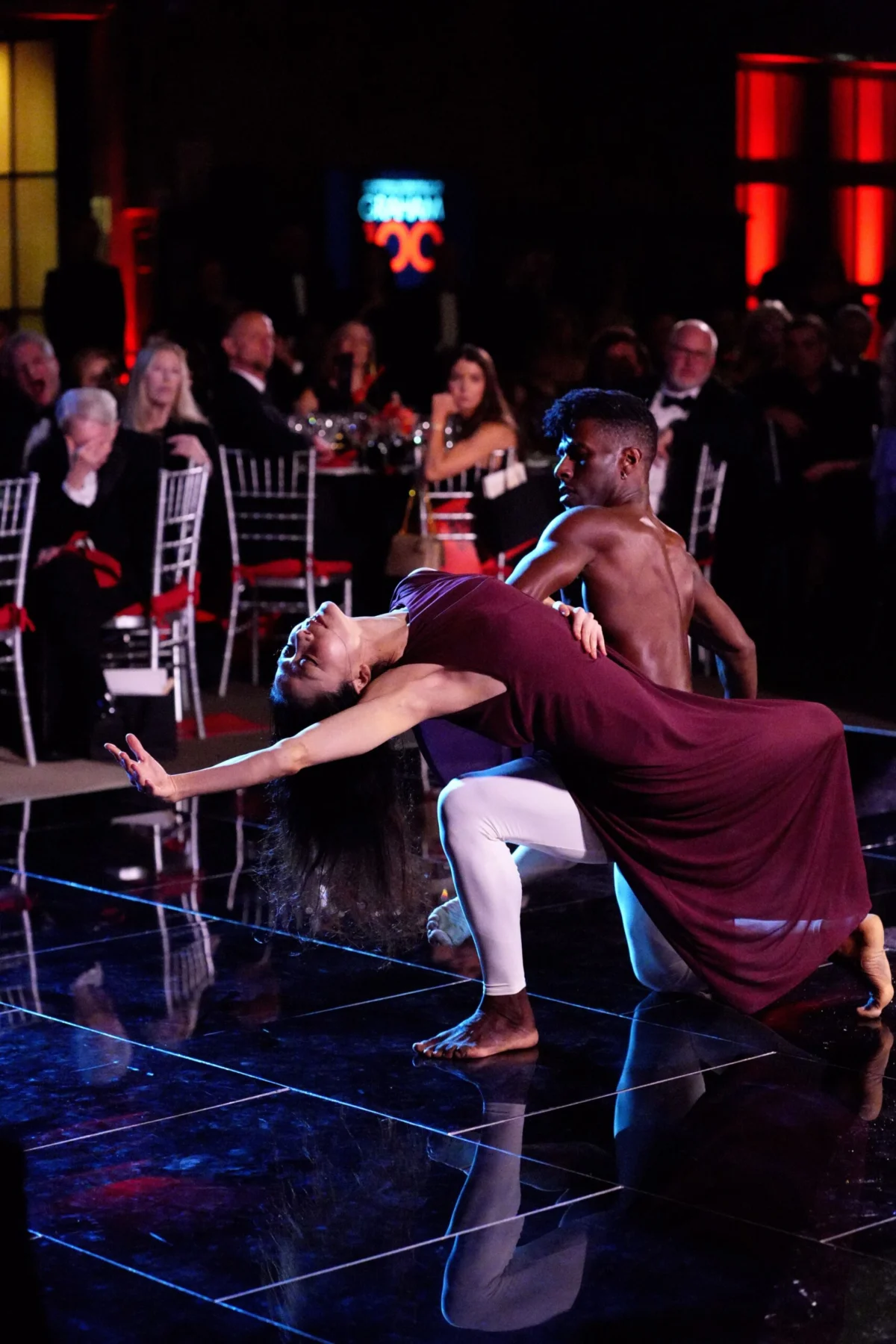
The intersection of sartorial elegance and the fluid physicality of modern dance reached a significant milestone last evening at the New York Public Library’s Stephen A. Schwarzman Building. As the Martha Graham Dance Company celebrated its 100th Anniversary Gala, the event served as a platform for a unique creative synthesis: the transformation of contemporary high-fashion silhouettes into functional performance art. Designer Daniella Kallmeyer, founder of the eponymous New York-based label, unveiled custom costume designs for principal dancers Xin Ying and Lloyd Knight, marking a full-circle moment for a designer whose aesthetic foundations were partially laid within the very walls of the Martha Graham School decades ago.
The performance featured a special excerpt from "O Thou Desire Who Art About to Sing," a work that demands both rigorous technical precision and an evocative emotional range. To meet these requirements, Kallmeyer adapted a standout piece from her upcoming Pre-Fall 2026 collection, translating the language of the runway into the specialized dialect of the stage. The collaboration underscores a growing trend in the performing arts where luxury designers are increasingly tapped to reinterpret the visual identity of classical and modern dance for a contemporary audience.
A Centenary Celebration at the New York Public Library
The Martha Graham Dance Company, recognized as the oldest dance company in the United States, officially entered its centennial season with a gala that honored its founder’s revolutionary impact on American culture. Martha Graham, who founded the company in 1926, is widely regarded as the "Mother of Modern Dance," having developed a movement language—the Graham Technique—that focused on the "contraction and release" of the human torso.
The choice of the New York Public Library as the venue for the 100th Anniversary Gala was deeply symbolic. The library’s Celeste Bartos Forum, with its glass dome and Beaux-Arts architecture, provided a dramatic backdrop for the performance. The event brought together patrons of the arts, fashion industry leaders, and luminaries from the dance world to witness the continued evolution of Graham’s legacy. The highlight of the evening’s program was the duet performed by Xin Ying and Lloyd Knight, two of the company’s most celebrated principals, who were clad in Kallmeyer’s custom burgundy ensembles.
From Runway to Stage: The Technical Evolution of the Roma Gown
The centerpiece of the costume design was a "dancerly iteration" of the Roma gown, a key silhouette from Kallmeyer’s Pre-Fall 2026 collection. The original Roma gown was conceived as a sophisticated evening piece, characterized by a one-shouldered drape and an internal structure designed to provide support while maintaining a sense of effortless movement.

Adapting a commercial garment for the stage involves significant technical hurdles. Performance wear must withstand the extreme stresses of professional dance, including high-impact leaps, deep lunges, and the friction of partner work. To ensure the gown’s functionality, Kallmeyer and her team modified the bodice, transforming it into a high-performance leotard. This structural change allowed the garment to remain securely in place during Xin Ying’s complex rotations and extensions while preserving the aesthetic integrity of the original design.
The choice of fabric was equally critical. In the context of Graham’s choreography, fabric is not merely an adornment but an extension of the body’s movement. The burgundy material used for the Roma gown was selected for its ability to catch the light and flow rhythmically with the dancer’s momentum. This "living fabric" approach pays homage to Graham’s own history of using heavy jerseys and expansive silks to amplify the visual impact of her choreography.
The Personal Journey of Daniella Kallmeyer
For Daniella Kallmeyer, the project was more than a professional commission; it was a return to her artistic roots. As a young student, Kallmeyer attended a summer dance intensive at the Martha Graham School in New York. This early exposure to the Graham Technique—and the visual drama associated with it—left a lasting impression on her design philosophy.
"The irony of this piece is that before this project came to me, I had actually designed our Pre-Fall with Martha Graham in mind," Kallmeyer noted during the fitting process. "She was known for dancing in these beautiful dresses with so much fabric and incorporating the garments into the choreography. I often think about the way bodies move within my clothes, and a lot of the proportions that inspire me come from that world."
Kallmeyer’s brand is built on a foundation of "quiet luxury" and purposeful tailoring, focusing on how women navigate their daily lives. By designing for the Martha Graham Dance Company, she was able to test her theories of movement in the most extreme environment possible. The collaboration highlights a synergy between the designer’s focus on the "lived-in" experience of clothing and the dancer’s reliance on the garment as a partner in performance.
The Martha Graham Aesthetic: Fabric as Movement
Martha Graham was a pioneer not only in movement but also in costume design. Throughout her career, she took a hands-on approach to the visual aspects of her productions, often designing her own costumes or collaborating with visionary artists like Isamu Noguchi and fashion designers like Halston.

Graham understood that the weight, texture, and volume of a costume could dictate the emotional resonance of a piece. In her iconic solo "Lamentation" (1930), she performed encased in a tube of purple jersey fabric, using the material’s resistance to symbolize the internal struggle of grief. Kallmeyer’s work for the gala reflects this tradition, particularly in the use of the one-shouldered drape which creates asymmetrical lines that mirror the tension and release inherent in Graham’s work.
The color palette for the gala costumes—a deep, resonant burgundy—was a deliberate nod to Graham’s signature aesthetic. Graham frequently utilized a palette of red, white, and black to create stark, high-contrast visuals on stage. The burgundy chosen by Kallmeyer provides a contemporary update to this tradition, offering a sense of warmth and depth that complemented the skin tones of the dancers and the ambient lighting of the library.
Complementary Masculinity: Lloyd Knight’s Costume
While the Roma gown was the focal point of the female silhouette, the costume for Lloyd Knight was designed to provide a balanced, grounded counterpoint. Knight, known for his powerful physique and elegant line, wore a matching burgundy cummerbund and high-waisted trousers.
Kallmeyer’s objective was to highlight Knight’s silhouette without restricting his range of motion. The high-waisted design is a classic element of dance costuming that emphasizes the length of the legs and the strength of the core. By matching the color and material to Ying’s gown, Kallmeyer created a visual unity between the two performers, emphasizing their connection during the duet. The cummerbund, a traditional formalwear accessory, was reinterpreted here as a functional piece of athletic gear, bridging the gap between the gala’s black-tie dress code and the demands of the stage.
Historical Context: Fashion’s Long Romance with the Martha Graham Dance Company
The collaboration between Kallmeyer and the Martha Graham Dance Company is the latest chapter in a long history of fashion designers contributing to the company’s repertoire. In the 1970s and 80s, Halston became a close friend and collaborator of Graham, designing costumes for works such as "Clytemnestra" and "Acts of Light." Halston’s minimalist, bias-cut designs were a perfect match for Graham’s modernism, and his involvement helped elevate the profile of the company within the fashion world.
In more recent years, the company has continued this tradition, partnering with designers like Donna Karan, Calvin Klein, and Oscar de la Renta. These collaborations serve a dual purpose: they provide the company with fresh visual perspectives and they offer designers a chance to showcase their work in a highly prestigious, culturally significant context. For a designer like Kallmeyer, whose brand is deeply rooted in New York City’s creative ecosystem, the opportunity to contribute to the 100th-anniversary celebration represents a significant career milestone.

Impact and Artistic Legacy
The success of the 100th Anniversary Gala and the positive reception of Kallmeyer’s designs suggest a vibrant future for the Martha Graham Dance Company as it enters its second century. By embracing contemporary designers, the company ensures that Graham’s work remains relevant to new generations of audiences who are as interested in visual style as they are in choreographic innovation.
From a business perspective, such collaborations offer designers a unique form of brand storytelling. The images of Xin Ying and Lloyd Knight performing in Kallmeyer’s creations provide a powerful testament to the durability and grace of her designs. It reinforces the brand’s identity as one that values the intersection of form and function, artistry and wearability.
As the Martha Graham Dance Company continues its centennial tour, the costumes designed by Kallmeyer will stand as a symbol of this era of the company’s history—a period defined by a respect for the past and an eager embrace of the contemporary creative spirit. The "full-circle" nature of Kallmeyer’s involvement serves as a reminder that the world of art is often a small, interconnected community where early inspirations can, decades later, manifest as major professional achievements.
The gala concluded with a standing ovation, not only for the dancers’ virtuosic performance but for the collective vision that brought the evening to life. In the quiet halls of the New York Public Library, the ghosts of Graham’s past met the innovators of the present, proving that even at 100 years old, the Martha Graham Dance Company remains at the cutting edge of American artistic expression.

0 Comments