
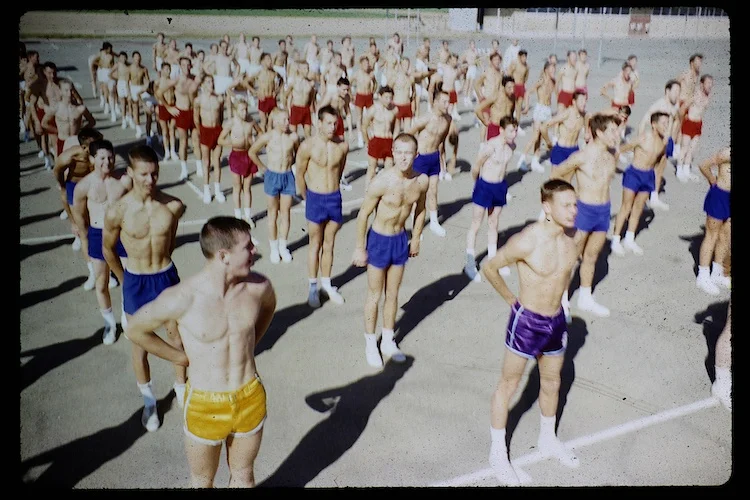
In the contemporary American education landscape, physical education (P.E.) is frequently characterized as a secondary elective, often relegated to a "blow-off" status where participation is minimal and academic rigor is nonexistent. For many modern students, P.E. involves sedentary periods on bleachers or uninspired participation in recreational games. However, during the mid-20th century, a radically different model existed at La Sierra High School in Carmichael, California. From the late 1950s through the early 1980s, La Sierra hosted what was widely considered the most demanding and scientifically structured physical education program in the world. Known as the "La Sierra System," this curriculum was designed not merely for recreation, but as a vital component of national security, intellectual development, and character formation.
The Historical Context: The Cold War and the Crisis of "Softness"
The emergence of the La Sierra System was not an isolated pedagogical experiment; it was a direct response to a perceived national crisis. Following World War II, as the United States entered the Cold War, social critics and military leaders began to voice concerns regarding the physical state of American youth. The transition to a more prosperous, technological, and sedentary lifestyle—fueled by the rise of television and suburban sprawl—led to fears that the American populace was becoming "soft."
This anxiety was quantified in 1953 by the Kraus-Weber test, which measured basic muscular strength and flexibility. The results were staggering: nearly 58% of American children failed at least one of the six tests, compared to only 8.7% of European children. This data reached the highest levels of government, prompting President Dwight D. Eisenhower to establish the President’s Council on Youth Fitness in 1956. When John F. Kennedy assumed the presidency in 1961, he intensified this focus, penning a landmark article for Sports Illustrated titled "The Soft American." Kennedy argued that physical "toughness" was the bedrock of intellectual and moral vigor, stating that a decline in physical fitness would eventually undermine the nation’s capacity for work, thought, and defense.
The Architect of Excellence: Stan LeProtti’s Vision
The man responsible for translating this national concern into a local reality was Stan LeProtti, a World War II veteran and physical educator. LeProtti was deeply influenced by the classical Greek ideal of the "whole man," which posited that the mind and body were inextricably linked. He believed that a rigorous physical regimen was essential for developing leadership, resilience, and discipline.
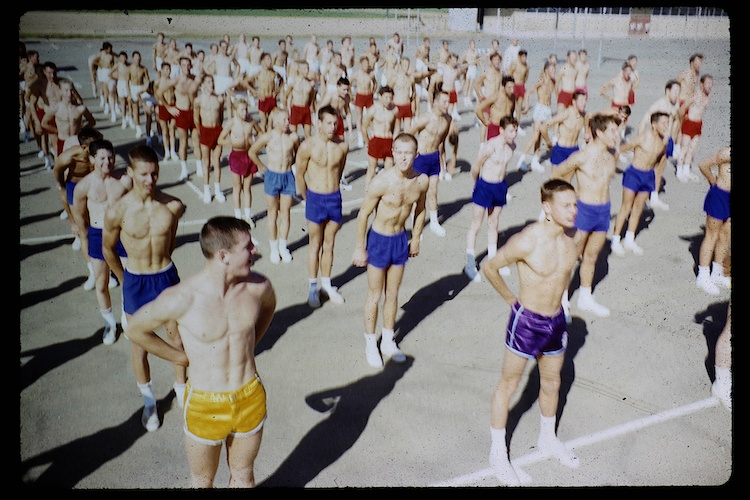
LeProtti’s program was designed to be inclusive yet elite. Unlike traditional athletic programs that focused on a small percentage of varsity athletes, the La Sierra System was mandatory for the entire male student body. The curriculum was exhaustive, featuring a 12-minute high-intensity calisthenic warm-up followed by sports, gymnastics, combatives, aquatics, and "off-the-ground" work on apparatuses such as pegboards and traveling rings. The philosophy extended beyond the physical; students attended regular lectures on the "why" behind their training, learning that physical mastery was a prerequisite for spiritual and intellectual success.
The Color-Coded Hierarchy: A Study in Motivation and Status
The most distinctive feature of the La Sierra System was its use of "ability grouping." Students were organized into a hierarchy based on physical proficiency, with each level signified by the color of the satin trunks they wore. This system tapped into the psychological drivers of competition and public recognition.
- White Team (Beginner): Every freshman began here. The requirements were basic, but the goal was immediate advancement.
- Red Team (Intermediate): This level required a significant increase in strength and endurance.
- Blue Team (Advanced): Only those who demonstrated superior athletic ability could wear the blue trunks. This level was further subdivided into Purple and Gold ranks for those aiming for the pinnacle.
- Navy Blue (Ultimate Athlete): This was the highest honor at La Sierra. Between 1958 and 1983, only 21 students out of thousands achieved this rank. When a student earned his Navy Blue trunks, the achievement was announced via the school’s public address system, often resulting in a school-wide celebration.
The system was designed to ensure that 90% of students could reach the Red Team by the end of their first year. By graduation, it was rare for a student to remain in White trunks; data suggests only one or two out of every 100 students failed to advance, demonstrating the program’s efficacy in motivating even the least naturally athletic students.
Empirical Data: Standards of the La Sierra System
The rigor of the program is best illustrated by the benchmarks required to move between the ranks. These standards would challenge many modern collegiate athletes today.
Red Team (Intermediate) Requirements:
- Pull-ups: 10
- Push-ups: 32
- Bar Dips: 12
- Sit-ups: 60 in two minutes
- Standing Broad Jump: 6 feet 9 inches
- Shuttle Run (200 yards): 34 seconds
Blue Team (Advanced) Requirements:
- Pull-ups: 14
- Push-ups: 48
- Bar Dips: 18
- Sit-ups: 100 in two minutes
- Standing Broad Jump: 7 feet 3 inches
- Rope Climb (20 feet): Use hands only, in under 15 seconds
Navy Blue (Ultimate) Requirements:
- Pull-ups: 34
- Bar Dips: 52
- Handstand Push-ups: 10
- Pegboard (Vertical): 3 trips up and down
- Mile Run: Under 5 minutes and 15 seconds
- Swimming: 50-yard sprint in 30 seconds
Psychological Implications and the "Self-Esteem" Debate
In modern educational circles, the La Sierra System might be criticized for potentially damaging the self-esteem of students in the lower "White" tier. However, contemporary research conducted during the program’s tenure suggests otherwise. Richard Chester Tucker, a coach at the time who later conducted a doctoral study on the system, compared La Sierra students to those in traditional P.E. programs.
Tucker’s research found that while there was no statistical difference in the self-esteem levels between the two groups, there was a massive disparity in physical capability. For instance, the bottom third of students at La Sierra could perform an average of nine pull-ups, while the bottom third at traditional schools could barely manage two. Tucker concluded that the color-coded system did not induce shame; rather, it provided a clear, attainable roadmap for self-improvement. The "shame" of the white trunks served as a catalyst for growth, and the supportive environment of the school ensured that students helped one another reach the next level.
The National Impact and JFK’s Endorsement
The success of La Sierra High School did not go unnoticed. President Kennedy, seeking a "gold standard" for his national fitness initiative, looked to La Sierra as the model for the rest of the country. The President’s Council on Physical Fitness distributed films of the La Sierra students to over 4,000 schools across the United States.
The program’s influence was such that it helped spark a brief "Golden Age" of American P.E., where schools nationwide adopted more rigorous, calisthenic-based curricula. For a period in the 1960s, the United States was on a trajectory to become one of the most physically fit nations on Earth, driven by the belief that a strong citizenry was essential for a strong republic.
The Decline and Legacy of the La Sierra System
Despite its success, the La Sierra High School P.E. program eventually fell victim to shifting cultural and educational priorities. By the late 1970s and early 1980s, the focus of American education began to shift toward standardized testing and "budget-conscious" elective structures. The intensive, equipment-heavy requirements of the La Sierra System became difficult to maintain under new fiscal constraints. Furthermore, the cultural zeitgeist moved away from the "communal discipline" of the Cold War era toward a more individualized, less competitive approach to student wellness.
La Sierra High School closed its doors in 1983 due to declining enrollment in the district. With its closure, the most rigorous P.E. program in American history was effectively dismantled. In the decades since, national fitness levels have plummeted. According to the Centers for Disease Control and Prevention (CDC), childhood obesity rates in the United States have tripled since the 1970s, and a significant portion of young adults are now medically ineligible for military service.
Today, the La Sierra System is remembered primarily through documentaries like The Motivation Factor and the testimonials of its alumni. Former students, now in their 70s and 80s, frequently cite the program as the most formative experience of their lives. They describe it not as a source of trauma, but as a source of lifelong confidence. The program taught them that they could overcome physical hardship through persistence—a lesson that many argue is missing from the modern educational experience.
The story of La Sierra serves as a historical benchmark. It stands as a testament to a time when the American education system held high expectations for the physical development of its youth, viewing the "sound body" not as a luxury, but as a vital prerequisite for a "sound mind" and a thriving nation. As the United States continues to grapple with a modern health crisis, the "La Sierra System" remains a compelling, if demanding, blueprint for what is possible when physical excellence is prioritized as a core educational value.

0 Comments