
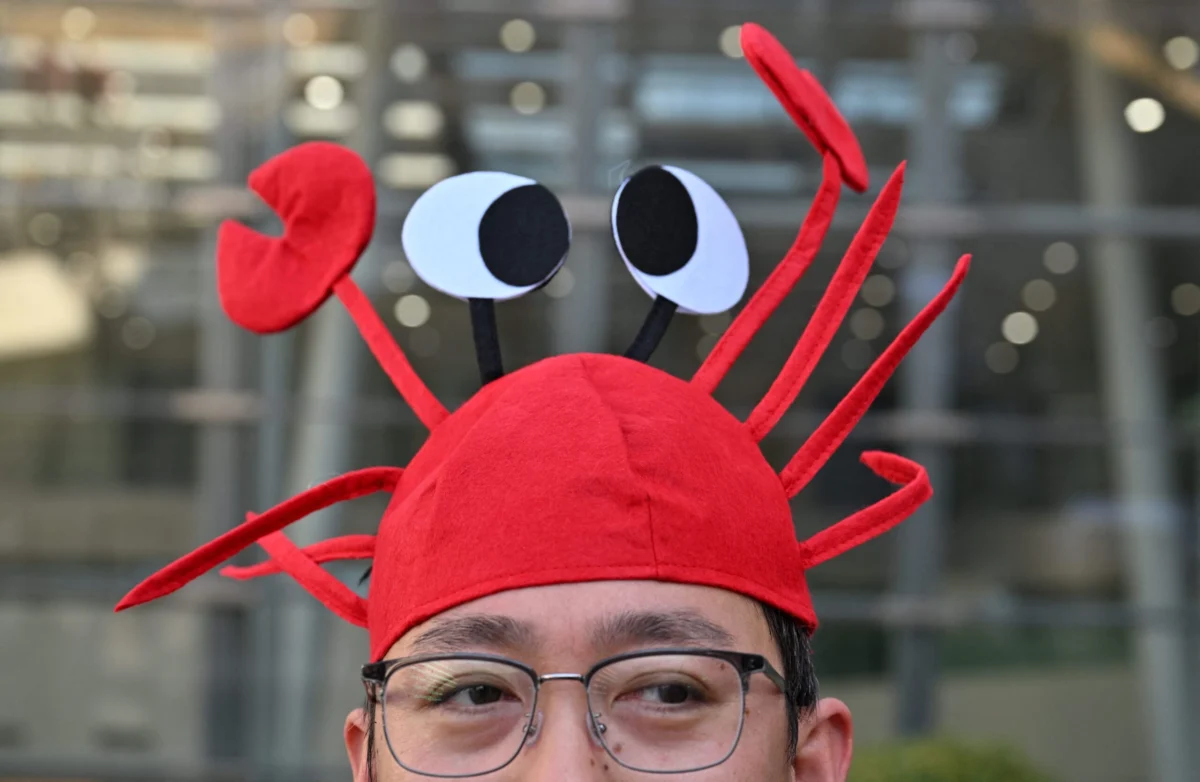
China is experiencing an unprecedented surge in the adoption of OpenClaw, the popular lobster-themed open-source artificial intelligence agent, with major domestic tech giants and local governments alike spearheading initiatives to broaden its accessibility. This rapid embrace, particularly pronounced in recent weeks, underscores a pivotal moment in China’s technological trajectory, highlighting its ambition to lead in the global AI race and leverage advanced tools to stimulate its economy.
OpenClaw, an AI agent distinct from traditional chatbots, possesses the capability to autonomously execute a range of tasks—from scheduling meetings and sending emails to booking restaurant reservations—with minimal human intervention. Its proactive nature, which necessitates broader access to user data and systems, simultaneously presents significant opportunities for efficiency and convenience while raising pertinent privacy and security concerns that are being carefully navigated by developers and regulators alike. The project’s developer, Peter Steinberger, joined OpenAI in mid-February, a testament to its groundbreaking influence.
The Genesis of a Phenomenon: OpenClaw’s Rise to Prominence
First launched in November, OpenClaw quickly garnered attention for its innovative approach to task automation. Unlike conversational AI that merely responds to prompts, AI agents like OpenClaw operate with a higher degree of autonomy, making decisions and taking actions based on a set of objectives. This paradigm shift in AI interaction has resonated deeply within the tech community and beyond. The open-source nature of OpenClaw has been a key driver of its widespread adoption, allowing developers to inspect, modify, and build upon its core functionalities, fostering a collaborative ecosystem of innovation.
The project’s global appeal was cemented when it surpassed Linux in "stars" on GitHub, the premier platform for open-source code collaboration. This metric, indicative of developer interest and community engagement, positions OpenClaw alongside transformative open-source projects that have fundamentally shaped modern computing. For many, this moment mirrors the "2022 ChatGPT moment" or the "2025 DeepSeek moment," signifying a breakthrough in making advanced AI capabilities more accessible and impactful. Jaylen He, CEO of Shenzhen-based startup Violoop, succinctly captured this sentiment, stating, "I think the craving, the desire, for a personal assistant that can really help the user, the desire has been there, and has been suppressed for a very long time."
China’s Unprecedented Adoption: Surpassing Global Peers
Data from American cybersecurity firm SecurityScorecard indicates that usage of OpenClaw in China has now surpassed that in the United States, a remarkable feat given the tool’s relatively recent emergence. This swift adoption is not merely a statistical anomaly but a reflection of China’s unique technological landscape and its citizens’ eagerness to embrace cutting-edge innovations. "In terms of adopting the new technologies, I think China definitely has a really large community that always wants to try what’s there, what’s new, and don’t want to be left behind," explained Jaylen He. He added, "I have friends who are not even in the tech industry … they are doing this, they are also running it." This anecdote highlights the grassroots appeal and broad societal penetration of OpenClaw.
The enthusiasm for OpenClaw in China is multi-faceted. It aligns with the nation’s strategic focus on becoming a global leader in artificial intelligence, a cornerstone of its "Made in China 2025" and subsequent five-year plans. Furthermore, as China’s economy navigates various headwinds, domestic tech companies view OpenClaw as a significant opportunity to attract new paying users and catalyze growth.
Tech Giants Mobilize: A Race to Integrate and Simplify
Chinese technology behemoths have moved swiftly to integrate OpenClaw into their vast ecosystems, often simplifying its notoriously complex installation process to appeal to a wider audience.

-
Tencent’s "Lobster Special Forces": On Tuesday, March 11, 2026, Tencent, the internet giant behind the ubiquitous WeChat superapp, unveiled a comprehensive suite of AI products built upon OpenClaw. Dubbed "lobster special forces," these tools are designed for seamless compatibility with WeChat, potentially bringing advanced AI agent capabilities to hundreds of millions of users. This move is strategically significant, leveraging WeChat’s unparalleled reach to democratize access to OpenClaw’s functionalities. Tencent also held free in-person setup sessions in Shenzhen, its headquarters, assisting "hundreds" of individuals in installing the tool on TencentCloud. This direct engagement underscores the company’s commitment to fostering user adoption.
-
Zhipu AI’s Localized Solution: The same day, startup Zhipu AI launched its localized version of OpenClaw, boasting an AI agent pre-installed with over 50 popular skills and offering a "one-click installation." This initiative directly addresses one of the primary barriers to mass adoption: the technical complexity often associated with open-source software. By streamlining the setup, Zhipu AI aims to capture a significant segment of non-technical users eager to experience AI agents.
-
ByteDance’s Web-Based "ArkClaw": TikTok owner ByteDance’s cloud unit, Volcano Engine, introduced "ArkClaw," a web browser-based version of OpenClaw. This innovation completely bypasses the need for local setup, making the AI agent instantly accessible through a browser, further lowering the entry barrier for millions. This strategic move highlights a broader trend in the industry to deliver sophisticated AI tools as cloud-based services.
-
E-commerce and Service Providers Join In: The wave of integration extends beyond pure tech players. JD.com, a major e-commerce platform, launched a dedicated page on Tuesday, offering remote assistance from Lenovo’s IT maintenance team, Baiying, for 399 yuan ($58) to deploy OpenClaw. Similarly, food delivery giant Meituan reportedly announced a partnership with Lenovo on Monday, indicating a widespread recognition of OpenClaw’s potential across diverse industries. These partnerships signal a commercialization trend, where companies offer value-added services around the open-source agent.
Powering Domestic LLMs: A Strategic Advantage
A crucial aspect of China’s OpenClaw craze is its synergistic relationship with the development and deployment of Chinese-developed large language models (LLMs). Autonomous AI agents like OpenClaw are model-agnostic, meaning they can be integrated with various LLMs, including those from OpenAI and Anthropic. However, in China, OpenClaw’s popularity has provided a significant boost to domestic models.
According to OpenRouter, a platform that provides developers with access to AI models, the top three tools utilized by OpenClaw users on its marketplace in the past month were all Chinese companies. Their combined usage reportedly doubled that of the three most-used Google Gemini and Anthropic Claude models. This data underscores a critical shift: Chinese-made AI models, such as DeepSeek, Moonshot, and Kimi, have increasingly narrowed the performance gap with their U.S. rivals over the past year. Crucially, they often offer comparable AI capabilities at a fraction of the price, significantly reducing the operational costs for OpenClaw users.
Winston Ma, an adjunct professor at NYU School of Law, emphasized this point, stating that the nationwide OpenClaw craze has "boosted the popularity of Chinese-developed large language models." This cost-effectiveness and performance parity are powerful incentives for Chinese users and businesses to opt for domestic solutions, strengthening the local AI ecosystem and fostering technological self-reliance.
Governmental Endorsement and the "One-Person Company" Phenomenon
Despite official warnings from China’s state media regarding OpenClaw’s inherent security risks—concerns typical of any powerful AI agent with broad system access—local governments across the country have paradoxically begun to offer substantial incentives to encourage its development and application. This dual approach reflects Beijing’s complex strategy: promote innovation aggressively while maintaining a cautious stance on potential downsides.
In the past week, several municipalities and districts have proposed attractive incentive packages. Shenzhen’s Longgang district and Hefei’s high-tech development zone, for instance, have offered equity financing support of up to 10 million yuan ($1.46 million), alongside direct subsidies aimed specifically at "one-person companies" utilizing OpenClaw. A district in Suzhou city followed suit, offering similar subsidies, coupled with 30 days of free office space, accommodation, and meals.

The term "one-person company," referring to individuals or small teams leveraging AI to rapidly build businesses, has gained significant traction in China. This phenomenon aligns perfectly with Beijing’s broader economic objectives, particularly as the government concluded a key meeting this week to formalize a five-year plan focused on spurring domestic tech development and fostering a vibrant entrepreneurial ecosystem. These government initiatives aim to cultivate a new generation of AI-driven entrepreneurs, transforming how businesses are conceived and operated.
Navigating Security and Privacy Concerns
The state media warnings about OpenClaw’s security risks are not without merit. As AI agents gain more autonomy and access to sensitive data and systems, the potential for privacy breaches, misuse, or unintended consequences escalates. The open-source nature, while beneficial for innovation, also means that vulnerabilities could be exploited if not properly managed.
However, the rapid adoption suggests that the perceived benefits currently outweigh these risks for many users and businesses. Companies facilitating OpenClaw’s use are likely implementing various safeguards, such as controlled environments (e.g., TencentCloud), user education, and potentially proprietary security layers built atop the open-source core. The government’s dual approach of issuing warnings while offering incentives indicates a calculated risk, prioritizing economic and technological leadership while acknowledging the need for future regulatory frameworks to mature.
Broader Implications and the Future Landscape
The OpenClaw phenomenon in China has profound implications across several dimensions:
-
Economic Transformation: It is fostering a new wave of entrepreneurship, driving demand for domestic LLMs, and creating new service industries around AI agent deployment and maintenance. This could provide a much-needed boost to China’s economy, generating jobs and fostering innovation. Violoop’s Jaylen He noted that his company, which plans to launch a device with OpenClaw-like features, is now considering a China launch alongside its overseas expansion due to the newfound interest in paying for AI services and capable domestic models. The startup has already secured multiple rounds of initial funding this year, primarily for production costs, indicating investor confidence in this emerging market.
-
Technological Leadership: By rapidly adopting and integrating OpenClaw, China is not only catching up but potentially setting new standards for AI agent deployment and user accessibility on a massive scale. This proactive stance strengthens its position in the global AI race, demonstrating its capability to quickly operationalize advanced AI research into widespread applications.
-
Societal Impact: The rise of "one-person companies" and the integration of AI agents into daily digital life through platforms like WeChat could fundamentally alter work patterns, productivity, and the nature of small businesses. It represents a significant step towards a future where intelligent assistants are ubiquitous, transforming how individuals and enterprises manage their tasks and interact with technology.
-
Open-Source Dynamics: China’s embrace of OpenClaw highlights the growing importance of open-source initiatives in driving national technological agendas. It showcases how a global open-source project can be localized, adapted, and commercialized within a specific national context, fueling both innovation and economic growth.
As the "OpenClaw moment" continues to unfold, China is demonstrating its unique ability to combine top-down strategic planning with bottom-up entrepreneurial zeal, creating a dynamic ecosystem where advanced AI tools are not just developed but rapidly integrated into the fabric of daily life and commerce. The coming months will likely reveal the full extent of this transformation, setting precedents for how nations harness the power of autonomous AI agents.

0 Comments