
The Commodity Futures Trading Commission (CFTC), the primary regulator for U.S. derivatives markets, has initiated a significant investigation into a series of highly unusual oil futures trades that occurred mere minutes before President Donald Trump made two distinct, market-moving announcements concerning U.S. military posture towards Iran. This probe, first reported by Bloomberg News, centers on whether material nonpublic government information was misappropriated for financial gain, threatening the integrity of global financial markets. The scrutiny follows a pattern of suspicious trading activity observed ahead of crucial presidential statements that significantly impacted commodity and stock indices, prompting calls from lawmakers for robust regulatory action.
The Heart of the Investigation: Anomalous Trading Patterns
At the core of the CFTC’s inquiry are at least two distinct instances of atypical trading volumes in crude oil futures, particularly West Texas Intermediate (WTI) May crude futures, and S&P 500 e-mini futures. These spikes in activity were observed during otherwise subdued premarket hours, preceding President Trump’s public statements regarding U.S. policy on Iran. The highly precise timing of these trades, occurring just before the information became public, has raised immediate red flags among market participants and regulators alike, suggesting the possibility of illicit foreknowledge.
The investigation is actively examining trading records from major venues operated by CME Group and Intercontinental Exchange (ICE), two of the world’s largest derivatives exchanges. Regulators have specifically requested "Tag 50 identifiers," which are crucial pieces of data that can help pinpoint the exact entities or individuals behind specific trades. This level of detail is critical for tracing the origin of potentially suspicious transactions and identifying any individuals who may have profited from advanced knowledge of White House policy decisions. Both the CFTC and ICE have maintained a policy of declining to comment on ongoing investigations, a standard practice to preserve the integrity of their probes. However, CME Group, while not commenting directly on the specific trades, underscored the paramount importance of market integrity, stating, "Nothing is more important than market integrity." A CME spokesperson further suggested that any comprehensive review of market behavior should extend to newer platforms, such as prediction markets like Polymarket and Kalshi, which list related products and often operate with less regulatory visibility.
A Detailed Chronology of Suspicious Events
The CFTC’s investigation focuses on two primary incidents that have drawn regulatory and congressional attention:
April 12, 2026: The Iran Attack Pause Announcement
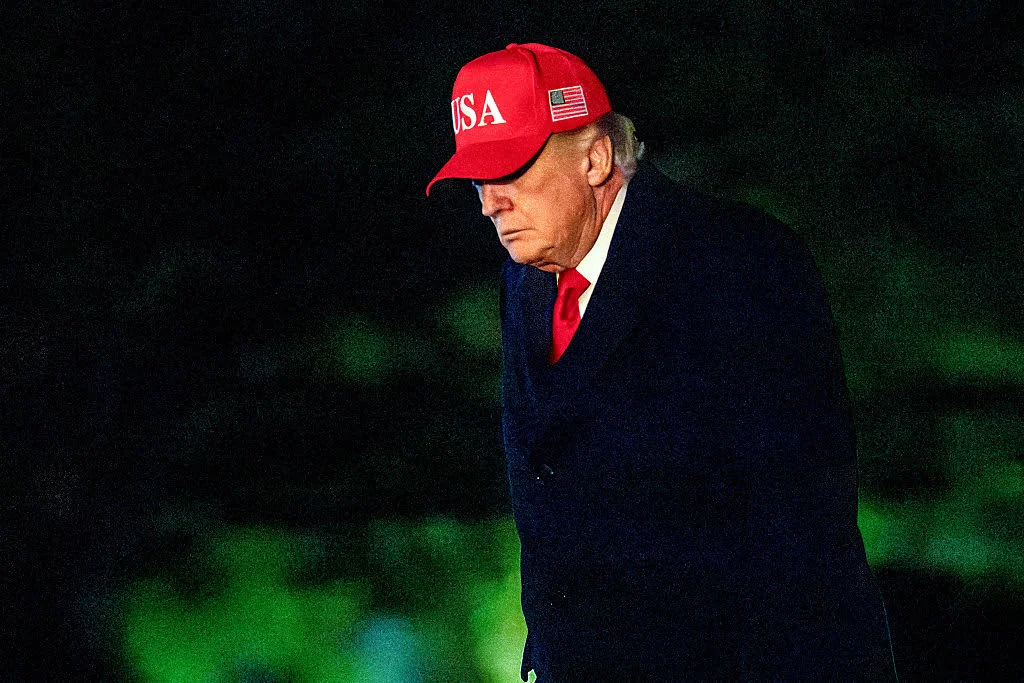
On Sunday, April 12, 2026, President Donald Trump was seen returning to the White House on Marine One in Washington, D.C. On this day, amidst other notable public statements, including a controversial attack on Pope Leo XIV for his criticisms of the US-Israeli war on Iran—where Trump reportedly called the pontiff "WEAK on crime"—the President delivered a pivotal announcement concerning military actions in the Middle East.
Minutes before Trump signaled a significant pause in planned U.S. attacks on Iran, specifically targeting Iranian power plants and energy infrastructure, unusual trading patterns emerged in the oil futures market. Trading volumes for WTI crude futures experienced an unexplained surge. When Trump’s announcement became public, the market reacted instantly and dramatically. WTI crude oil futures, which had shown anomalous activity earlier, tumbled nearly 6%, reflecting a sudden decrease in geopolitical risk premium associated with potential conflict in a major oil-producing region. This sharp downturn allowed those who had placed bearish bets (e.g., short-selling futures or buying put options) just before the announcement to reap substantial profits.
March 23, 2026: A Precedent of Suspicion
The April 12 incident was not an isolated event. CNBC had previously reported on similar suspicious activity occurring on March 23, 2026. On that date, during otherwise quiet premarket trading hours, S&P 500 e-mini futures and West Texas Intermediate May crude futures experienced a sudden and isolated surge in trading volume. This spike, devoid of any clear public news or market trigger at the time, immediately raised eyebrows among seasoned traders and market analysts.
Approximately 15 minutes after this unusual trading activity, President Trump took to his preferred social media platform, Truth Social, to announce that the U.S. and Iran had engaged in talks and that he was halting planned strikes on Iranian power plants and energy infrastructure. The market’s reaction was swift and profound. S&P 500 futures surged by more than 2.5% ahead of the official market open, indicating a broad-based relief rally as geopolitical tensions seemingly de-escalated. Concurrently, WTI crude oil futures plummeted by nearly 6%, mirroring the pattern observed later in April. The parallel and precisely timed movements in both equity and crude oil derivatives markets, immediately preceding sensitive government announcements, established a clear pattern that regulators are now meticulously dissecting.
The Geopolitical Context: US-Iran Tensions
To understand the profound market impact of President Trump’s announcements, it is crucial to appreciate the volatile geopolitical backdrop of US-Iran relations in early 2026. The original article mentions a "US-Israeli war on Iran," implying a state of heightened conflict or significant military engagement. Such a scenario would inherently drive up crude oil prices due to fears of supply disruptions in the Strait of Hormuz, a critical chokepoint for global oil shipments, and the broader Middle East.
Throughout the Trump presidency, and extending into his hypothetical second term in 2026, U.S. policy towards Iran has been characterized by a "maximum pressure" campaign, including stringent sanctions and a willingness to use military force. This stance often led to periods of acute tension, with various incidents—such as attacks on oil tankers, drone shoot-downs, and proxy conflicts—periodically escalating the risk of a full-blown military confrontation. In this environment, any signal of de-escalation or a pause in planned military action would be interpreted by markets as a significant reduction in risk, particularly for oil prices which are highly sensitive to Middle Eastern stability. Conversely, any hint of escalation would send oil prices soaring. The market’s immediate and dramatic reactions to Trump’s announcements underscore this sensitivity.
Congressional Scrutiny and Calls for Accountability
The recurring nature of these suspicious trades has not gone unnoticed in Washington. Last week, two prominent Democratic senators, Elizabeth Warren of Massachusetts and Sheldon Whitehouse of Rhode Island, formally called on the CFTC to launch comprehensive investigations into these unusual trading patterns. In a strongly worded letter, they explicitly raised concerns about the "recurring misappropriation of material nonpublic government information."
Senator Warren, known for her focus on financial market oversight and consumer protection, and Senator Whitehouse, a keen advocate for government transparency and accountability, highlighted the potential for severe damage to market integrity and public trust if high-level government information is being illicitly used for personal profit. Their intervention elevates the issue from a technical regulatory matter to a significant political concern, placing additional pressure on the CFTC to conduct a thorough and transparent investigation. The senators’ letter implies a broader concern that such incidents might not be isolated acts but rather symptoms of a systemic vulnerability within the government’s handling of market-sensitive information.
Defining Insider Trading in Derivatives Markets
Insider trading, traditionally associated with equity markets, also applies with equal force to commodity and financial derivatives. In the context of government information, it involves trading on material nonpublic information that is obtained through a breach of duty or other unlawful means. For example, if an individual with access to the President’s schedule or policy decisions uses that information to trade oil futures before it becomes public, that would constitute illegal insider trading. The information is "material" because it would significantly alter the price of the security or commodity, and it is "nonpublic" because it is not available to the general investing public.
Proving insider trading, especially when it involves government information, can be complex. Regulators must establish that the traders possessed the specific nonpublic information, that the information was material, and that they acted on it to their benefit. The "Tag 50 identifiers" requested by the CFTC are crucial here, as they can help establish the identity of the traders and potentially link them to sources of nonpublic government information, directly or indirectly.
Market Integrity and Regulatory Challenges
The integrity of financial markets is paramount to their function. If participants believe that some individuals have an unfair advantage through access to privileged information, it erodes confidence, deters legitimate investment, and distorts fair price discovery. The cases under investigation strike at the very heart of this principle.
The CFTC’s mandate is to protect market users and the public from fraud, manipulation, and abusive practices. Its investigation into these trades is a critical test of its ability to uphold this mandate in an era where information travels at lightning speed and market-moving announcements can come from unconventional sources like social media. The challenge for regulators extends beyond identifying the perpetrators; it also involves understanding how such information might be leaked or accessed, and implementing measures to prevent future occurrences.
CME’s suggestion to include prediction markets in any review highlights a growing area of concern. Prediction markets allow individuals to bet on the outcome of future events, including political decisions or geopolitical developments. While some argue they can be valuable for forecasting, their relatively unregulated nature, particularly regarding information disclosure, could potentially make them avenues for individuals to monetize insider information or for information to subtly leak into broader markets. This raises questions about the scope of regulatory oversight required in an increasingly fragmented and digitally driven financial landscape.
Broader Implications and Future Outlook
The outcome of the CFTC’s investigation will have significant implications. If insider trading is proven, it could lead to substantial fines, disgorgement of illicit profits, and criminal charges for those involved. Beyond individual accountability, it could prompt a re-evaluation of protocols within government agencies regarding the handling and dissemination of market-sensitive information. The White House, Treasury Department, and other federal agencies might face increased pressure to implement stricter controls and clearer guidelines for officials who possess such information.
Furthermore, this investigation could serve as a precedent for how regulators approach similar instances of suspicious trading activity linked to government announcements in the future. It could influence policy discussions on enhancing surveillance capabilities, strengthening existing insider trading laws to explicitly cover government information more comprehensively, and potentially expanding the CFTC’s jurisdiction or collaboration with other agencies, such as the Securities and Exchange Commission (SEC) and the Department of Justice.
The recurring nature of these incidents also raises questions about the broader ethical landscape surrounding high-level political decision-making and its intersection with financial markets. The public’s trust in both government and financial institutions hinges on the perception of fairness and accountability. As the CFTC meticulously sifts through trading data and investigates the intricate connections behind these suspicious trades, the financial world and political observers alike will be watching closely for answers and consequences that could reshape the regulatory environment for years to come. The investigation underscores the enduring challenge of safeguarding market integrity in an age where information, power, and capital converge with unprecedented speed and impact.

0 Comments