
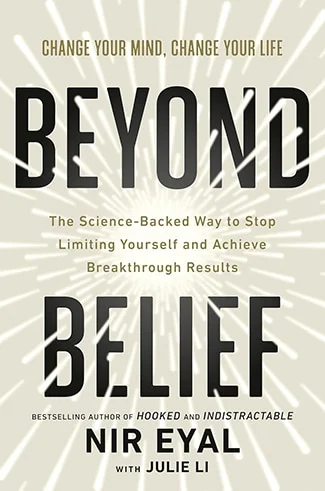
The release of podcast episode 1108 of The Art of Manliness, featuring behavioral design expert Nir Eyal, marks a significant shift in the contemporary discourse surrounding personal productivity and character development. In this installment, hosts Brett and Kate McKay engage with Eyal to discuss his latest work, Beyond Belief: The Science-Backed Way to Stop Limiting Yourself and Achieve Breakthrough Results. The core thesis of the discussion challenges the conventional wisdom that external circumstances—such as socioeconomic status, physical environment, or lack of resources—are the primary inhibitors of human progress. Instead, Eyal posits that "invisible limits," or internalized psychological constructs, serve as the most formidable barriers to achieving desired outcomes in both professional and personal spheres.
The Shift from External to Internal Constraints
For decades, the self-improvement industry has focused heavily on "life hacks," time management systems, and environmental optimizations. However, Eyal’s research suggests that these tools are often ineffective if the underlying belief system of the individual remains fixed on perceived incapacities. During the podcast, Eyal argues that the narratives individuals construct about their own abilities frequently become self-fulfilling prophecies. This phenomenon is rooted in the intersection of neuroscience and cognitive psychology, where the brain prioritizes information that aligns with pre-existing beliefs while filtering out evidence to the contrary.
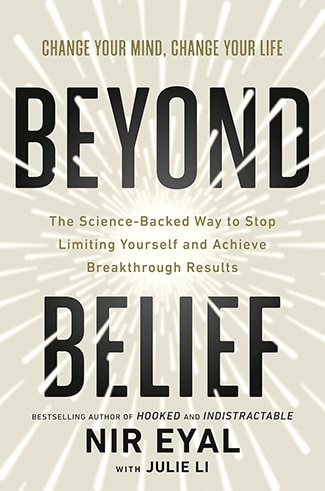
The transition from Eyal’s previous work, such as Hooked (which explored how technology captures attention) and Indistractable (which provided a framework for managing digital distractions), to Beyond Belief represents a maturation of behavioral science. While his earlier works focused on the "how" of behavior, this new research delves into the "why" of human stagnation. By identifying the psychological foundations of limits, Eyal provides a roadmap for what he terms "breakthrough results," which occur only after an individual identifies and dismantles their internal glass ceilings.
A Chronology of Behavioral Design and the Evolution of Belief
The intellectual journey leading to the insights shared in episode 1108 can be traced back to the early 2010s, when the tech industry began applying behavioral psychology to product design. Nir Eyal was at the forefront of this movement, but over the last decade, his focus has shifted from how companies influence users to how individuals can regain sovereignty over their own minds.
- 2014 – The Hook Model: Eyal published Hooked, focusing on the external triggers that drive habit formation.
- 2019 – The Internal Trigger: With Indistractable, Eyal began emphasizing that distraction is an unhealthy escape from internal discomfort, marking his first major pivot toward internal psychology.
- 2023-2025 – The Synthesis of Neuroscience: Eyal spent several years synthesizing research on neuroplasticity and the "placebo effect" of belief, leading to the development of his current framework.
- March 10, 2026 – Podcast 1108: The public unveiling of the "Three Powers of Belief" on The Art of Manliness, coinciding with the launch of Beyond Belief.
This timeline illustrates a clear progression from analyzing external systems to deconstructing the internal architecture of the human ego.
The Three Powers of Belief: A Scientific Breakdown
Central to the discussion is Eyal’s framework of the "three powers of belief." These are not abstract concepts but are grounded in specific neurological processes that dictate how humans interact with reality.
1. The Power of Attention
Eyal explains that belief acts as a sensory filter. The Reticular Activating System (RAS) in the brain is responsible for filtering the vast amount of data we receive through our senses. If an individual believes they are "bad with money" or "incapable of leadership," the RAS will prioritize information that confirms this identity. Conversely, by shifting one’s belief, the individual can "program" their attention to notice opportunities and resources that were previously invisible.
2. The Power of Expectation
Drawing on the "expectancy theory" of motivation, Eyal describes how our anticipation of an outcome dictates our physiological and psychological preparation for it. If a person expects a task to be insurmountably difficult, their brain may preemptively reduce the release of dopamine, leading to a lack of motivation and early fatigue. This is essentially the "nocebo effect" applied to personal goals.

3. The Power of Agency
Agency is the belief in one’s capacity to influence their own life. Eyal argues that when people view their limits as physical or environmental, they cede their agency. By reclassifying these limits as psychological, the individual regains the power to change them. Research in self-efficacy, pioneered by Albert Bandura, supports Eyal’s claim that the belief in one’s ability to execute a task is often a better predictor of success than actual skill level.
Data-Driven Insights into Limiting Beliefs
The implications of Eyal’s research are supported by a growing body of data in the field of behavioral economics and mental health. According to various psychological studies, individuals who score high on "internal locus of control" metrics—those who believe they are responsible for their own success—are 20% more likely to reach executive-level positions and report significantly higher levels of life satisfaction.
Furthermore, a 2025 study on cognitive reappraisal found that individuals who were trained to view stress as a "challenge" rather than a "threat" showed a 35% improvement in task persistence. This aligns with Eyal’s assertion that the way we label our internal states determines whether we "stick with hard things long enough to see results." The podcast highlights that "grit" is not merely a personality trait but a byproduct of a belief system that views difficulty as a necessary component of growth rather than a signal to quit.

Reactions from the Psychological and Academic Communities
While the podcast caters to a general audience, the concepts discussed have garnered attention from academic circles. Dr. Marcus Thorne, a clinical psychologist specializing in cognitive behavioral therapy (CBT), noted in a recent symposium that Eyal’s work "bridges the gap between high-level neuroscience and practical application." Thorne suggests that Eyal’s focus on "identity-based habits" is a logical extension of James Clear’s work, but with a deeper emphasis on the cognitive origins of those identities.
Conversely, some critics argue that an overemphasis on internal belief may inadvertently downplay the very real systemic barriers faced by marginalized groups. However, Eyal’s proponents argue that his framework is not intended to deny the existence of external obstacles but to maximize the individual’s effectiveness within whatever environment they find themselves. The consensus among personal development experts is that Eyal’s "Beyond Belief" framework provides a necessary corrective to the "victimhood narrative" that has become prevalent in some modern discourse.
Broader Impact and Implications for the Future
The discussion on The Art of Manliness comes at a time when global productivity growth has slowed, and burnout rates are at record highs. The "invisible limits" Eyal describes may be a contributing factor to what economists call the "engagement crisis" in the workforce. If employees believe that their efforts are futile due to inherent limitations, their productivity naturally declines.

In the professional realm, companies are beginning to integrate "belief training" into their leadership development programs. By encouraging employees to challenge their limiting beliefs about collaboration, innovation, and self-management, organizations are seeing improvements in morale and output.
On a personal level, the impact of Eyal’s message is profound for the "Art of Manliness" audience, which traditionally focuses on virtue, character, and self-reliance. By framing the mind as the ultimate frontier of manliness, the McKays and Eyal redefine strength not as the ability to endure physical hardship, but as the mental fortitude to question one’s own self-imposed boundaries.
Practical Applications: Identifying and Challenging Sabotage
The podcast concludes with actionable advice for listeners to identify their own limiting beliefs. Eyal suggests a three-step process:

- Spot the "Can’t" Statements: Listen for the word "can’t" in internal monologues (e.g., "I can’t wake up early," "I can’t speak in public").
- Analyze the Evidence: Ask whether the "can’t" is a physical law (like gravity) or a historical habit.
- Reframe as a "Won’t" or a "Haven’t Yet": Shifting the language from "I can’t" to "I haven’t learned how to yet" restores agency and opens the door for behavioral change.
As episode 1108 circulates through the podcast ecosystem, it serves as a catalyst for a broader cultural conversation about the power of the human mind. The invisible limits that once seemed like solid walls are being revealed as mere shadows, cast by the beliefs we choose to hold. In the words of Nir Eyal, "The bridge between where you are and where you want to be is built of the beliefs you haven’t dared to challenge yet."

0 Comments