
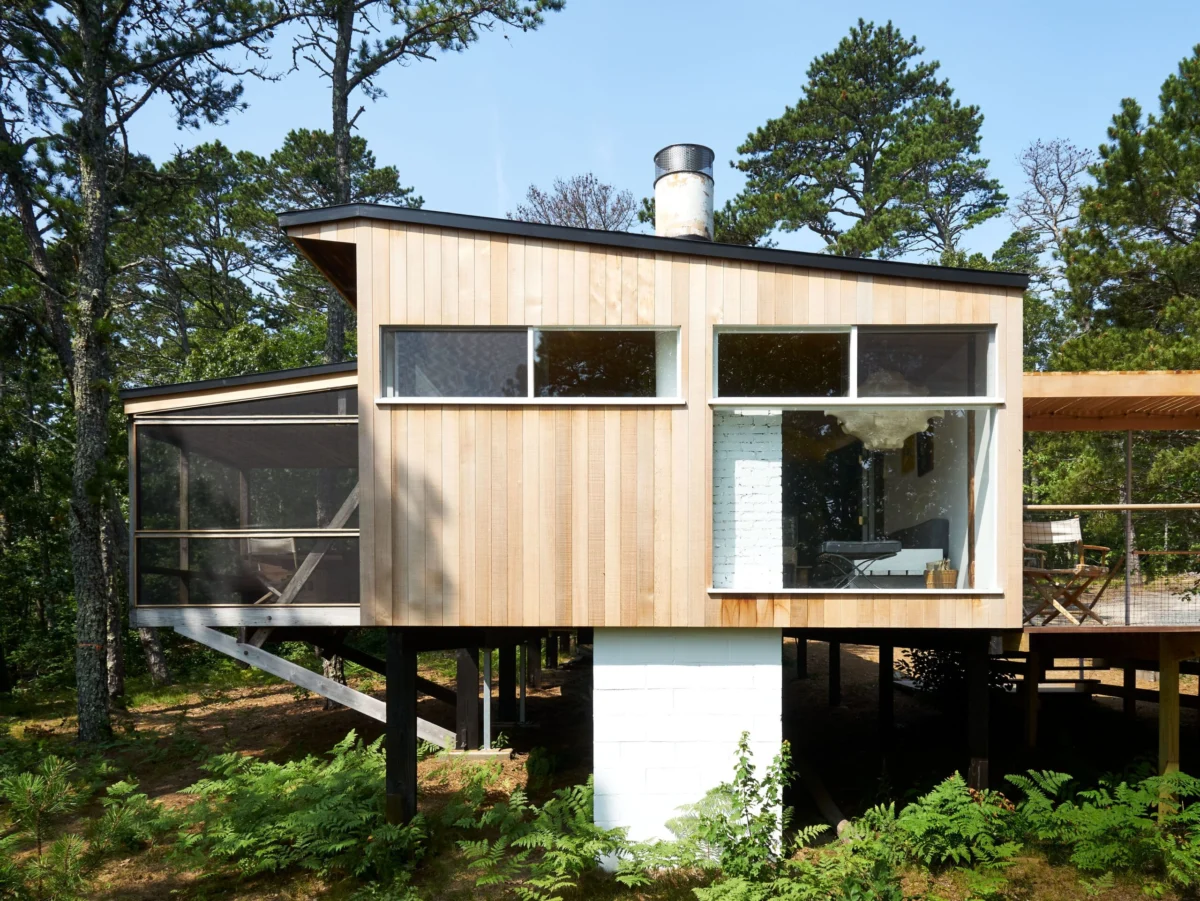
In the annals of architectural history, Marcel Breuer stands as a towering figure, a Bauhaus-trained visionary whose designs consistently pushed the boundaries of form and function. While his 1949 exhibition of a two-bedroom home at the Museum of Modern Art in New York City offered a glimpse into his revolutionary approach to affordable suburban housing, it was his more personal sanctuary, nestled amidst the wild beauty of Wellfleet, Massachusetts, that truly embodied his concept of midcentury domesticity. This iconic beach retreat, a testament to Breuer’s genius, has now undergone a meticulous restoration, breathing new life into a significant piece of architectural heritage, thanks to the dedicated efforts of the Cape Cod Modern House Trust (CCMHT).
The Genesis of a Cape Cod Haven
Breuer’s connection with Wellfleet began in the early 1940s, sparked by a visit to his esteemed colleague and friend, Serge Chermayeff. Chermayeff, himself a prominent architect, had established a family home in a secluded, wooded area near the National Seashore. It was here, amidst the placid swimming holes, sandy expanses, and windswept pines of Cape Cod, that Breuer found an environment that resonated deeply with his aesthetic sensibilities. The allure of the landscape proved irresistible, leading him to acquire 24 acres overlooking the serene waters of Williams Pond.

It was on this picturesque parcel of land that Breuer embarked on the creation of his "Long House," a design that masterfully fused the vernacular charm of New England architecture with the clean, modernist ideals of European "white-box" aesthetics. The challenges of establishing this retreat were as formidable as its design was groundbreaking. Initially, there was no proper access road. Breuer, with characteristic determination, forged his own path through the dense woodland, a testament to his hands-on approach that, as the story goes, famously resulted in his sports car sustaining scratches from the encroaching branches. This anecdote, while perhaps apocryphal in its exact details, underscores the deep commitment and personal investment Breuer poured into this remote haven.
A Design That Defied Convention
Constructed for a remarkably modest sum of less than $5,000, the Breuer House was initially a purist’s dream, foregoing conveniences like electricity and a telephone. Its design, however, was anything but primitive. The house sits with a remarkable lightness upon its site, its timber-framed volumes gracefully elevated on stilts above a dramatic slope. This elevated stance not only minimizes the impact on the natural terrain but also enhances the sense of openness and connection to the surrounding environment.
The architectural features are hallmarks of Breuer’s signature style. Gently sloped shed roofs harmoniously echo the contours of the landscape, while expansive ribbon windows dissolve the boundaries between interior and exterior, inviting the natural light and panoramic views indoors. Perhaps most striking is the cantilevered screened porch, a sophisticated extension of the living space that hovers over the landscape, offering an unparalleled vantage point for enjoying the tranquil vistas of the woods and Williams Pond.

Peter McMahon, the founder of the Cape Cod Modern House Trust, eloquently captures the essence of the design: "It’s a small house, but there is something very majestic about it. It is a tribute to what you can do with very simple forms if you really understand the site. There is this absolute feeling of levitation." This sentiment is further elaborated by McMahon’s reference to the concept of "heavy lightness," a term coined by Breuer scholar Barry Bergdoll, which perfectly encapsulates the house’s ability to feel both grounded and ethereal, substantial yet effortlessly buoyant.
A Legacy of Evolution and Enduring Challenges
Breuer’s Wellfleet retreat was not a static monument but a living, evolving space. He and his family frequented the Cape every summer until his passing in 1981, during which time he continually expanded and refined the house. The addition of a dedicated studio in 1961 and an apartment in 1969 demonstrated his ongoing engagement with the property and his desire to adapt it to changing needs. Throughout these renovations, Breuer applied a palette of bold hues, reflecting his adventurous spirit and his willingness to imbue his architectural spaces with vibrant personality.
However, the passage of time and the unforgiving coastal climate presented significant challenges. By the time the Cape Cod Modern House Trust acquired the property in 2024, following a substantial fundraising campaign that underscored the public’s appreciation for this architectural gem, the house had succumbed to years of deferred maintenance. McMahon highlights the extreme environmental pressures: "This is a very unforgiving climate in terms of dampness and hurricanes." The structural integrity of various elements had been compromised, evidenced by rotted plywood walls, deteriorating birch ceiling panels, and weathered cedar siding. The cantilevered rear porch, a once-graceful feature, had sagged under the immense weight of Breuer’s original stone-top dining table, a stark reminder that even a master architect’s designs can sometimes push the limits of structural feasibility. "Breuer often did things that structurally didn’t work," McMahon notes with a touch of wry observation, "Sometimes, he pushed it too far."

The Cape Cod Modern House Trust: Guardians of Architectural Heritage
The acquisition and restoration of the Breuer House by the Cape Cod Modern House Trust represent a significant victory for the preservation of midcentury modern architecture. The CCMHT, a non-profit organization dedicated to safeguarding and promoting significant modern homes on Cape Cod, has undertaken a rigorous and sensitive restoration process. Their mission is not merely to preserve buildings but to ensure they remain vital, accessible, and educational resources for future generations.
The restoration project involved a comprehensive assessment and repair of the house’s various components. Working with a team of skilled contractors, the Trust meticulously addressed issues such as roof repairs, replacement of damaged ceiling panels, and the ebonizing of oak floors. Interior surfaces were carefully refreshed, aiming to honor Breuer’s original intentions while acknowledging the accumulated history of the house.
The process of restoration, as McMahon explains, was akin to an archaeological dig: "There was no way to tell when certain things were done. We peeled down layers and then decided which one to go with." This iterative approach allowed the team to make informed decisions, often guided by fragmented visual evidence and an intuitive understanding of Breuer’s design philosophy. For instance, the kitchen floor was reconstructed using the same speckled black linoleum that characterized a previous renovation, and its walls were repainted in a former blue hue. In Breuer’s own bedroom, the discovery of a brown wall beneath layers of later paint prompted its faithful resurrection. This "mixed and matched" approach to color and material choices reflects the layered history of the house and the Trust’s commitment to revealing and preserving its authentic narrative.

Furnishings and Unearthing Treasures
The interior of the Breuer House is a curated blend of original furnishings and carefully selected pieces that complement the architectural aesthetic. Many of Breuer’s original items, including cast-iron candlesticks and director’s chairs, have been retained and refreshed with new upholstery. The iconic cantilevered outdoor dining table, now structurally stabilized, features a mahogany top, a practical and aesthetically pleasing alternative to its original, overly heavy slate.
During the restoration, an extraordinary cache of personal and artistic treasures was uncovered. These included a Paul Klee lithograph, an Alexander Calder painting, and, crucially, Breuer’s own original blueprints for the house. Perhaps most captivating were over 1,000 rolls of family photographs, offering an intimate and invaluable visual chronicle of the house’s life. "They document the house over time—the parties, the guests, the bonfires," McMahon reflects, highlighting the ongoing effort to digitize these precious images, which will further enrich our understanding of the house and its occupants.
The restoration also involved the meticulous repair and enhancement of the elevated walkway connecting the main house to the studio. Previously lacking a railing, this critical architectural element has been made safe and visually coherent, its pergola restored to its intended elegance. The studio itself, a Brutalist masterpiece, features a fireplace that anchors the space, while its sleeping quarters maintain a sense of serene simplicity.

Broader Implications and Future Accessibility
The successful restoration of the Marcel Breuer House is not an isolated event but part of a larger movement to preserve the architectural legacy of midcentury modernism on Cape Cod. This project marks the fifth significant restoration undertaken by the Cape Cod Modern House Trust, following their work on homes by other influential architects such as Luther Crowell, Jack Hall, Paul Weidlinger, and Charlie Zehnder.
McMahon expresses a hopeful perspective on the broader impact of these preservation efforts: "People get cynical and think the market will wash these places away. What we have achieved is a grassroots, low-tech way to preserve these buildings." This approach underscores the power of community-driven initiatives and a deep appreciation for architectural heritage in counteracting the pressures of development and neglect.
The Breuer House is now poised to re-enter public life, embodying its original spirit of welcoming and inspiration. Similar to previous CCMHT projects, the house will be available for weeklong rentals from May through September, offering visitors an immersive experience of midcentury living. Throughout the summer, public tours will provide architectural enthusiasts and the general public with opportunities to explore this iconic residence. Furthermore, an artist residency program will be hosted during the fall, fostering a continued connection between art, architecture, and the inspiring natural environment.

As for practical advice for those venturing to this remote sanctuary, McMahon offers a pragmatic reminder, echoing Breuer’s own experiences: "Four-wheel drive is best. Better yet, bike." This lighthearted caution serves as a fitting epilogue, reminding us that while the house itself is a masterpiece of design and engineering, its setting demands a certain respect for the rugged beauty of Cape Cod, a beauty that Marcel Breuer so profoundly embraced and translated into enduring architecture. The restoration of his Wellfleet retreat stands as a powerful testament to the enduring appeal of his vision and the vital importance of preserving these irreplaceable pieces of our cultural landscape.

0 Comments