
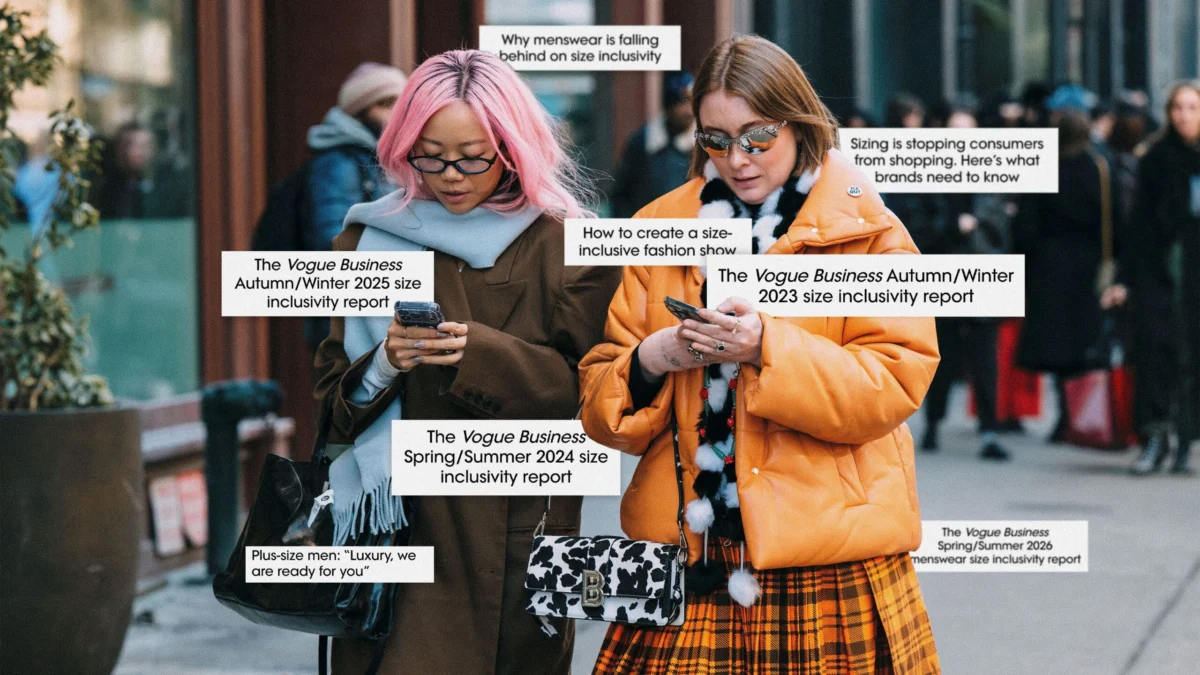
The fashion industry has reached a critical juncture in its relationship with body diversity, as new data reveals a significant regression in size inclusivity across global runways and retail environments. According to the latest three-year longitudinal study conducted through the Vogue Business Size Inclusivity Report, the momentum for diverse representation that gained traction in the early 2020s has largely dissipated, replaced by a return to aesthetic standards favoring extreme thinness. The findings indicate that despite years of public discourse regarding body positivity, the proportion of straight-size models (US 0-4) on the runway reached a three-year peak during the Fall/Winter 2026 (FW26) season, accounting for 97.6% of all looks presented.
This shift marks a notable departure from the goals established at the report’s inception three years ago. At that time, industry analysts and advocates anticipated that increased scrutiny and the celebration of "curve" models would encourage designers to move beyond tokenism toward systemic change. Instead, the data suggests that the industry has moved in the opposite direction, with mid-size and plus-size representation falling to their lowest levels since tracking began.
A Statistical Overview of Three Years of Regression
The trajectory of size inclusivity from the FW23 season to the FW26 season illustrates a consistent narrowing of body types featured in high-fashion showcases. In FW23, straight-size models occupied 95.6% of runway slots. By FW26, this figure climbed to 97.6%, representing a two-percentage-point increase in an area that was already heavily dominated by a single body type.
The decline is most pronounced in the mid-size (US 6-12) and plus-size (US 14+) categories. Mid-size representation, which stood at 3.8% in FW23, has nearly halved, dropping to 2.1% in the most recent season. The statistics for plus-size models are even more stark: representation in this category has plummeted from an already marginal 0.6% in FW23 to a mere 0.3% in FW26. This 50% decrease in plus-size visibility brings the industry back to its lowest recorded point, matching the previous low seen in FW25.
Industry analysts note that the brief "peaks" in inclusivity observed during the Spring/Summer 2024 (SS24) and Spring/Summer 2025 (SS25) seasons appear to be anomalies rather than indicators of progress. These seasons featured a higher frequency of size-inclusive looks, often utilizing stretchy fabrics and jersey dresses. Experts suggest these garments are "easier" for brands to produce as single samples that can accommodate multiple body types, whereas the complex tailoring required for Fall/Winter collections often sees brands reverting to traditional sample sizes.
Socio-Cultural Drivers of the Thinness Trend
The regression in size inclusivity does not exist in a vacuum; it is bolstered by several converging socio-cultural and technological factors. One of the most significant influences is the "GLP-1 boom," referring to the widespread use of semaglutide medications for weight loss. This medical trend has coincided with a resurgence of "90s-style thinness" as a dominant aesthetic, often referred to in fashion circles as a return to the "heroin chic" era.

Furthermore, the rise of "looksmaxxing"—a subculture focused on radical self-optimization through diet, exercise, and cosmetic procedures—has shifted the cultural focus toward extreme physical discipline. This trend is mirrored in the design choices of major fashion houses, which have increasingly prioritized silhouettes that accentuate skeletal frames. Audience members at recent fashion weeks have reported audible reactions to the appearance of exceptionally thin models, and media coverage has frequently pivoted from the craftsmanship of the garments to the physical state of the individuals wearing them.
The broader political and social climate has also played a role. A perceived rise in cultural conservatism has, in some sectors, led to a cooling of "woke" corporate initiatives, including diversity and inclusion programs. For many luxury brands, the pressure to maintain a "prestige" image has translated into a retreat from the inclusive marketing strategies that characterized the 2020–2022 period.
The Disconnect Between Runway Representation and Retail Availability
The lack of diversity on the runway is compounded by a significant "availability gap" in the retail sector. A survey of nearly 700 consumers conducted in conjunction with the report found that 48% of respondents feel a persistent pressure to lose weight. Notably, 63% of those individuals cited challenges with garment sizing while shopping as the primary source of this pressure, significantly outranking the 36% who blamed runway imagery.
This data highlights a systemic failure in the consumer experience. While some luxury labels claim to offer extended sizing on their e-commerce platforms, field research suggests these items are rarely available for immediate purchase in physical flagship stores. In an investigation of luxury boutiques on London’s Bond Street, researchers found that brands advertising sizes up to US 20 online often stocked no larger than a US 12 in-store.
When questioned, sales representatives frequently stated that larger sizes could be "specially ordered" or were "kept in the back." This practice of hiding plus-size inventory creates a psychological barrier for consumers, reinforcing the idea that larger bodies are not the intended audience for luxury fashion. Furthermore, the "sold out" status of larger sizes on many websites—a frequent occurrence identified in the research—suggests a high demand that brands are either failing to meet or are intentionally limiting to maintain exclusivity.
Tokenism and the Frustration of Specialized Brands
The report also addresses the issue of tokenism, where brands feature a single high-profile "curve" supermodel to boost their inclusivity rankings without making substantive changes to their production lines. Data shows that if these specific models are unavailable for a show, many brands revert to a 100% straight-size lineup rather than casting from a broader pool of mid- or plus-size talent.
This practice has drawn criticism from brands that have built their business models around inclusive sizing. These specialized designers express frustration that luxury houses receive "kudos" for minimal effort while continuing to ignore the needs of the average consumer. In the United States, the average woman wears a size 16 to 18, placing her firmly in the plus-size category that currently receives 0.3% representation on the runway.

Case Studies in Consumer Advocacy: The "Plus-Size and Passing" Series
In response to the industry’s gatekeeping, creative directors and content creators have begun conducting their own primary research. Abisola Omole, known professionally as Abi Marvel, has gained significant attention for her "Plus-Size and Passing" series on social media. Omole visits luxury stores to document the reality of shopping as a US 16-18 consumer.
Her research has revealed a nuanced, if inconsistent, landscape. For instance, Omole noted that while brands like Chanel are rarely associated with size inclusivity on the runway, they do produce garments in sizes 50 and 52 (US 16-18), though these are often not displayed on the shop floor. Similarly, she found success with Jonathan Anderson’s debut collection at Dior and Matthieu Blazy’s work at Chanel, discovering pieces in both menswear and womenswear that could accommodate plus-size frames.
Omole’s work emphasizes that while the garments may exist, the retail experience for plus-size shoppers remains one of "calculated navigation." She advises consumers to book appointments in advance to ensure that larger sizes are brought out from storage, a step that straight-size consumers rarely have to take.
Implications for the Future of the Fashion Industry
The ongoing regression to thinness standards poses significant risks to the fashion industry, both ethically and economically. By alienating the majority of the consumer base, luxury brands may be limiting their long-term growth potential. The psychological impact on consumers, particularly younger generations who are once again being exposed to unattainable body standards, remains a primary concern for public health advocates.
Despite the discouraging data from the FW26 season, organizations like Vogue Business maintain that continued data collection is essential for holding the industry accountable. The shift in methodology to include e-commerce and in-store availability tracking represents a new phase in the push for inclusivity—one that moves beyond the optics of the runway to the tangible reality of the fitting room.
The fashion industry currently stands at a crossroads. It can continue to move toward an increasingly narrow and exclusionary definition of beauty, or it can address the logistical and aesthetic biases that prevent it from serving the global population. As it stands, the data from the past three years suggests that without significant external pressure or a shift in the cultural zeitgeist, the runway will remain a space reserved for a fraction of the world’s body types.

0 Comments