
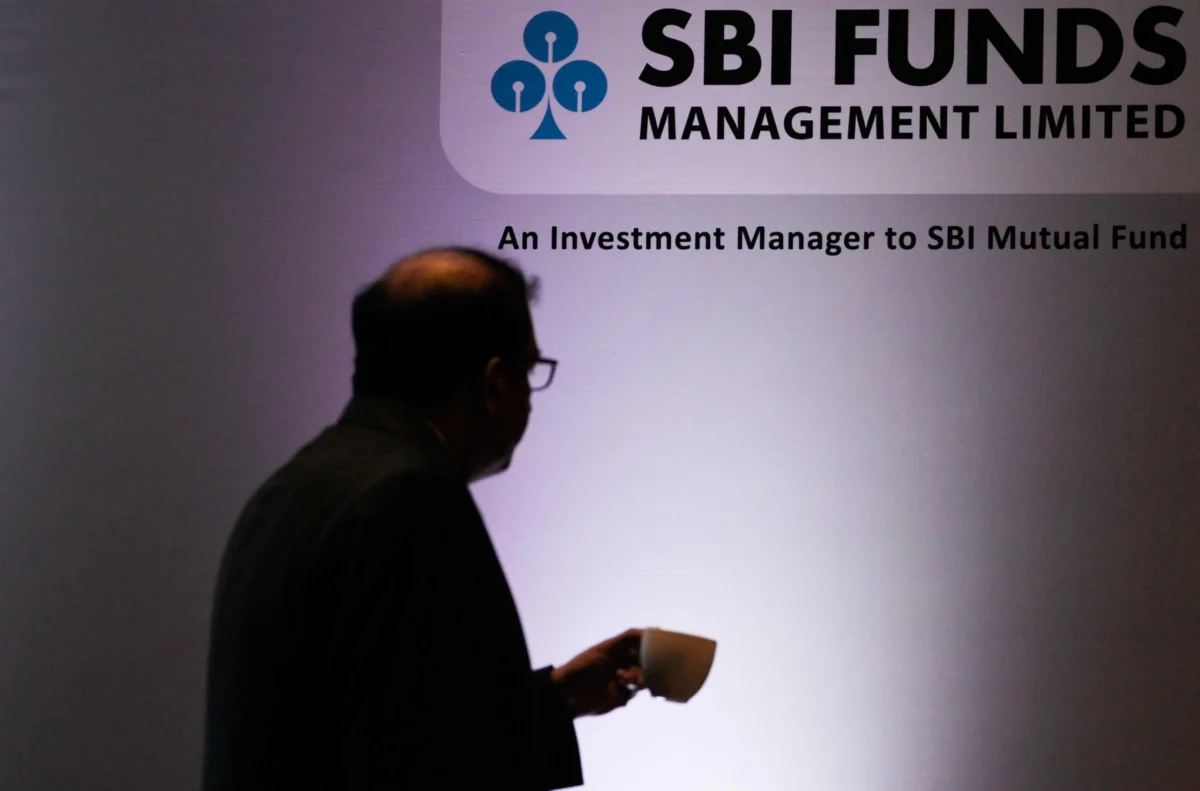
Mumbai, India – India’s capital markets have witnessed a significant resurgence of investor confidence, dramatically underscored by the overwhelming success of SBI Fund Management’s initial public offering (IPO). The public market offering, the largest in India this year, garnered an astounding 2.97 trillion rupees ($30.7 billion) in bids, far exceeding its target of 97.9 billion rupees ($1 billion). This remarkable oversubscription, closing at 41.6 times, is a powerful testament to the abundant liquidity available in the market and sets a promising precedent for a series of much larger public issues anticipated in the latter half of 2026.
Deep Dive into the SBI Fund Management IPO Success
The IPO of SBI Fund Management, a prominent joint venture between the State Bank of India, the country’s largest lender, and Europe’s Amundi Group, captivated institutional investors, driving the majority of the oversubscription. The portion specifically reserved for qualified institutional buyers (QIBs) was subscribed an extraordinary 140 times. This segment saw robust participation primarily from domestic institutional powerhouses, including leading banks, insurance companies, and mutual funds, indicating a strong belief in the company’s fundamentals and the broader Indian growth story. In contrast, retail investors, while participating, showed a relatively more measured enthusiasm, with their allocated portion being subscribed 3.6 times by the close of the offer on Thursday.
The success of SBI Fund Management is not merely a corporate triumph but a critical barometer for the health of India’s capital markets. As India’s largest asset management company, SBI Fund Management commands substantial influence. As of March 2026, it managed a staggering 29.5 trillion rupees ($395 billion) in assets, positioning it as a cornerstone of the nation’s financial landscape. Its successful market debut is therefore viewed as a bellwether for the appetite for financial services entities and, more broadly, for the Indian equity market as a whole. The company’s listing, eagerly awaited next week, will be closely watched by market participants, as strong post-IPO gains could further amplify investor appetite for new issues and sustain the positive momentum.
Chronology of Market Dynamics: From Headwinds to Recovery
The spectacular success of the SBI Fund Management IPO marks a significant turning point, especially considering the challenging market conditions that characterized the first half of 2026. India, often celebrated as one of the most prolific IPO markets globally over the past two years, recorded the highest number of listings worldwide, showcasing its robust capital-raising capabilities. This period saw a flurry of diverse companies, from technology startups to traditional manufacturers, tapping into the public markets, fueled by strong domestic liquidity and an optimistic economic outlook.
However, the early part of 2026 presented a stark contrast. A confluence of global and domestic factors led to a noticeable slowdown in IPO activity and a general cooling of market sentiment. A primary global headwind was the escalating "Iran war," which triggered a sharp increase in international energy prices. As a major oil importer, India’s economy is particularly sensitive to such fluctuations. Rising energy costs squeezed corporate profit margins, fueled inflationary pressures, and consequently impacted consumer purchasing power, taking the sheen off India’s vaunted domestic consumption story. This economic pressure was compounded by a global investment rally towards artificial intelligence (AI) stocks, an industry where India, despite its vast tech talent, has yet to produce globally dominant champions. This shift in global capital allocation meant that funds that might otherwise have flowed into emerging markets like India were diverted towards AI-centric opportunities in more developed economies.
The cumulative effect of these challenges was palpable in India’s benchmark indices. Since the start of the year, the BSE Sensex, India’s flagship equity index, had shed over 9.4%, positioning it among the worst-performing large stock markets globally. The broader Nifty 50 index also experienced a significant downturn, declining by 7.9% over the same period. This period of market contraction saw many companies delay their fundraising plans, waiting for more favorable conditions.
A turning point arrived in June, with news of a ceasefire between Iran and the U.S., which brought a measure of stability to global energy markets and eased some geopolitical tensions. This de-escalation immediately provided a much-needed fillip to the Indian market, which recovered partially. Sensing a shift in sentiment, companies that had been on the sidelines began to announce renewed fundraising plans, with SBI Fund Management being one of the first major entities to capitalize on this improved environment.
Anticipating the Next Wave: NSE and Jio Platforms
The strong institutional interest in the SBI Fund Management IPO is particularly good news for two of India’s most anticipated public issues: the National Stock Exchange (NSE) and the country’s largest wireless telecommunications company, Jio Platforms. Both mega-IPOs are widely expected to hit the market later this year, and their successful listing is crucial for sustaining the capital market’s momentum.
The National Stock Exchange, as the backbone of India’s equity trading infrastructure, represents a unique investment opportunity. An IPO of NSE would not only offer investors a stake in the country’s rapidly growing capital markets but also unlock significant value from its dominant position in derivatives and cash market trading. Its listing has been a long-awaited event, often seen as a barometer of regulatory readiness and market maturity.
Jio Platforms, on the other hand, is a digital behemoth. A subsidiary of Reliance Industries, it encompasses a vast ecosystem of digital services, including mobile telecommunications, broadband, cloud services, and a suite of consumer-facing applications. With a subscriber base in the hundreds of millions, Jio has fundamentally transformed India’s digital landscape, driving unprecedented internet penetration and digital adoption. Its IPO, if it proceeds as planned, would be one of the largest technology listings globally, reflecting the immense potential of India’s digital economy.
According to Prime Database, a Mumbai-based IPO intelligence firm, both the NSE and Jio Platforms are estimated to raise more than $3 billion each. The combined potential capital raise from these and other significant offerings could see stock market offerings worth an astounding $50 billion flood the Indian markets this year. This projected influx of capital underscores the depth and capacity of India’s financial system to absorb large-scale fundraising, provided market conditions remain conducive.
Broader Implications for India’s Capital Markets and Economy
The success of the SBI Fund Management IPO carries profound implications for India’s broader economic narrative. It signals a renewed appetite among both domestic and international investors for Indian assets, especially after a period of global capital reallocation. This influx of capital is vital for financing India’s ambitious growth targets, driving infrastructure development, fostering innovation, and creating jobs.
Official Perspectives and Market Sentiment (Inferred)
While no official statements from SBI Fund Management or the lead managers were explicitly provided in the source, the overwhelming subscription figures inherently communicate a strong sense of optimism. Market analysts, often quoted anonymously or through their research reports, would likely interpret this success as a "vote of confidence" in India’s long-term economic prospects. Experts would undoubtedly highlight the institutional backing as a critical factor, suggesting that large, sophisticated investors are committing capital based on fundamental analysis and a positive outlook for the asset management sector and the broader Indian financial services industry. The consensus among market watchers would be that this IPO provides much-needed positive sentiment, potentially encouraging other companies to accelerate their listing plans.
Expert Perspectives and Market Sentiment
Market analysts and investment strategists are keenly observing these developments, interpreting the SBI Fund Management IPO as a critical indicator of renewed investor confidence. "The robust demand from institutional investors for SBI Fund Management demonstrates that deep liquidity exists in the Indian market, and quality assets will always find takers," commented a senior analyst at a leading domestic brokerage firm, preferring anonymity due to internal company policies. "This success is a powerful signal to companies that have been waiting on the sidelines, particularly those in the financial services and technology sectors, that the window for public offerings is now open."
Several economists also weighed in on the broader implications. "Successful large-scale IPOs contribute significantly to capital formation, which is essential for funding long-term economic growth," noted Dr. Rhea Sharma, an economic researcher specializing in emerging markets. "They also broaden public participation in wealth creation and deepen the capital markets, making them more resilient to shocks." The optimism is palpable, suggesting that the recent market recovery, coupled with the success of the SBI Fund Management IPO, could usher in a sustained period of capital market activity.
Looking Ahead: Risks and Opportunities
Despite the current wave of optimism, the continuation of the "Iran war" remains a key geopolitical risk that investors will be closely monitoring. Any resurgence of hostilities or further disruptions to global oil supplies could quickly reintroduce inflationary pressures and dampen market sentiment. India’s reliance on imported energy means that stable geopolitical conditions in the Middle East are paramount for its economic stability and sustained growth.
However, the opportunities presented by India’s demographic dividend, growing middle class, and ongoing digital transformation continue to attract long-term capital. The success of SBI Fund Management’s IPO has unequivocally demonstrated that despite recent headwinds, the underlying fundamentals of the Indian economy remain strong, and its capital markets possess the depth and resilience to absorb significant public offerings. As the country navigates global uncertainties, its ability to attract and deploy capital through robust public markets will be a defining factor in its journey towards becoming a global economic powerhouse. The stage is now set for what promises to be an exciting and potentially transformative period for India’s capital markets.

0 Comments