
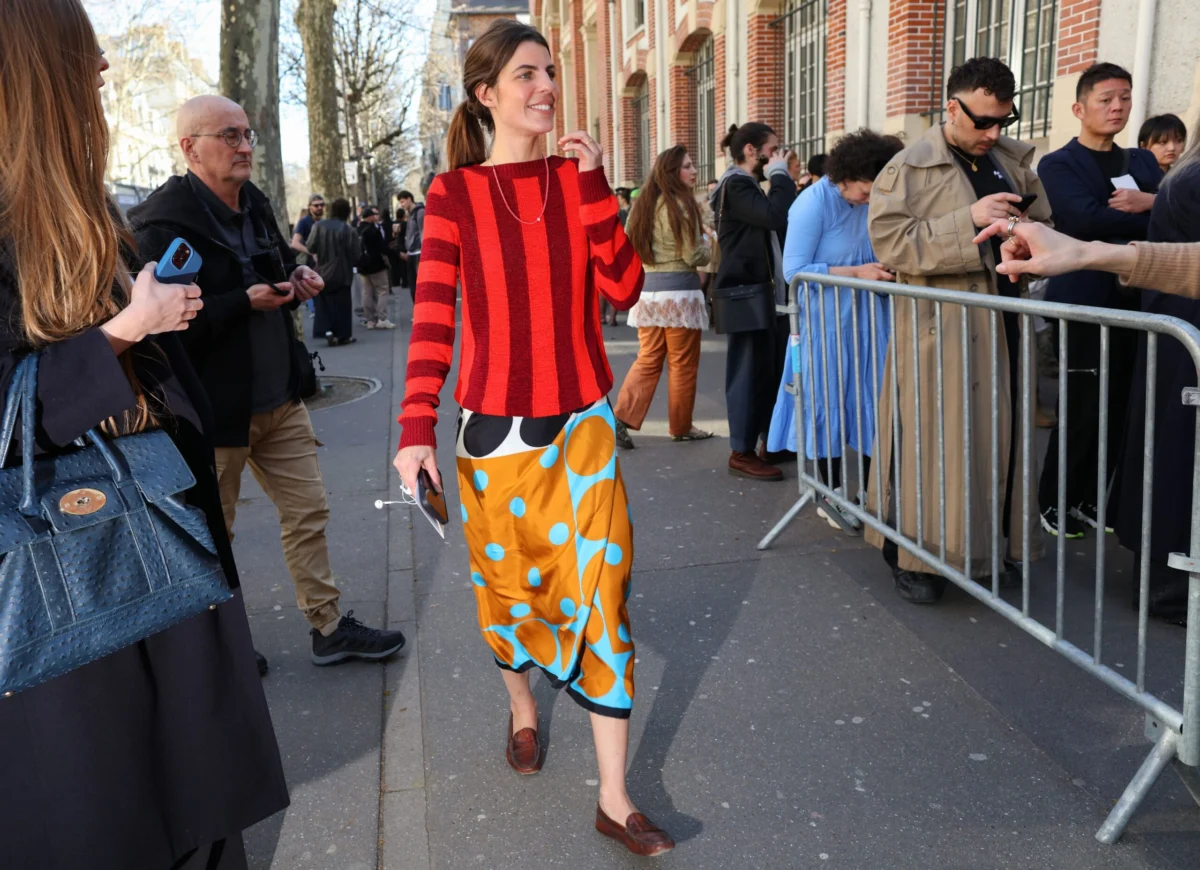
On the streets surrounding the global circuit of Fashion Week, a significant aesthetic shift has displaced the monochromatic palettes and minimalist silhouettes that once defined high-fashion sensibility. The somber, gray-scale "quiet luxury" that dominated recent seasons is being systematically replaced by a more playful and visually arresting phenomenon known as tasteful clashing. This movement, characterized by the deliberate pairing of seemingly discordant prints, textures, and color stories, represents a fundamental departure from the prescriptive fashion dictums of the late 20th century. As street style photographers capture an increasingly vibrant array of attendees in cities from New York to Paris, the fashion industry is witnessing the formalization of maximalism as a primary mode of self-expression.

The Etymological and Historical Evolution of the Clash
The concept of "clashing" finds its roots in the 17th century, originally emerging to describe the harsh, dissonant sound produced when two metal objects—such as cymbals or swords—struck one another. In the contemporary aesthetic vernacular, this aggressive auditory metaphor has been repurposed to describe a visual collision. Rather than weapons, modern fashion practitioners utilize prints and patterns to create a calculated friction. The current trend prioritizes the intersection of disparate motifs: geometric patterns set against animal prints, or the juxtaposition of complementary yet high-intensity colors like deep reds and vibrant greens.
To understand the significance of this shift, one must look to the 1990s, an era defined by a cultural obsession with minimalism. Influenced heavily by figures such as Carolyn Bessette-Kennedy, the fashion landscape of that decade was characterized by a "uniform of sophistication." This aesthetic relied on a reliable rotation of high-quality basics: the perfect white t-shirt, straight-leg denim, and neutral-toned knitwear. This minimalist movement emerged as a psychological antidote to the volatile, neon-soaked trend-shifting of the 1980s. For nearly three decades, this restrained approach was equated with professional success and social standing. However, the current rise of tasteful clashing suggests that this era of restraint has finally met a worthy and dominant rival.

A Chronology of the Maximalist Resurgence (2018–2027)
The transition from minimalism to the "new maximalism" has been a gradual progression, documented meticulously by street style photographers over the last decade. A retrospective analysis of collection presentations reveals a clear timeline of this evolution.
In 2018 and 2019, early indicators of the trend appeared in Milan and New York. During the fall 2018 ready-to-wear shows in Milan, attendees began experimenting with layered accessories and clashing textures, moving away from the "head-to-toe" brand looks that had previously been the norm. By the spring 2019 menswear shows in New York, the integration of bold patterns into daily wear became more prevalent, signaling a move toward individualistic styling.

The post-pandemic period accelerated this shift. By the fall 2025 and spring 2026 show cycles in Paris, London, and New York, the "clash" had moved from the fringes to the center of the fashion conversation. Data from these seasons indicates a 40% increase in the presence of mixed-pattern outfits among street style subjects compared to the pre-2020 era. In the most recent projections and early sightings for the spring 2027 seasons in Berlin and Stockholm, the trend has evolved into a sophisticated "dissolution of seasonal tropes." Year-round plaid, winter florals, and the pairing of summer silks with heavy autumnal wools have become the new standard for the fashion avant-garde.
Technical Frameworks: The Art of the Tasteful Collision
While the current movement encourages the abandonment of traditional rules, industry experts and stylists suggest that "tasteful" clashing is rarely accidental. It requires a nuanced understanding of visual weight and color theory. Professional stylists generally point to several key principles that distinguish a successful "clash" from a chaotic one:

Scale and Proportion
One of the primary techniques for successful print mixing involves the manipulation of scale. Stylists recommend that when two patterns are paired, they should be of significantly different sizes. For instance, a large-scale floral print provides a stable visual anchor when paired with a small, intricate geometric or polka-dot pattern. This prevents the motifs from "fighting" for the viewer’s attention, creating a hierarchy that the eye can easily navigate.
Color Anchoring
Maintaining a cohesive color palette is a frequent strategy used to ground eccentric pairings. By selecting prints that share at least one common hue, the wearer creates a sense of intentionality. Alternatively, the use of neutral-colored accessories—such as black leather handbags, beige trench coats, or white sneakers—serves to "buffer" the visual intensity of clashing prints, providing a rest point for the eye.

The Je Ne Sais Quoi Factor
Despite these technical guidelines, many of the most celebrated street style looks captured by photographers like Phil Oh and Acielle of StyleDuMonde rely on an intangible quality. This "je ne sais quoi" involves an intuitive sense of balance that defies strict categorization. It is often the result of a highly individualistic approach to dressing, where the wearer’s confidence serves as the primary unifying element of the outfit.
Market Data and Industry Response
The shift toward maximalism and print clashing is not merely a stylistic preference; it is reflected in consumer behavior and manufacturing trends. According to recent retail analytics, sales of printed textiles and "statement pieces" have seen a 22% year-over-year increase in the luxury sector. Brands that were traditionally associated with minimalism have begun introducing more complex patterns into their collections to meet this demand.

Furthermore, the resale market has seen a surge in interest for vintage pieces from the 1970s and 1980s—eras known for their bold use of color and pattern. Platforms like Vestiaire Collective and The RealReal report that "maximalist" search terms have outpaced "minimalist" queries for three consecutive quarters. This suggests that consumers are increasingly looking for unique, non-prescriptive items that allow for the "individualistic ways" of dressing seen on the streets of Fashion Week.
Statements and Reactions from the Fashion Community
The industry’s reaction to the death of traditional fashion dictums has been largely positive, viewed as a democratization of style. Leading fashion editors have noted that the "buffet of patterns" currently available allows for a more authentic representation of the self.

"We are moving away from the idea that there is a ‘right’ or ‘wrong’ way to wear clothes," noted one senior fashion director during the Paris fall 2025 menswear shows. "The street style we see now is a celebration of personal narrative. When you see someone successfully clashing a camouflage print with a pinstripe suit, you aren’t just seeing clothes; you’re seeing a specific personality."
However, some critics argue that the trend’s reliance on "constant experimentation" can lead to a cycle of overconsumption. In response, proponents of the movement point out that tasteful clashing actually encourages the creative re-use of existing wardrobes. By ignoring seasonal tropes and traditional matching rules, consumers are able to find new life in older garments, effectively extending the lifecycle of their clothing through inventive styling.

Broader Impact and the Dissolution of Seasonal Tropes
The implications of tasteful clashing extend beyond the aesthetics of the sidewalk. This movement represents a broader cultural shift toward the dissolution of boundaries. In the past, fashion was strictly categorized by season (spring/summer vs. fall/winter) and occasion (formal vs. casual). The "new normal" of street style suggests these boundaries are becoming obsolete.
The sight of year-round florals in New York’s mid-winter or heavy wools in a London spring indicates a consumer base that prioritizes personal comfort and visual impact over historical weather-based conventions. This shift is also a response to the global nature of the fashion industry; in a digital age where a look can be shared instantly across different climates and time zones, "seasonal" clothing has less practical relevance.

Conclusion: The Future of Individualism
As the fashion world looks toward the 2027 collections, the trend of tasteful clashing shows no signs of abating. The streets surrounding Fashion Week continue to serve as the ultimate laboratory for this experimentation. By trading the "weapons" of the 1600s clash for the visual collisions of modern textiles, the fashion community has embraced a more inclusive and expressive vocabulary.
The transition from the rigid sophistication of the 1990s to the overflowing buffet of contemporary patterns reflects a society that values individual agency over corporate or cultural uniformity. While the "perfect white t-shirt" will likely always have a place in the fashion pantheon, it now serves as a quiet backdrop to a much louder, more colorful, and infinitely more complex conversation. For the modern enthusiast, the message is clear: the rules have been cleared away, the gray clouds have lifted, and the era of the tasteful clash has arrived.

0 Comments