
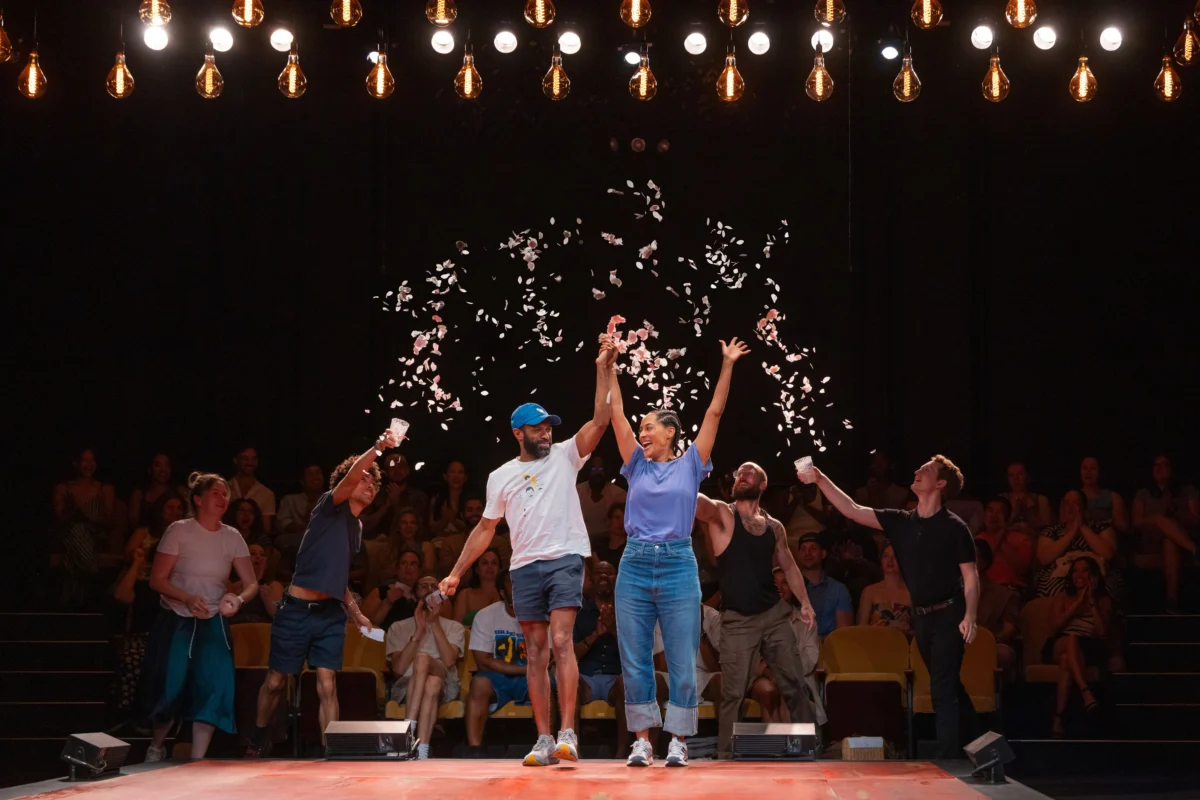
The Hudson Theatre in New York City has become the site of a significant cultural milestone as Tracee Ellis Ross, the Golden Globe-winning actress, producer, and entrepreneur, officially stepped onto the Broadway stage for her debut performance in Every Brilliant Thing. This production, a solo show that demands both immense emotional vulnerability and improvisational skill, marks a pivotal moment in Ross’s career, transitioning her from the heights of television stardom in series such as Black-ish and Girlfriends to the intimate, high-stakes environment of a live theatrical monologue. Ross’s tenure in the role began on July 7, 2026, following an intensive three-week rehearsal period, and is scheduled to conclude on August 9.
Every Brilliant Thing, written by Duncan Macmillan and Jonny Donahoe, is not a traditional play. It is a 40-page monologue that relies heavily on audience participation to tell the story of a Narrator who, as a child, began a list of everything worth living for in an attempt to cure their mother’s chronic depression. The list begins with simple childhood joys—ice cream, water fights, and staying up past one’s bedtime to watch television—and evolves over decades as the Narrator navigates college, first love, and their own personal battles with mental health. The play culminates when the list reaches its millionth entry, serving as a testament to human resilience and the cumulative power of small, positive observations.
The Evolution of a Global Theatrical Phenomenon
The journey of Every Brilliant Thing to the Broadway stage has been one of steady, global expansion. Originally developed by Macmillan and Donahoe, the play was first presented in its current interactive format at the Ludlow Fringe and the Edinburgh Fringe Festival. Its success in the United Kingdom led to an Off-Broadway run at the Barrow Street Theatre in 2014, where Jonny Donahoe himself starred. Since that time, the play has become a staple of regional and international theater.
As of 2024, data indicates that the play has been translated into 66 different languages and staged in 63 countries. Its universal appeal lies in its ability to address the heavy subject of suicide and clinical depression through a lens of hope and communal support. The 2026 Broadway revival at the Hudson Theatre has seen a rotating cast of high-profile performers, beginning with Daniel Radcliffe in March 2026. Radcliffe’s performance earned both the play and the actor critical acclaim and Tony Award nominations. Following Radcliffe, Mariska Hargitay, known for her long-standing role on Law & Order: Special Victims Unit, took over the mantle before passing it to Ross.
Tracee Ellis Ross: From Childhood Performance to Broadway Milestone
For Tracee Ellis Ross, this debut is the fulfillment of a lifelong ambition rooted in her upbringing. Ross has frequently recounted how she would perform one-woman shows in her family home, often to the "torture" of her sisters as she belted out songs from Annie or portrayed characters like Mrs. Hannigan. Her early influences included the transformative solo work of Whoopi Goldberg, Lily Tomlin, and Anna Deavere Smith—artists who utilized the stage to explore complex social identities and human experiences.

Ross’s formal training in theater took place at Brown University, but her career path initially led her to the fashion industry and then to television. Despite her success on screen, the pull of live theater remained. She described her first moments on the Hudson Theatre stage as "flying with my feet on the ground," a metaphor for the balance of technical discipline and creative freedom required for a solo production.
The Mechanics of Audience Participation and the "Conductor" Role
One of the most distinctive elements of Every Brilliant Thing is its requirement for the lead performer to act as a "conductor" of the audience. Throughout the performance, Ross engages directly with the attendees, casting them in various roles such as the Narrator’s father, a school counselor, or a veterinarian. This interactive element ensures that no two performances are identical, as the energy and responses of the audience dictate the rhythm of the evening.
Ross has noted that her role is to set a tone of safety and "flourishing" for the audience. During one performance, when an audience member cast as a lecturer expressed nervousness, Ross responded by acknowledging her own nerves, creating a shared moment of human connection. This approach aligns with the play’s core philosophy: that the experience of "hurt" is a universal human condition, but it is one that can be navigated through community and the recognition of "brilliant things."
Mental Health Context and the "Werther Effect"
The production arrives at a time when the United States is facing a documented mental health crisis. According to data from the Centers for Disease Control and Prevention (CDC), the prevalence of depression and anxiety has seen a marked increase over the last decade, necessitating broader public discourse on treatment and support systems.
A critical component of the play’s educational value is its mention of the "Werther effect," or suicide contagion. This psychological phenomenon occurs when the sensationalized reporting or depiction of suicide leads to an increase in suicidal behaviors in the general population. By addressing this concept directly, Every Brilliant Thing navigates the fine line between depicting the reality of depression and ensuring that the narrative promotes "copycat" resilience rather than copycat tragedy. Ross admitted to being "staggered" by this information during her preparation, highlighting the play’s role as a vehicle for public awareness.
Broader Implications for Diversity in Mental Health Narratives
The casting of Tracee Ellis Ross, a Black woman, adds a layer of social significance to the production. Research consistently shows disparities in mental health care and outcomes based on race. According to a study published in the journal Psychiatry Services, Black adults are significantly less likely than their white counterparts to receive mental health treatment. Furthermore, data from the Office of Minority Health indicates that Black high school-aged girls are more likely to report attempted suicide than their white peers.

Ross has been vocal about the necessity of addressing mental health specifically within the Black community. "Mental health for Black women—and Black people—in America is something that needs attention and care and love," she stated, noting that the play serves as a "wonderful vehicle" for these essential conversations. By placing a Black woman at the center of a story about depression and survival, the production challenges the "strong Black woman" trope that often discourages individuals from seeking help or acknowledging vulnerability.
Impact on the 2026 Broadway Season
The success of Every Brilliant Thing at the Hudson Theatre reflects a broader trend in the 2026 Broadway season toward intimate, star-driven vehicles that prioritize emotional depth over spectacle. The production’s ability to draw diverse audiences—ranging from fans of Daniel Radcliffe’s film work to Mariska Hargitay’s television following and now Ross’s multifaceted fanbase—demonstrates the commercial viability of serious subject matter when paired with high-caliber talent.
Industry analysts suggest that Ross’s performance may influence future casting decisions for solo shows, encouraging producers to look toward established television actors who possess the "conductor" qualities necessary for interactive theater. As her run continues through August 9, the production remains a focal point for critics and theatergoers alike, not only for Ross’s technical prowess but for the play’s enduring message that life, despite its inherent difficulties, is filled with a million brilliant reasons to persevere.
The culmination of the play—the millionth entry on the list—serves as a symbolic bridge between the performer and the audience. In a world often characterized by isolation, Ross’s Broadway debut in Every Brilliant Thing stands as a factual reminder of the power of shared storytelling and the ongoing necessity of mental health advocacy in the public sphere.

0 Comments