
Researchers at Oregon State University (OSU) have unveiled a groundbreaking experimental strategy that holds significant promise for treating glioblastoma, the most aggressive and devastating form of brain cancer. The disease, characterized by its rapid growth and infiltrative nature, tragically affects fewer than 30% of patients with a two-year survival rate post-diagnosis. This innovative approach, spearheaded by Oleh Taratula, Olena Taratula, and Yoon Tae Goo from the OSU College of Pharmacy, directly confronts two of the most formidable obstacles in glioblastoma therapy: the impenetrable blood-brain barrier and the imperative to selectively target cancerous cells while sparing healthy brain tissue.
Overcoming the Blood-Brain Barrier and Achieving Tumor Selectivity
The development of effective treatments for brain tumors has been historically hampered by the blood-brain barrier (BBB). This highly selective physiological barrier acts as a stringent gatekeeper, meticulously regulating the passage of substances from the bloodstream into the central nervous system. Its primary function is to protect the brain from toxins, pathogens, and fluctuations in blood composition. However, this same protective mechanism also prevents the vast majority of therapeutic agents, including many chemotherapy drugs, from reaching their intended targets within the brain.
Furthermore, even when a treatment can penetrate the BBB, ensuring it selectively attacks glioblastoma cells without causing collateral damage to healthy brain tissue is a critical challenge. The diffuse and invasive growth pattern of glioblastoma, where tumor cells infiltrate surrounding brain parenchyma, makes surgical removal exceptionally difficult and often incomplete. This necessitates treatments that can precisely identify and eliminate these rogue cells.
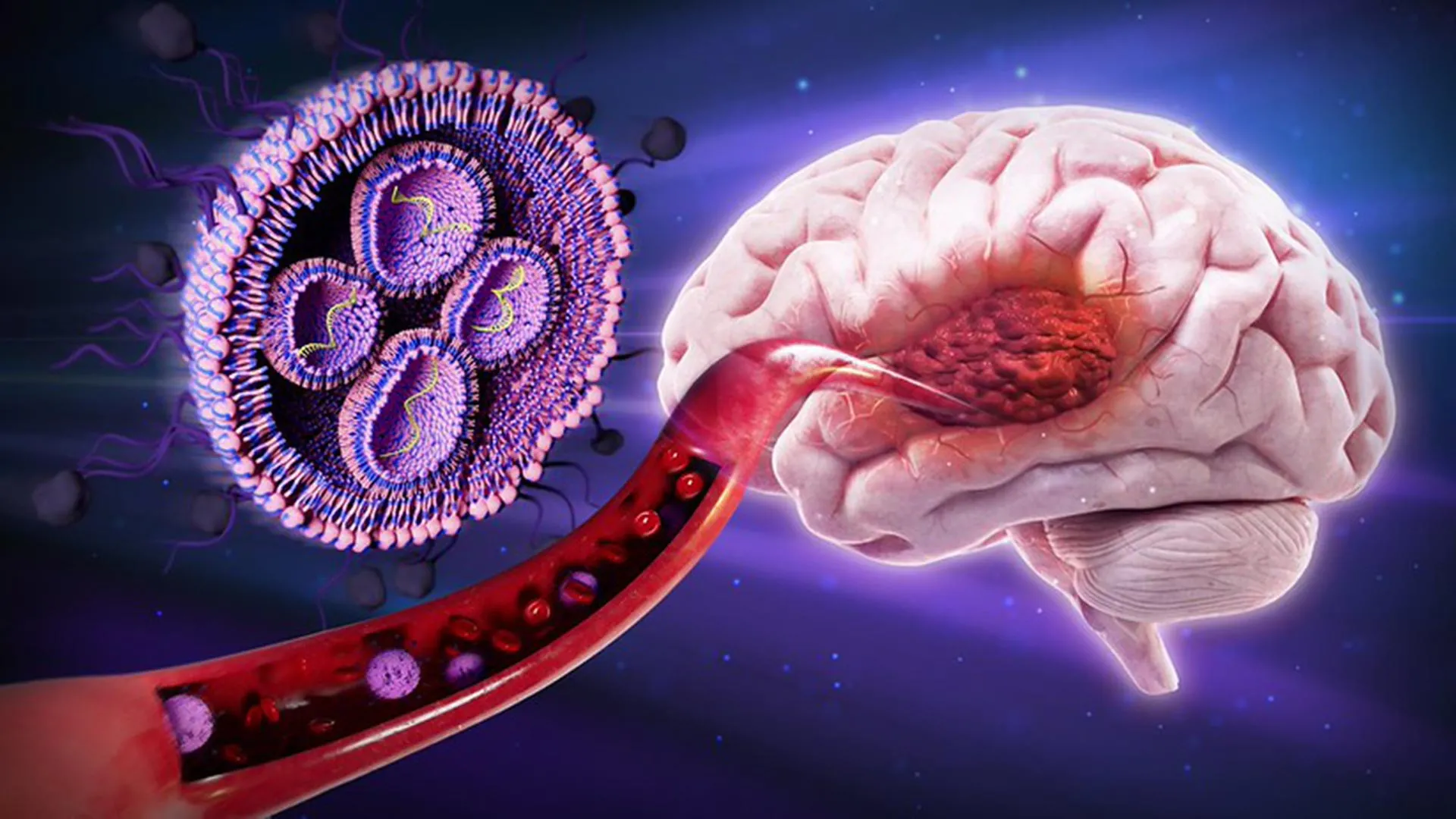
The OSU team’s novel strategy addresses these dual challenges through the ingenious design and application of sugar-coated lipid nanoparticles. These microscopic carriers are engineered to encapsulate genetic material that can reprogram the body’s own cellular machinery to suppress tumor growth. The key innovation lies in the specialized sugar coating, which plays a pivotal role in facilitating the nanoparticles’ entry into the brain and their subsequent concentration within the tumor microenvironment.
The Science Behind the "Sugar-Coated" Nanoparticles
In preclinical studies conducted on a mouse model of glioblastoma, the researchers meticulously evaluated the efficacy of these advanced nanoparticles. The core of the therapy involves delivering messenger RNA (mRNA) designed to instruct cells to produce PTEN. PTEN is a critical tumor suppressor protein that plays a vital role in regulating cell growth and preventing uncontrolled proliferation. In glioblastoma, PTEN is frequently mutated, deleted, or inactivated, contributing significantly to the aggressive nature of the cancer. By restoring PTEN expression, the therapeutic strategy aims to reinstate the natural growth control mechanisms within the tumor cells.
The success of this approach hinges on the nanoparticles’ ability to navigate the BBB. The researchers ingeniously employed mannose, a simple sugar structurally related to glucose, for the coating. The cells that form the lining of the blood vessels in the brain, known as endothelial cells, possess a specific transporter protein called GLUT1. This transporter is primarily responsible for facilitating the uptake of glucose, the brain’s main energy source, from the bloodstream into the central nervous system. Crucially, GLUT1 exhibits a remarkable affinity for mannose, allowing it to recognize and bind to mannose-coated nanoparticles. This molecular mimicry provides a sophisticated pathway for the nanoparticles to effectively traverse the BBB.
"Blood contains relatively high concentrations of glucose, and that’s what the nanoparticles are competing against for GLUT1’s attention," explained Oleh Taratula, a lead researcher on the project. "For the nanoparticles to get it, they need a densely coated sugar surface, and that’s our central innovation. By chemically connecting mannose to cholesterol, a major structural component of the nanoparticles, we improved surface coverage sixfold." This enhanced surface coverage is instrumental in ensuring that a sufficient quantity of nanoparticles can successfully engage with GLUT1 and gain entry into the brain, overcoming the competitive presence of abundant glucose in the bloodstream.
Delivering Therapeutic Cargo and Enhancing Tumor Accumulation
Beyond their ability to cross the BBB, the sugar-coated nanoparticles are further designed to enhance their accumulation within the tumor itself. Glioblastoma cells are known to exhibit a heightened metabolic activity and express significantly higher levels of GLUT1 transporters compared to normal brain tissue. This metabolic reprogramming means that glioblastoma cells avidly consume glucose for their rapid growth and proliferation.
The researchers observed that this elevated GLUT1 expression in tumor cells creates a differential uptake mechanism. Once the mannose-coated nanoparticles have successfully entered the brain, they are preferentially drawn to and internalized by the glioblastoma cells due to their higher concentration of GLUT1 transporters. "Glioblastoma is metabolically reprogrammed and expresses GLUT1 at three times the levels of normal brain tissue, so the particles preferentially accumulate in tumor tissue after crossing the blood-brain barrier," stated Olena Taratula, another key member of the research team. "And restoring PTEN expression in tumor cells reinstates growth control. Across repeated dosing, tumor shrinkage occurred without any measurable organ toxicity." This selective accumulation is a critical factor in minimizing off-target effects and maximizing the therapeutic impact directly at the tumor site.
To ensure the integrity and efficacy of the mRNA cargo, the researchers incorporated an additional protective measure. The mRNA molecule is inherently fragile and susceptible to degradation by enzymes present in the body. To safeguard the genetic material from premature breakdown before it reaches its cellular destination, the nanoparticles were engineered to encapsulate the mRNA within a positively charged cholesterol derivative. This internal structure acts as a protective shell, keeping the mRNA securely enclosed and intact until it can be released within the target tumor cells.
Significant Survival Benefits in Preclinical Trials
The findings from the OSU study, published in the prestigious Journal of Controlled Release, are highly encouraging. In the glioblastoma mouse model, the experimental therapy led to a substantial improvement in median survival time, increasing it by an impressive 50%. This significant extension of lifespan in a preclinical setting offers a beacon of hope for the development of more effective treatments for this devastating disease.
Moreover, the researchers meticulously assessed the safety profile of their approach. Crucially, the repeated administration of the sugar-coated nanoparticles resulted in tumor shrinkage without any observable signs of organ toxicity. This indicates a favorable therapeutic window, where the benefits of the treatment are achieved with minimal adverse effects on healthy tissues and organs, a critical consideration for any potential human therapy.
Understanding Glioblastoma: A Formidable Adversary
Glioblastoma, also known as glioblastoma multiforme (GBM), is the most common and deadliest primary malignant brain tumor in adults. It originates from astrocytes, a type of glial cell that provides support and nourishment to neurons. The World Health Organization (WHO) classifies glioblastoma as a Grade IV astrocytoma, signifying its highest level of malignancy.
The incidence of glioblastoma in the United States is approximately 3.19 cases per 100,000 individuals annually. It tends to affect males more frequently than females, and the median age at diagnosis is around 64 years. The prognosis for glioblastoma patients is grim; the median survival time is typically around 15 months, and more than 95% of patients succumb to the disease within five years of diagnosis. This stark statistic underscores the urgent need for novel and more effective therapeutic interventions.
The aggressive nature of glioblastoma stems from several factors: its rapid proliferation rate, its diffuse infiltrative growth pattern that makes complete surgical resection nearly impossible, and its inherent resistance to conventional therapies such as chemotherapy and radiation. Standard treatment typically involves a combination of surgery, radiation therapy, and chemotherapy (often with the drug temozolomide). However, these treatments often provide only a modest improvement in survival and quality of life, highlighting the limitations of current therapeutic paradigms.
Future Directions and Broader Implications
The success of the sugar-coated nanoparticle strategy in preclinical models represents a significant leap forward in glioblastoma research. The ability to effectively deliver therapeutic agents across the BBB and achieve selective tumor targeting is a long-sought goal in neuro-oncology. This innovative approach opens up exciting possibilities for not only delivering mRNA-based therapies but also for a wide range of other therapeutic molecules, including small molecule drugs, antibodies, and gene therapies.
The potential implications of this research extend beyond glioblastoma. The principles of using sugar-coated nanoparticles to navigate the BBB could be applied to treat other neurological disorders, such as Alzheimer’s disease, Parkinson’s disease, and stroke, where targeted drug delivery to the brain is also a major challenge.
The research team, which includes Vincent Cataldi, Vladislav Grigoriev, Neera Yadav, Tetiana Korzun, Chao Wang, and Adam Alani from the College of Pharmacy, continues to refine and advance this promising technology. The study received vital financial support from the National Cancer Institute, the Eunice Kennedy Shriver National Child Health and Human Development, and the National Research Foundation of Korea, underscoring the collaborative and well-supported nature of this critical research endeavor.
While human clinical trials are the next crucial step, the preclinical data generated by the OSU researchers provide a strong foundation for optimism. The development of therapies that can overcome the formidable blood-brain barrier and precisely target cancerous cells represents a paradigm shift in the fight against glioblastoma and potentially other devastating neurological diseases. This breakthrough signifies a critical stride towards offering renewed hope and improved outcomes for patients facing these challenging conditions.

0 Comments